

A flooded car may look ready to move, but starting it or driving it can cause further damage and put you at risk. If you’re searching for how to dispose of a flood damaged car Melbourne, deal with safety and your insurance requirements before arranging removal.
It’s understandable to be unsure what comes first. Your insurer may need to assess the vehicle, and its written-off status can affect what happens next. A car recorded as a statutory write-off can’t be re-registered, while a repairable write-off follows a different path. Treat the insurance assessment and the disposal decision as separate steps.
This guide covers what to do immediately, how to approach your insurer and check the vehicle’s status, and what paperwork to consider before disposal. You’ll also learn how to arrange collection from a home, street or parking area in Melbourne. Once you’ve dealt with the necessary checks, Rapid Car Removal can provide an instant quote and free professional removal for a damaged vehicle.
Key Takeaways
- Pause before moving a flood-damaged vehicle. Record visible damage and keep clear of hazards.
- Understand how your insurer’s assessment and the vehicle’s written-off status may affect disposal.
- Compare insurer-managed disposal, repair assessment and vehicle removal by the paperwork and effort involved.
- Use a practical checklist before collection, and retrieve belongings only if the car can be accessed safely.
- Learn how to dispose of a flood damaged car melbourne, including arranging an instant quote and professional collection once insurer requirements are addressed.
Flood-damaged car in Melbourne: what to do before starting
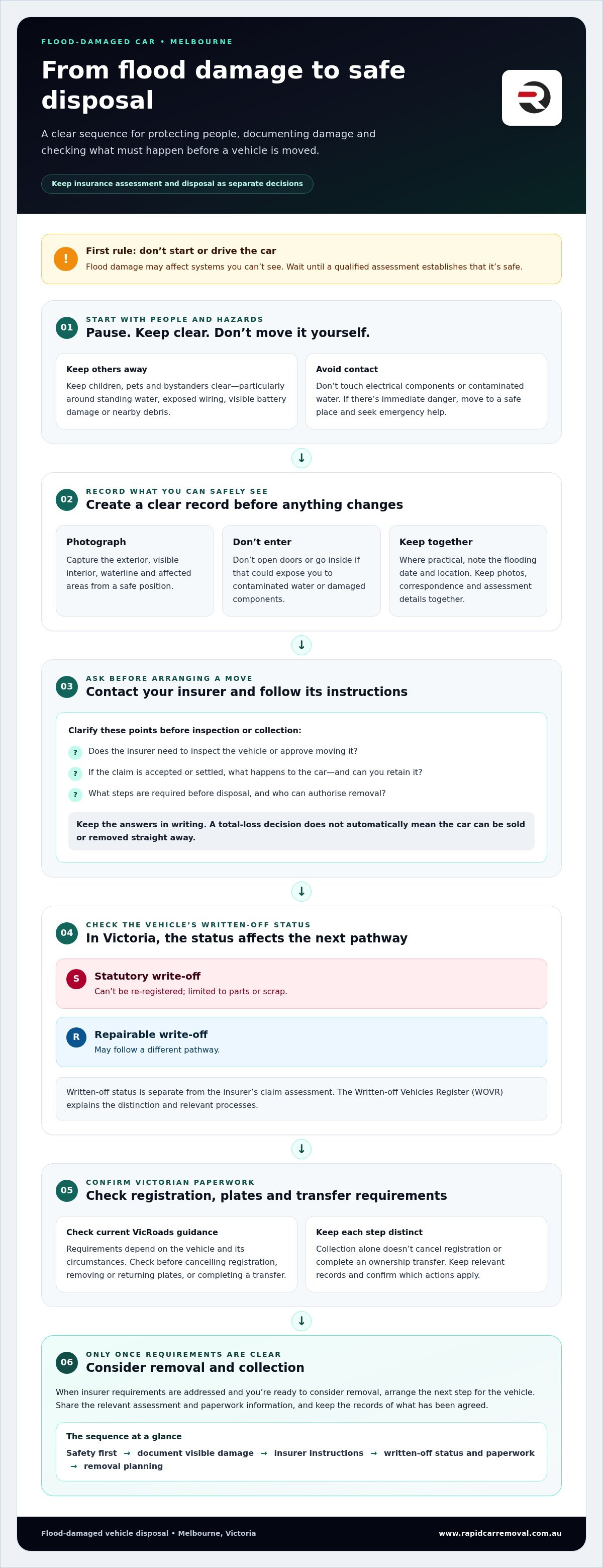
First, pause. You don’t need to decide how to dispose of a flood damaged car Melbourne before addressing immediate safety and speaking with your insurer. Keep children, pets and bystanders away, particularly if there’s standing water, exposed wiring, visible battery damage or debris nearby. Don’t touch electrical components or contaminated water. If there’s immediate danger, move to a safe place and seek emergency help.
Take these steps from a safe position:
- Record what you can see. Photograph the vehicle and visible water damage without entering an unsafe area.
- Contact your insurer. Report the flooding and ask what it needs you to do before the car is inspected or moved.
- Follow the instructions. Keep messages and assessment details, and don’t arrange disposal until you understand the insurer’s requirements.
A vehicle can look mostly dry even when water has reached parts you can’t see. Don’t test the ignition or drive it to a mechanic, even if the engine appears unaffected. Starting or moving it could cause more damage or expose you to hazards. If it’s blocking access or in a dangerous location, tell your insurer where it is rather than trying to move it yourself.
Should you start or drive a flood-damaged car?
No, not until a qualified assessment establishes that it’s safe. Floodwater can affect electrical and mechanical systems, and the damage may not be visible from outside. Leave the car where it is if moving it could create a safety risk. Contact your insurer or a qualified automotive professional for advice about the vehicle and its surroundings. Don’t touch exposed wiring or a damaged battery.
Record the damage before arranging removal
Take clear photographs from a safe position before the vehicle is moved. Capture the exterior, the interior where safely visible, the waterline and affected areas. Don’t open doors or enter the car if that could expose you to contaminated water or damaged components. Where practical, note the date and location of the flooding. These details can help when you explain what happened to your insurer.
Keep your photos, insurer correspondence and assessment information together. You can then refer to the same record when discussing what happens next, whether the insurer arranges disposal or you choose another option. Don’t assume an initial conversation or visual check is the final assessment. Wait for clear instructions before committing to removal.
After addressing safety concerns and insurer instructions, consider damaged car removal in Melbourne as one possible next step. Documenting the damage and getting advice first helps you make an informed decision about the vehicle.
How insurance and written-off status affect flood-damaged car disposal in Victoria
Before choosing how to dispose of the car, find out whether your insurer needs to assess it and what it expects you to do with it. A total-loss decision is part of an insurance claim. It doesn’t automatically mean you can sell the vehicle or arrange its removal straight away. Next steps may depend on your policy, the claim outcome and the insurer’s instructions.
Keep the decisions separate: your insurer assesses the claim, while disposal concerns what happens to the car afterwards. If you’re working out how to dispose of a flood damaged car Melbourne, get the insurer’s position in writing before agreeing to a sale or signing transfer documents.
In Victoria, written-off status also matters. A statutory write-off can’t be re-registered and is limited to parts or scrap, while a repairable write-off may follow a different pathway. The Written-off Vehicles Register (WOVR) information explains the distinction and relevant processes. For the separate written-off vehicle scenario, see this written-off car guidance.
What to clarify with your insurer before disposal
Ask whether the insurer needs to inspect the vehicle or approve moving it before collection. If your claim is accepted or settled, clarify what happens to the car, whether you can retain it, and what steps are required before disposal. Policies and claim circumstances vary, so don’t assume a cash settlement automatically means you can sell the vehicle.
Keep the answers in writing. Save emails, claim notes and any documents you’re asked to sign, and make sure you understand them before agreeing. If instructions are unclear, ask the insurer to explain. A clear record helps avoid confusion about who can authorise removal and what has been agreed.
Registration, plates and transfer details in Victoria
Registration and number-plate requirements depend on the vehicle’s circumstances and current VicRoads guidance. Check the applicable instructions directly with VicRoads before cancelling registration, removing or returning plates, or completing a transfer. Don’t rely on a general checklist if an insurance claim or written-off status may affect the next steps.
Collection alone doesn’t cancel registration or complete an ownership transfer. Confirm which actions apply to your situation and keep relevant records. This is particularly useful when the insurer and removal company are handling different parts of the process. Don’t assume one step has taken care of another.
Once your insurer has clarified its requirements and you’re ready to consider removal, contact Rapid Car Removal about your damaged vehicle. The team can provide an instant quote and assist with paperwork as part of arranging professional removal in Melbourne.
Compare your options for disposing of a flood-damaged car in Melbourne
The right path depends on whether the insurer still needs to assess the vehicle, whether you’re considering repairs, and whether you’ve decided to let the car go. Compare the practical steps, not just the final outcome. A car that looks salvageable may have hidden water damage, while a non-running vehicle may still be suitable for professional collection.
Use this overview to narrow down how to dispose of a flood damaged car Melbourne. The options aren’t always interchangeable, so follow insurer instructions before arranging movement or disposal.
| Option | Safety and approval | Condition, paperwork and effort |
|---|---|---|
| Insurer-managed disposal | Suitable when the insurer is handling the claim and directs what happens to the vehicle. Follow its instructions before arranging anything independently. | The insurer may coordinate next steps. Your main tasks are keeping records and completing the paperwork it requires. |
| Repair assessment | Useful while the insurer or owner is deciding whether to consider repairs. Don’t assume the car is safe to drive. | A qualified assessment can help establish the damage and possible repair pathway. Further decisions depend on the findings and insurer requirements. |
| Selling or arranging removal | Consider this once the insurer’s requirements are clear and you’ve decided not to keep the car. | This can suit a damaged or non-running vehicle. You’ll need to organise collection and confirm the required transfer and registration steps. |
When does repair or insurer assessment make sense?
An assessment is a decision point, not a promise that the car can be repaired. Water can reach electrical and mechanical components that aren’t visible during a quick look. A qualified professional can assess the damage, but repairability and roadworthiness depend on the vehicle’s condition and the relevant inspection. This route makes sense if you’re waiting for the insurer’s view or deciding whether keeping the car is practical.
When is vehicle removal the more practical route?
If you’ve discussed the claim and don’t plan to keep the vehicle, removal may be simpler than pursuing repairs. A car that won’t start can still be considered for professional collection, so don’t try to drive it to make disposal easier. If recovery and reuse of vehicle materials are priorities, a Melbourne car wreckers service may be relevant.
Once you’ve decided to dispose of the vehicle, Melbourne damaged-car removal offers a practical collection option. Share the vehicle details for an instant quote, then arrange professional removal after addressing insurer requirements. If you’re ready to discuss the next step, get in touch about your damaged car.
Prepare a flood-damaged car for collection: a Melbourne owner’s checklist
Once immediate safety concerns are addressed and you’ve followed your insurer’s instructions, a little preparation can make collection easier. You don’t need to make the car driveable or move it yourself. Focus on sharing accurate details, making the location clear and having relevant information ready. These steps can help you work out how to dispose of a flood damaged car Melbourne without unnecessary handling or risk.
Before arranging collection, use this checklist:
- Confirm the timing. Make sure the insurer’s assessment or claim instructions allow you to proceed with disposal.
- Describe the vehicle. Note its make, model, approximate year and which areas were affected by water.
- Explain its condition. Say whether it starts, if known, and mention visible damage or anything that may affect loading.
- Give clear location details. Include the suburb, where the car is parked and any access restrictions, such as a narrow driveway, basement car park or limited vehicle access.
- Gather available documents and keys. Keep relevant ownership details and insurer paperwork handy for the agreed handover.
- Take photos only if safe. Images can show the vehicle’s condition and access, but don’t approach hazards to get them.
Be straightforward about what you know and what you don’t. For example, if the car is parked in a shared garage and won’t start, say so when requesting a quote. Clear details help the removal team understand the collection conditions and discuss the next steps with you.
What information helps organise a vehicle quote?
Have the make, model and approximate year ready, along with a brief description of the flooding and any visible damage. Mention whether the car starts, where it’s located and any access limits. If you already have safe, clear photos, they can help show its condition. Don’t return to a hazardous area or touch the vehicle to collect extra details.
What to do with belongings, keys and documents
Retrieve personal belongings only if the car can be accessed safely and doing so doesn’t conflict with insurer instructions. Don’t reach into standing water or near exposed wiring or damaged components. If it isn’t safe to enter, leave items in place and ask your insurer how to handle them. Safety comes before clearing the cabin or preparing the car for handover.
Keep available keys, ownership details and relevant claim documents together. If something is missing, explain that when arranging collection rather than putting yourself at risk trying to find it. Follow the agreed handover process and keep copies of disposal paperwork.
If the vehicle has entered the separate written-off process, the written-off vehicle seller’s guide covers that scenario. When you’re ready to organise collection, request a quote for your flood-damaged car with its condition and location details.
Arrange flood-damaged car removal in Melbourne with Rapid Car Removal
Once you’ve addressed safety, followed your insurer’s instructions and decided you no longer want to keep the car, professional removal can make the next step more manageable. Rapid Car Removal handles unwanted and damaged vehicles, including flood-affected cars, with free professional removal across metropolitan Melbourne.
The process is straightforward: share the vehicle details, receive an instant quote, then arrange collection if you’re happy to proceed. You don’t need to make a flood-damaged car driveable. Accurate information about its condition and location helps the team understand the collection and explain the handover.
What to expect when arranging collection
Have the make, model and approximate year ready, along with a brief description of the flood damage. Explain whether the car starts, where it’s parked and any access issues, such as a tight driveway, restricted building access or a low-clearance car park. Mention details that could affect loading, but don’t approach the vehicle or take photos if that would bring you near a hazard.
These details help inform your quote and collection arrangements. The vehicle doesn’t need to be working to discuss removal. If it’s in an awkward spot or can’t be accessed safely, explain that early so the collection can be planned around the situation.
Make the handover straightforward
Before confirming arrangements, make sure you’ve addressed any insurer requirements that affect disposal. An insurance assessment, settlement or instruction may shape what you can agree to, so clarify those points before proceeding with ownership or handover arrangements. Collection itself doesn’t confirm that registration has been cancelled or a transfer completed.
When the handover is agreed, gather available keys, ownership details and relevant paperwork. Rapid Car Removal includes paperwork assistance in its removal process, helping you understand the documents involved. Keep copies of records you receive and follow any separate instructions that apply to the vehicle.
If you’re still weighing how to dispose of a flood damaged car Melbourne, take it one step at a time: share the facts, review the quote and settle the handover details when you’re ready. Don’t rush while insurer instructions or safety questions remain unresolved.
When you’re ready to discuss a quote and collection, contact Rapid Car Removal about your flood-damaged car. Provide the vehicle’s location, condition and access details to help plan a clear, practical handover.
Take the next step when you’re ready
Flood damage can leave you with decisions that don’t need to be made all at once. Once you’re clear to proceed, choose a practical outcome for your situation and make sure the vehicle’s handover is properly addressed. Keep your records together, clarify the handover and don’t move ahead while important questions remain unresolved.
If you’re considering how to dispose of a flood damaged car Melbourne, Rapid Car Removal is a Melbourne-based vehicle removal specialist offering free professional removal across metropolitan Melbourne and instant quotes for unwanted and damaged vehicles. Discuss the car’s condition and location, then decide whether the proposed next step suits you.
Contact Rapid Car Removal to discuss your flood-damaged car when you’re ready. Share its condition and location to get an instant quote and discuss professional collection.
Frequently Asked Questions
Can I start a car after it has been flooded?
No. Don’t turn the ignition on until a qualified automotive professional has assessed the vehicle. Water may have entered the engine, wiring or electronic components, and a dashboard that lights up doesn’t prove the car is safe to start. Even a brief attempt could worsen damage. Keep the keys aside and tell your insurer the vehicle hasn’t been started since the flooding.
Can I drive a flood-damaged car to a mechanic?
No, not unless a qualified assessment has established it’s safe to drive. Floodwater can affect braking, steering and electrical systems, even if the car seems to run normally. Ask your insurer or a qualified automotive professional how to arrange an assessment without driving it. If the car is obstructing a road or creating an immediate hazard, move yourself to safety and seek appropriate assistance.
Does car insurance cover flood damage in Victoria?
It depends on your policy and the circumstances of the damage. Check your policy documents for flood cover, exclusions and claim requirements, then report the incident to your insurer and ask what evidence it needs. Cover isn’t automatic just because the damage happened during a flood. Keep claim communications together and wait for guidance before authorising repairs or disposal.
How can I tell whether a car has hidden flood damage?
You may notice a musty smell, damp carpet, silt in the cabin or unusual residue under seats. Corrosion on connectors or a visible waterline can also be clues, but none confirms the full extent of damage. Don’t pull up wet carpet or inspect electrical parts yourself. A qualified professional can assess areas that aren’t safely visible during a basic check.
Can a flood-damaged car be removed if it does not run?
Yes. A vehicle doesn’t have to start to be considered for professional collection. Describe it as non-running when you request a quote, and explain whether it’s in a driveway, car park or another location with access limits. Don’t try to push or tow it yourself if it may be unsafe. For Melbourne owners, clear access information helps the removal team understand the collection conditions.
Should I wait for my insurer before selling or disposing of a flooded car?
Speak with your insurer first and follow its instructions before agreeing to a sale or disposal. The insurer may need to inspect the vehicle or explain what happens to it if your claim is accepted or settled. Don’t sign transfer documents or make ownership arrangements until those requirements are clear. This helps avoid a mismatch between the claim process and your plans for the car.
What details should I provide when arranging flood-damaged car removal in Melbourne?
Share the vehicle’s make, model and approximate year, plus a clear description of the flood damage and whether it runs. Give the suburb, exact parking location and any access limits, such as a narrow driveway or basement clearance. Safe photographs can help show condition and access, but don’t approach hazards to take them. Mention insurer instructions that affect collection arrangements.
Is it better to repair or dispose of a flood-damaged car?
There isn’t one answer for every vehicle. Consider the findings of a qualified assessment, the insurer’s decision, the car’s condition and whether you’re prepared to manage possible repairs. A clean-looking interior doesn’t establish that hidden systems are unaffected. If repair isn’t practical or you’d rather not keep the vehicle, professional removal is an option. If you’re weighing how to dispose of a flood damaged car melbourne, base the choice on assessment and insurer guidance, not appearance alone.


