

Could selling your car help with debt, or create a new problem when you need to get to work or care for family? If you’re weighing up whether to sell my car for debt repayment, start by looking at the whole picture. The money from a sale may help, but it won’t automatically clear a debt, and finance on the vehicle can affect what happens next.
It’s understandable to want a straightforward way to ease repayments without adding more stress. Before deciding, compare the car’s role in your daily life with the likely sale proceeds and any outstanding obligations. This guide explains what selling can and can’t solve, what to check if the car is financed, and which documents to gather before you act.
You’ll also learn how a private sale in Victoria compares with a cash-for-cars option in Melbourne, including the practical steps involved. That way, you can make an informed choice and treat the sale as one part of a debt plan, not a guaranteed cure.
Key Takeaways
- Before you sell your car for debt repayment, weigh its potential sale proceeds against its importance for work, caring responsibilities and daily travel.
- Get a sale estimate, identify any finance or other obligations, then work out what may remain. An initial quote isn’t a guaranteed final amount or debt payoff.
- Compare private sale, trade-in and cash-for-cars options by the effort, timing, vehicle condition and paperwork each involves.
- Gather your vehicle and finance details, record its condition accurately, and remove personal belongings before arranging a sale.
- For an unwanted vehicle in metropolitan Melbourne, Rapid Car Removal offers instant quotes, professional collection and free removal.
Should you sell your car for debt repayment? Start with the full picture
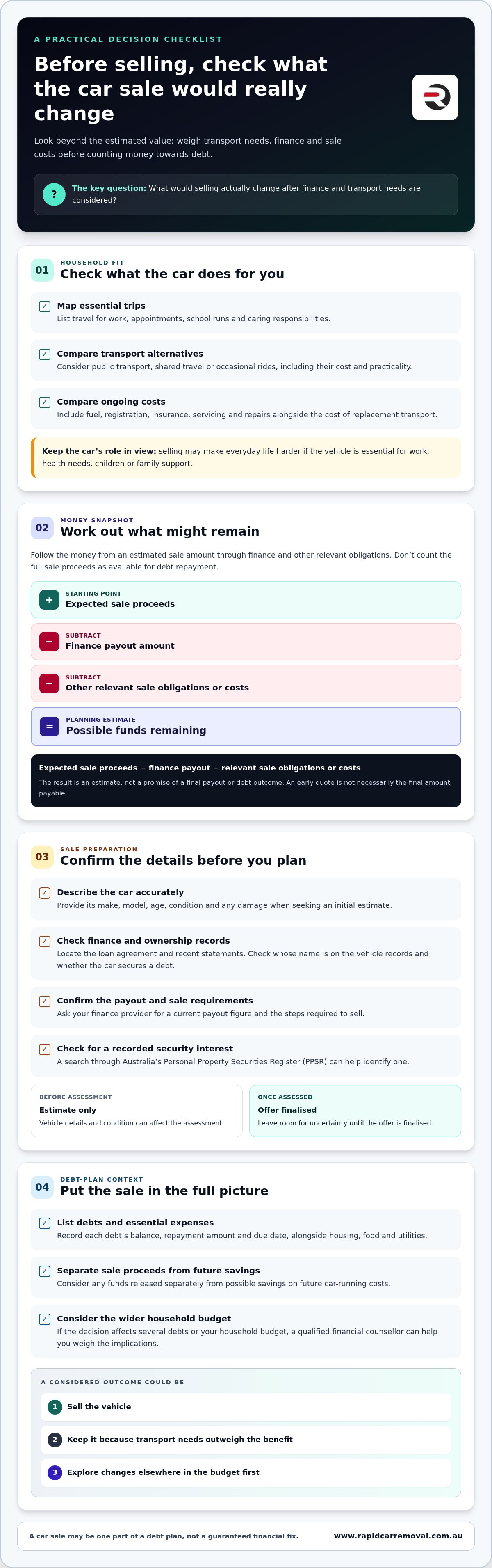
When repayments are hard to manage, selling a car can look like a direct way to free up money. But don’t decide based on the vehicle’s estimated value alone. First work out what you owe, what the car costs to keep, and what losing access to it would mean for your household. A sale may release funds, but it isn’t a guaranteed financial fix.
Start with a clear snapshot of your position. List each debt, its balance, repayment amount and due date, alongside essential expenses such as housing, food and utilities. Understanding the different forms and repayment structures of debt can help you see where a car sale might fit; Understanding Debt provides a general overview. Also note whether finance is secured against the vehicle, as this can affect the sale and the amount available afterwards.
- Write down regular car costs, including fuel, registration, insurance, servicing and repairs.
- List the trips the car makes for work, appointments, school runs and caring responsibilities.
- Identify realistic alternatives, such as public transport, shared travel or occasional rides, and consider their cost and practicality.
- Compare what might remain from a sale with your obligations, rather than assuming the full sale proceeds can go towards debt.
This gives you a more useful question than “What is my car worth?” Ask: “What would selling actually change, after finance and transport needs are considered?”
When selling the car could fit your debt plan
Selling may be worth considering if the vehicle is rarely used, has become costly to maintain, or no longer suits your needs. An unused second car, for example, may be taking up money through ongoing ownership costs without providing much day-to-day value. Reducing those expenses could matter alongside any funds released by the sale.
Still, separate the likely sale proceeds from the savings on future running costs. Finance or other obligations may affect what is left, and those savings won’t necessarily address a gap between household income and ongoing repayments. Treat the sale as one possible step in a broader plan, not a solution on its own.
When keeping the car may be the more practical choice
Keep the car’s practical role in view. If it’s essential for reaching work, managing health needs, transporting children or supporting family members, selling could make everyday life harder. Compare the cost of replacement transport with the car’s current running expenses. Include the trips you make regularly, not just the occasional journey that is easiest to replace.
If the decision affects your household budget or several debts, consider speaking with a qualified financial counsellor before committing. They can help you understand the wider implications and weigh your options. A measured decision may be to sell, keep the vehicle or first explore changes elsewhere in your budget. The aim is to choose with a realistic view of both the money and the transport you’ll need.
Work out what selling the car could leave for repayment
A sale estimate is only the starting point. To work out whether selling could help, follow the money from a likely sale amount through any finance and other obligations before counting what may be available for debt repayment. If you’re considering whether to sell my car for debt repayment, keep the estimate separate from money you’ve actually received.
- Get an initial sale estimate. Give accurate details about the make, model, age, condition and any damage. An indicative quote or valuation helps with planning, but it isn’t necessarily the final amount payable.
- Find out whether finance is attached. Review your loan documents and check whether the vehicle secures a debt.
- Confirm amounts and requirements. Get a current payout figure and sale instructions from your finance provider. Note any other obligations or costs relevant to the sale.
- Estimate what could remain. Subtract those amounts from the expected proceeds, then compare the possible remainder with your bills and repayment priorities.
The final offer can depend on the vehicle’s details and condition once assessed. Don’t plan around an early estimate as if it were a settled amount. A car that looks similar to another may have a different condition or history, which can change the assessment.
Check finance, ownership and vehicle records first
Locate the loan agreement and recent finance statements. Check whose name is on the vehicle records and whether the loan uses the car as security. A search through Australia’s Personal Property Securities Register (PPSR) can help identify a recorded security interest. For current search guidance, use the official PPSR service. Then ask your finance provider for an accurate payout figure and the steps required to sell. Don’t assume an outstanding loan can simply be ignored when arranging a sale.
Estimate the funds available after the sale
Use a worksheet with blanks rather than guessing. Fill it in with confirmed figures as they become available:
- Expected sale proceeds: A$ ______
- Finance payout amount: A$ ______
- Other relevant sale obligations or costs: A$ ______
- Possible funds remaining: A$ ______
Formula: expected sale proceeds minus the finance payout and relevant sale obligations or costs equals the possible funds remaining. This is a planning estimate, not a promise of a final payout or debt outcome. Leave room for uncertainty until the vehicle has been assessed and the offer is finalised.
Before allocating any remainder, compare it with essential bills and the repayment options available to you. If the payout figure is higher than the expected proceeds, pause and discuss the shortfall and sale process with your finance provider. If you’ve decided to sell and want an estimate for your vehicle, you can get in touch about a vehicle sale. A quote can help inform your worksheet, but it can’t guarantee how much will be left for repayment.
Compare private sale, trade-in, and cash-for-cars options
The right sale route depends on the vehicle, your available time and how much of the process you can manage. If you want to sell my car for debt repayment, compare the practical trade-offs as well as the likely proceeds. No option guarantees a particular sale amount or debt outcome.
| Option | Effort and timing | Vehicle condition | Paperwork |
|---|---|---|---|
| Private sale | You manage advertising, enquiries, inspections and negotiation. Timing depends on finding a buyer and agreeing on the sale. | Often suits a presentable vehicle that can be shown to prospective buyers. | You coordinate the handover and sale paperwork, and follow the relevant registration steps. |
| Trade-in | Can fit into the process of replacing your car. It may not suit you if you want to sell outright and won’t be buying another vehicle. | Suitability depends on the vehicle and the trade-in arrangement. | The dealer handles the trade-in as part of the vehicle purchase; check how the figures are set out. |
| Cash-for-cars | A quote and collection process may reduce the owner’s need to advertise and handle buyer enquiries. Timing depends on the arrangement. | Can be an option for unwanted, damaged or scrap vehicles as well as vehicles in other conditions. | Confirm what paperwork is handled as part of the sale and keep a record of the agreed transaction. |
Choose a sale route that matches your vehicle and circumstances
A roadworthy, presentable car may suit a private buyer, particularly if you’re comfortable organising viewings and negotiating. A trade-in is more relevant if you’re replacing the car, while a damaged, scrap or unwanted vehicle may be better suited to a specialist removal service. For more context on the process, see this guide to selling a car in Melbourne.
Compare convenience with control
A private sale gives you direct control over the listing, conversations and negotiation, but it also puts each task on your plate. Consider whether you have time to respond to enquiries, arrange inspections and be available for handover. Also think about whether the car is accessible and suitable to show. A quote-and-collection process can streamline the steps for an unwanted vehicle, though an initial quote isn’t a final offer until the vehicle details have been assessed.
Private sale can offer more control; a quote-and-collection option can offer convenience; neither makes the final sale amount certain. Compare the amount you expect to receive, the effort involved and any finance or other obligations before choosing. That gives you a clearer basis for deciding which route fits your repayment plan.
Follow a practical checklist before selling in Melbourne
A few checks before handover can prevent avoidable delays and confusion later. Work through the steps in order, especially if finance, missed repayments or registration questions are involved. If you’re planning to sell my car for debt repayment, decide how you’ll handle the proceeds before the sale is complete, not after.
Prepare documents and agree on the handover
Gather what you have before arranging a sale. Useful items can include identification, proof of ownership, registration details, all keys and available service records. Your circumstances may call for other documents, so treat this as a starting list rather than a complete set. Owners with a vehicle they no longer need can also consider cash for unwanted cars in Melbourne.
- Check finance and ownership. Review loan paperwork and contact the lender or creditor before committing if finance, arrears or hardship are involved. Ask about any payout figure, sale conditions and steps you need to follow.
- Record the vehicle’s details. Note the registration, make, model and any identifying details you’ll need for the sale. Write down known faults, damage and missing items so you can describe the car accurately.
- Prepare the car for handover. Remove personal belongings, including items from the boot and glovebox. Gather every available key and service record, and be upfront about the vehicle’s condition.
- Check Victorian registration requirements. Before transferring, cancelling or otherwise changing registration, follow the current VicRoads guidance for your situation. Check what applies to number plates as well, rather than relying on assumptions or old instructions.
- Agree on the sale details. Before handing over the vehicle, make sure you understand the agreed amount, payment arrangement, collection or handover plan, and paperwork responsibilities. Keep a record of what’s agreed.
Requirements can differ depending on the vehicle and sale route. If the car has accident or write-off status, make sure you understand how that affects the sale and records. Where relevant, this guide to written-off car sales covers that specific situation.
Plan where the proceeds will go
Before completing the transaction, confirm the correct account details and how payment will be handled. If a lender must be paid or has given you instructions for a financed vehicle, follow those arrangements before directing any remaining funds elsewhere. Don’t assume the full sale proceeds will be available for another debt.
Keep the sale paperwork and payment records together. Note the amount received and date, then check your debt account afterwards to see how any payment has been recorded. This helps you track your budget and follow up if something doesn’t match your records. For a vehicle sale with collection, contact Rapid Car Removal to discuss your unwanted car.
Sell your unwanted car with Rapid Car Removal
If you’ve compared your options and decided the car is no longer needed, Rapid Car Removal offers a cash-for-cars option across metropolitan Melbourne. The service provides instant quotes, professional vehicle collection and free removal. Unwanted, damaged and scrap vehicles are among the conditions accepted, so the car doesn’t need to be in perfect shape to start a conversation.
A quote is a starting point for your decision, not a promise that a debt will be cleared or reduced. The vehicle’s details and condition inform the quote, while finance and other obligations affect what you may have left. Keep those figures separate as you decide whether the sale fits your repayment plan.
What to expect when requesting a quote
Share clear, accurate information to help make the quote relevant. Have these details ready:
- The vehicle’s make, model and year, if known.
- Its location in metropolitan Melbourne and whether it can be accessed for collection.
- Its current condition, including damage, missing parts or known mechanical issues.
- Registration details and any other information that helps identify the vehicle.
Be straightforward about the car’s condition. This helps avoid a mismatch between the details provided and the vehicle assessed. Rapid Car Removal arranges professional collection and handles sale paperwork, which can simplify the process for owners who don’t want to manage a private sale. You can also learn about Rapid Car Removal’s company background and its local vehicle-removal experience.
Take the next step without rushing the debt decision
Before you accept an offer or commit to a sale, resolve any questions about secured finance with your lender and understand the payout requirements. Then compare the final amount available with your repayment goal and the transport you’ll need afterwards. An instant quote can help inform that comparison, but it can’t confirm your final proceeds or predict the effect on your debts.
If you’re ready to describe your vehicle, include its location, condition and identifying details when you get in touch. If finance is involved, keep the lender’s instructions handy so you can consider the sale steps alongside them. Take time to review the figures, then choose whether to proceed.
Request a quote for your unwanted car and use it as one practical input in your decision.
Make your next move with a clear plan
Deciding whether to sell my car for debt repayment is easier when you separate two questions: are you ready to part with the vehicle, and what will you do with the money if you sell? Settle any finance questions first, then choose a repayment priority that fits your wider budget. You don’t need to rush into a decision just because repayments feel pressing. A clear plan can help you move forward with more confidence.
If selling feels right, share your car’s details and condition to request a quote. Use the information to assess your options, then decide whether to proceed.
Request a quote for your unwanted car and take the next step at your own pace. You can make a practical decision that works for both your transport needs and your finances.
Frequently Asked Questions
Can I sell my car if I still owe money on it?
Yes, but the finance arrangement needs to be addressed as part of the sale. Ask your lender for a current payout figure and instructions before agreeing to hand over the car. If the sale proceeds don’t cover the payout, you may still owe the difference. Don’t assume the lender’s interest in the vehicle is cleared automatically; follow the lender’s process and keep written records of any agreed arrangements.
Will selling my car clear my debt?
No, a car sale doesn’t automatically clear a debt. The result depends on the amount received and any finance or other obligations linked to the vehicle. If you sell my car for debt repayment, compare the confirmed proceeds available after those obligations with the debt balance. Check your creditor’s account after making a payment so you can see how it was applied and what remains owing.
What should I do if I cannot afford my car loan repayments?
Contact your lender as soon as you think you may miss a repayment. Explain what has changed and ask about hardship assistance or other arrangements that may apply to your circumstances. Request the details in writing, including any effect on repayments or the loan term. Don’t stop paying or sell a financed car without understanding the lender’s instructions. A free financial counsellor, such as the National Debt Helpline, can help you consider your options.
Can I use a cash-for-cars service to sell a damaged car in Melbourne?
Yes. Rapid Car Removal buys damaged and accident vehicles in metropolitan Melbourne. Describe the damage clearly, including whether the car starts, has missing parts or has been involved in a collision. These details help inform the quote and assessment. The vehicle’s condition may affect the offer, so don’t treat an initial quote as a guaranteed sale amount or assume the proceeds will meet a particular debt repayment.
How do I check whether finance is recorded against my car in Australia?
Search the Personal Property Securities Register (PPSR) using the vehicle identification number (VIN), or another identifier accepted by the register. A PPSR search can show whether a security interest has been recorded against the vehicle. If a result appears, contact the named finance provider to confirm the current payout and sale requirements. Don’t rely on the search alone to establish your loan balance or whether the finance has been settled.
What paperwork do I need when selling a car in Victoria?
Have identification, proof of ownership, registration details, keys and any service records available. For a private sale of a registered vehicle in Victoria, the seller must provide a valid Certificate of Roadworthiness; VicRoads guidance says it’s valid for 30 days from issue. Both parties complete the transfer paperwork, and the seller should notify VicRoads of the sale. The buyer must lodge the transfer within 14 days. Requirements can vary by sale type.


