

Could your unwanted car be off the driveway but still tied to your name? Knowing how to scrap a car legally in Victoria means dealing with registration and documenting the handover, not just arranging a tow. Before the car leaves your hands, check what to do about its plates, who has authority to dispose of it and whether it can be driven safely.
The right steps can depend on whether the car is registered, damaged or unable to be driven. This checklist covers what to prepare for collection, what to verify with VicRoads for your circumstances and which records to keep. Removing the plates and sorting out registration before handover can help you avoid loose ends later.
Work through the checks before collection day. Rapid Car Removal provides free professional towing and removal across metropolitan Melbourne, so you don’t need to drive an unroadworthy car to its next destination. A clear handover starts with the right paperwork and ends with records you can keep.
Key Takeaways
- Learn how to scrap a car legally in Victoria by treating registration, number plates, ownership and handover as separate steps.
- Check the vehicle’s registration status and follow VicRoads’ current cancellation instructions for your circumstances.
- Confirm who has authority to dispose of the car, especially if there are co-owners or estate matters.
- Prepare a clear handover record and remove personal belongings and stored information from the vehicle.
- Once your checks are complete, professional Melbourne removal can help you avoid driving an unregistered or unroadworthy car.
What does it mean to scrap a car legally in Victoria?
Legal car scrapping in Victoria means handling registration, number plates, ownership authority and the physical handover as separate steps. Booking a tow or agreeing to sell the car doesn’t, by itself, cancel its registration or complete every VicRoads requirement. Treat collection as one part of the process, not the whole process.
An unwanted car can still be registered, and a damaged car may or may not be roadworthy. These are separate questions. Before making arrangements, confirm who can authorise disposal, check the vehicle’s registration status and decide how it can be collected safely. This guide covers general steps, not legal advice for a particular situation.
In short, how to scrap a car legally in Victoria depends on the car’s status and your circumstances. Keep VicRoads administration separate from the sale or disposal agreement, and record what was handed over and when.
Which Victorian rules and records matter?
Check VicRoads’ current registration procedures and instructions for your vehicle. The steps can differ depending on whether you’re selling a registered car, disposing of one or dealing with a vehicle that’s already unregistered. A collection receipt doesn’t, on its own, change the registration record.
Number plates are a separate consideration. For context on plate formats and history, see Vehicle registration plates of Victoria. For what to do with plates during disposal, follow VicRoads’ current guidance. A written-off vehicle’s record may also affect what happens next, so check its status and relevant Victorian requirements before agreeing to a handover.
Does an unregistered car need a different plan?
Yes. An unregistered vehicle shouldn’t be driven on public roads unless there’s lawful authority for that use. Roadworthiness is a separate issue: even if a vehicle is registered, damage or a mechanical fault may make it unsafe to drive. Don’t risk a trip just to get the car to a buyer or collection point.
Arrange suitable transport instead, such as professional vehicle removal. This addresses the transport issue, but it doesn’t cancel registration or replace any VicRoads step that applies to your circumstances.
Before collection, provide the vehicle’s location and access details so transport can be planned around its condition. A car that won’t start, has accident damage or can’t be driven safely may still be collected by tow, avoiding the need to take it onto the road yourself. Rapid Car Removal provides free professional towing and removal across metropolitan Melbourne. If you’re selling an unregistered car in Melbourne, arrange collection after considering the separate registration and handover steps.
Keep a clear paperwork trail. Record the collection date, vehicle details and parties involved, then retain any sale or collection documents. These records can help if you need to follow up on a registration or ownership matter. Before collection day, check the VicRoads instructions that apply to your vehicle.
Cancel registration and deal with number plates through VicRoads
Registration cancellation and number-plate handling are separate steps. Cancelling registration updates the vehicle’s status, while plate instructions tell you what to do with the physical plates. Neither happens automatically because you’ve arranged a sale or collection. For how to scrap a car legally in Victoria, check both requirements with VicRoads and keep a record of the steps you complete.
Use this sequence as a starting point:
- Check the registration status. Confirm the vehicle details and whether its Victorian registration is current.
- Follow VicRoads’ cancellation instructions. Use the current channel and provide the information requested for your situation.
- Deal with the plates as directed. Confirm the current surrender options and any applicable deadlines before taking action.
- Keep your records. Save evidence of your cancellation request, any response and documents relating to the sale or disposal.
This keeps VicRoads administration separate from the physical handover. A collection booking, sale receipt or tow doesn’t confirm that registration has been cancelled.
How do you cancel a car registration in Victoria?
Start with VicRoads’ current registration-cancellation guidance. It sets out the correct channel, required vehicle information and steps for your circumstances. Check details such as the registration number and vehicle information before submitting a request, then keep the confirmation or other evidence you receive. Don’t rely on an old form or assume the process is unchanged.
Verify forms, time limits and refund details against VicRoads’ current 2026 instructions before acting. If you use myVicRoads, follow the prompts for the specific vehicle and save a copy or screenshot of your submission.
What should you do with the number plates?
Check VicRoads’ current instructions for the plates, including whether they need to be surrendered and how to do so. Confirm any deadlines directly with VicRoads. Don’t assume you can keep, transfer, destroy or leave the plates with the vehicle without checking which process applies.
If the plates are personalised or the car has special circumstances, clarify the relevant steps before collection. Keep any record or receipt relating to plate handling with your registration documents.
A refund or adjustment for unused registration, if available, depends on the rules for your situation. Check VicRoads’ current eligibility and evidence requirements, as well as any applicable processing arrangements, before counting on a refund. Keep disposal paperwork, such as a receipt or handover record, in case it’s relevant to an application.
Once you’ve checked the administrative steps, arrange transport that suits the car’s condition rather than driving it if it’s unsafe or unregistered. Rapid Car Removal provides free professional towing and removal across metropolitan Melbourne, and handles paperwork as part of its process. To discuss vehicle collection arrangements, have the vehicle details and your preferred collection location ready.
Check ownership, finance and vehicle status before disposal
Before arranging collection, confirm that the person organising disposal has authority to act for the vehicle owner. A registration record can help identify the registered operator, but it doesn’t necessarily prove that person is the sole owner or has permission to sell the car. Ownership authority and registration status are separate: one concerns who can authorise disposal, the other concerns the vehicle’s recorded registration.
This distinction matters if the car is jointly owned, financed or connected to an estate. Resolve any uncertainty before agreeing to a handover to help prevent collection being delayed or challenged later.
What if the car is financed, jointly owned or part of an estate?
If finance is outstanding, contact the lender to understand whether it has a security interest and what must happen before disposal. A PPSR search at ppsr.gov.au can help identify recorded security interests, but it isn’t a legal requirement for every private scrapping situation and doesn’t replace speaking with the lender.
For a jointly owned car, get agreement from the relevant co-owner or co-owners. If the vehicle belonged to someone who has died, establish who is authorised to deal with it, such as an executor or other properly authorised representative. Keep any relevant written permission or estate documents ready for the handover.
What if the car is damaged or recorded as written off?
Damage alone doesn’t tell you whether a vehicle is recorded as written off. Check the vehicle’s status and current Victorian requirements through the relevant official channels before deciding what can happen next. A written-off record can affect future registration and use, and the rules may differ depending on the classification and circumstances.
Don’t assume every written-off vehicle can be repaired or registered again. Confirm the applicable rules before describing the car as repairable or agreeing to a use beyond parts or scrap. Once finance, ownership authority and vehicle status are clear, you can arrange a handover on a firmer footing. Rapid Car Removal also handles damaged car removal in Melbourne.
What should you resolve before agreeing to collection?
Use this quick check to spot issues early:
- Confirm who owns the vehicle and who has authority to dispose of it.
- Get co-owner agreement or resolve estate authority questions.
- Ask the lender about any finance or security interest affecting disposal.
- Check whether the vehicle has a written-off record and what that means for its next steps.
These checks support how to scrap a car legally in Victoria, but they don’t replace any separate VicRoads action. Keep copies of relevant records and make sure the person handing over the car and the person accepting it understand what has been agreed. Once these matters are resolved, you can get in touch about vehicle removal.
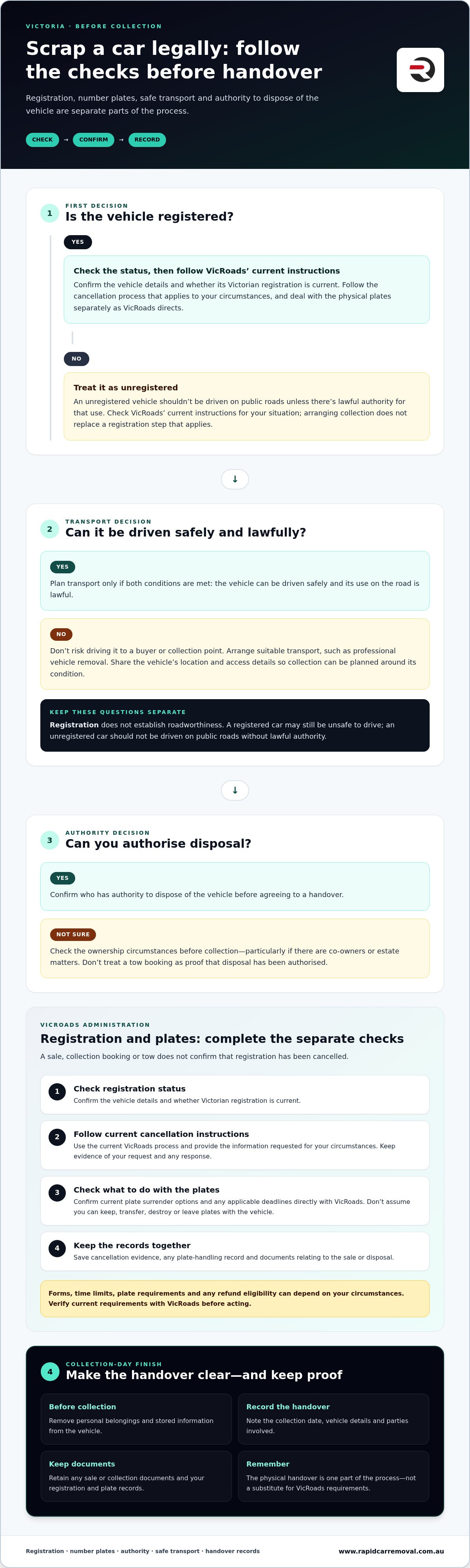
Follow this checklist to prepare a legal car handover
A tidy handover starts before the tow arrives. Confirm who can authorise disposal, complete the relevant VicRoads steps, agree on how the car will be collected and keep a written record of the transfer. This checklist helps identify missing details early and avoids relying on a single receipt to close every administrative task.
- Confirm authority to dispose. Make sure the person arranging collection has the owner’s authority. Resolve co-owner, lender or estate questions before agreeing to hand over the vehicle.
- Check the VicRoads requirements. Confirm the registration status and follow current instructions for registration cancellation and number plates. Keep evidence of any submission or response.
- Agree on the collection. Confirm the vehicle’s location, access and condition, including whether it starts, rolls or has accident damage. Share details that could affect safe loading.
- Prepare a handover record. Have the vehicle details ready and make sure the written record reflects the agreed transaction and collection date.
What should you have ready before collection?
Gather the registration and vehicle details you have, identification and any evidence showing you’re authorised to dispose of the car. You may not need every document in every situation, but relevant records can make the transfer clearer. Remove personal belongings, toll tags and loose items. Check compartments, the boot and storage areas carefully.
Clear personal information stored in the vehicle, too. If the car’s system allows it, remove paired phones and saved contacts, navigation destinations, garage codes and other personal data. Make the collection area accessible, and mention tight access, missing keys or damage when agreeing on pickup. Accurate details help avoid surprises on the day.
What records should you keep after handover?
Keep copies of any receipt, sale record or collection confirmation provided. For your own files, note the vehicle identification details, collection date and the names or business details of the people involved. Check that the paperwork matches what you agreed, including which vehicle was collected and whether the arrangement was a sale or disposal.
A receipt is useful evidence of the handover, but it doesn’t replace registration cancellation, plate requirements or any other VicRoads step that applies. Store those records separately so you can find them if you need to follow up. A clear paper trail can help establish when the car left your possession.
Don’t drive an unregistered or unsafe car to its destination. Arrange suitable transport instead. Rapid Car Removal provides free professional towing and removal across metropolitan Melbourne, and handles paperwork as part of its process. If your vehicle is ready for collection, arrange a car removal handover with the key details at hand. Completing these checks is a practical part of how to scrap a car legally in Victoria.
Arrange Melbourne car removal after completing the legal checks
Once you’ve confirmed your authority to dispose of the vehicle and dealt with the relevant VicRoads steps, organise its removal. Professional collection is a practical option if the car is unregistered, damaged or not roadworthy. It avoids the need to drive an unsafe vehicle and gives you a clear point to document the handover.
Rapid Car Removal provides cash offers and free professional towing and removal across metropolitan Melbourne. The team handles cars, vans, trucks and 4x4s in varied conditions, and its process includes paperwork handling. Collection makes the physical handover easier, but it doesn’t replace any registration, plate or other action you’re responsible for completing with VicRoads.
How can professional collection simplify disposal?
A car that won’t start, has accident damage or can’t be driven safely may need towing rather than a road trip. Describe the vehicle’s condition when arranging collection so transport can be planned appropriately. If you’re considering scrap disposal, Rapid Car Removal’s cash for scrap cars in Melbourne service provides a local way to discuss an unwanted vehicle and its collection.
Keep the administrative steps in view. A tow removes the vehicle from its location; it doesn’t automatically update the registration record or settle every ownership matter. Keep any sale or collection documents and complete the VicRoads requirements that apply to your circumstances.
What details help arrange a straightforward handover?
Have the vehicle’s location, make, model and identifying details ready, along with a clear description of its condition. Mention whether it starts, has keys, is accessible and has damage that could affect loading. Accurate details help set expectations and reduce avoidable delays on collection day. Have your authority to dispose and relevant documents ready for the agreed handover.
Before the vehicle leaves, remove personal belongings and stored information. Match the handover record to the agreed transaction, note the date and parties involved, and keep a copy of any receipt or collection confirmation provided.
Use this final check before confirming collection:
- Confirm the collection location and access arrangements.
- Describe the vehicle’s condition and any loading considerations.
- Have relevant ownership authority and vehicle details available.
- Keep a written record of the vehicle and handover date.
- Complete any remaining VicRoads steps separately from the collection.
That practical separation is central to how to scrap a car legally in Victoria: arrange transport for the vehicle, but don’t treat collection as a substitute for your administrative responsibilities. If you’re ready to discuss an unwanted, damaged or scrap vehicle, contact the Melbourne team to arrange the next steps.
Take the next step with confidence
Before moving on from the car, put your handover record and any VicRoads correspondence in one place. This gives you a clear reference if questions come up later. Keep the collection paperwork with your own notes, and follow any remaining steps that apply to your vehicle.
Understanding how to scrap a car legally in Victoria helps you move from an unwanted vehicle to a properly documented handover. Rapid Car Removal offers cash for unwanted vehicles in varied conditions, free professional towing and removal across metropolitan Melbourne, and paperwork handling as part of its vehicle-selling process. Collection takes care of transport, while you remain responsible for completing your VicRoads steps.
Ready to discuss your car and the next steps? Contact Rapid Car Removal to discuss your unwanted car. With the details and documents organised, you can move ahead with greater confidence and leave the vehicle behind safely.
Frequently Asked Questions
Do I need to cancel my car registration before scrapping it in Victoria?
Yes, if the car is registered and you’re disposing of it, follow VicRoads’ current cancellation process. A key part of how to scrap a car legally in Victoria is checking the registration record and completing the steps that apply to your vehicle. If the registration has already expired or the car is registered interstate, don’t assume the same process applies. Check VicRoads’ instructions for your situation.
Do I have to return my number plates when scrapping a car in Victoria?
Follow VicRoads’ current instructions for your plates, including whether to surrender them and how to do so. Don’t leave them on the vehicle or dispose of them based on assumptions. If the plates are personalised, or you want to keep them for another vehicle, check the process and any applicable time limits with VicRoads before collection. Keep any record you receive when handling the plates.
Can I drive an unregistered car to a scrap yard in Victoria?
No, not on public roads unless you have lawful authority to drive it there. Even a short trip to a scrap yard involves using the vehicle on the road. Arrange suitable transport instead, particularly if the car also has a mechanical fault or accident damage. For a vehicle in Melbourne that can’t be driven safely, professional towing can move it without requiring you to take it onto public roads.
What documents do I need to scrap a car in Victoria?
Have identification, the vehicle’s registration and identifying details, and evidence that you own it or have authority to arrange disposal. A registration certificate can be useful, but if you can’t find it, follow VicRoads’ guidance on alternative evidence for your circumstances. If there’s a co-owner or estate involved, have relevant written authority ready. Keep a copy of the sale or collection record with your own notes.
Can I scrap a car that is still under finance in Victoria?
Possibly, but contact your lender before agreeing to disposal. The lender may have a security interest in the vehicle, so ask what needs to happen before it can be sold or scrapped. A PPSR search can help identify a recorded security interest, but it doesn’t resolve the matter or replace the lender’s instructions. Don’t treat a vehicle handover as proof that finance obligations have been cleared.
What happens if my car has been written off in Victoria?
The type of write-off matters. A statutory write-off cannot be re-registered in Victoria, while a repairable write-off may only be eligible for registration after required checks. Confirm the vehicle’s recorded status and the current Victorian rules before deciding what can happen next. Don’t rely on visible damage alone to determine its classification. If you’re unsure, check the vehicle record with the relevant official authority before arranging a sale or disposal.
Can someone else scrap my car for me in Victoria?
Yes, if they have authority to act for you. Give them clear written permission and make sure they can provide any ownership or identity details needed for the handover. If the car is jointly owned, financed or part of an estate, resolve those interests first. In Melbourne, you can arrange vehicle collection through Rapid Car Removal, but the authorised owner or representative should still complete any VicRoads steps required for the vehicle.


