

Before looking for a buyer, confirm who has authority to act for the estate. If you’re asking “how to sell a deceased estate car victoria”, this is the key first step. You may be the executor or an administrator, but the documents and VicRoads steps depend on the estate’s circumstances.
Probate, registration, roadworthiness and a car that can’t be driven can all raise questions. This guide explains how to establish your role, check the relevant Victorian requirements and organise a sale. You’ll learn which estate documents may be needed, what to verify with VicRoads or an estate professional, and how the process may differ for a registered, unregistered or non-running vehicle.
Once you’re authorised and ready to sell, Rapid Car Removal offers free vehicle removal across Melbourne and handles the sale paperwork. First get the estate administration in order, then choose a practical way to move the car on.
Key Takeaways
- Confirm who is authorised to act for the estate before agreeing to sell or transfer the car. An executor, administrator and beneficiary have different roles.
- Use this guide to understand how to sell a deceased estate car victoria, including what to verify with VicRoads before proceeding.
- Compare selling, transferring the car to a beneficiary and cancelling its registration to identify the path that suits the estate and vehicle.
- Gather relevant estate and vehicle details, and clearly disclose damage, registration status, drivability and collection access.
- When the estate is ready to sell, arrange free same-day removal across Melbourne for an unwanted, damaged or non-running vehicle.
Selling a deceased estate car in Victoria: first confirm who can act
Before agreeing to sell or transfer a deceased person’s car, establish who is authorised to act for the estate. Being a family member, having the keys or being named in the will doesn’t, by itself, prove authority. In Victoria (Australia), the estate representative should confirm the relevant evidence and process with VicRoads before committing the estate to a sale.
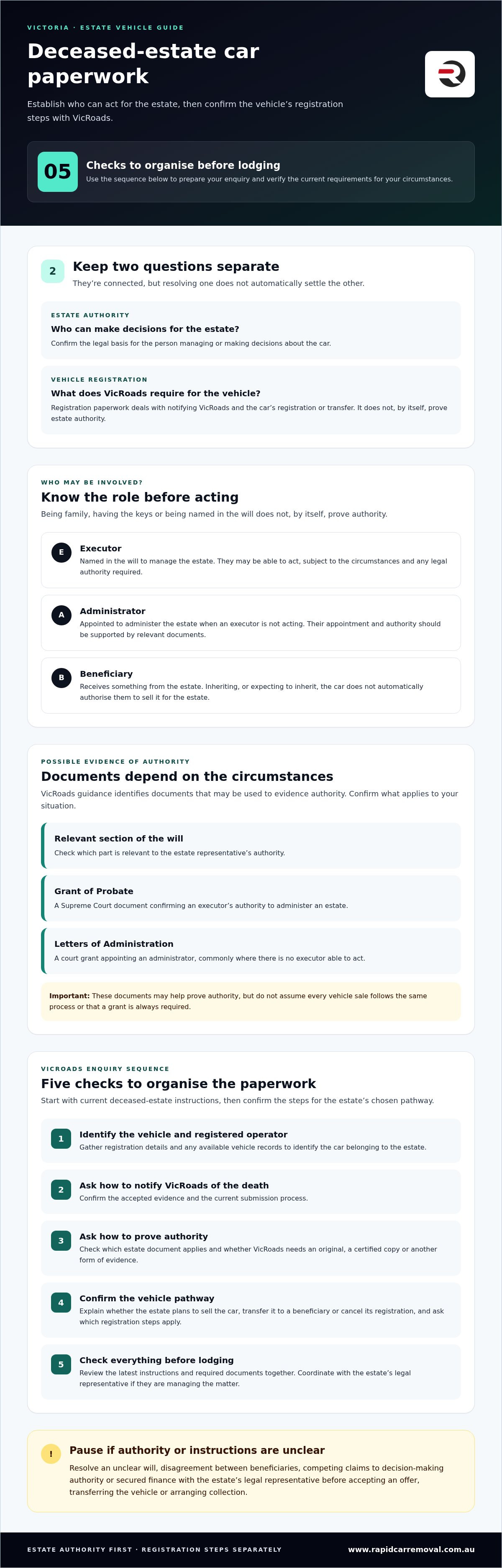
Keep two questions separate: who can make decisions for the estate, and what steps are needed to deal with the vehicle’s registration? They’re connected, but resolving one doesn’t automatically settle the other. This distinction is a useful first step in working out how to sell a deceased estate car victoria.
Estate authority is the legal basis for someone to manage or make decisions about estate property. Depending on the circumstances, that person may be an executor or an administrator.
Vehicle registration administration is the separate process of notifying VicRoads and dealing with the car’s registration or transfer. Registration paperwork alone doesn’t establish who can act for the estate.
Who can make decisions about a deceased person’s car?
Executor: A person named in the will to manage the estate. They may be able to act for the estate, subject to its circumstances and any legal authority required. Administrator: A person appointed to administer the estate when an executor isn’t acting, such as when there’s no suitable executor. Their appointment and authority should be supported by the relevant documents.
Beneficiary: A person or organisation that receives something from the estate. Being left the car, or expecting to inherit it, doesn’t automatically authorise a beneficiary to sell it for the estate. Confirm who can make that decision before arranging a buyer or signing paperwork.
When might probate or letters of administration matter?
A Grant of Probate is a Supreme Court document that confirms an executor’s authority to administer an estate. Letters of Administration are a court grant appointing an administrator, commonly where there’s no executor able to act. These documents may help prove authority, but don’t assume every vehicle sale follows the same process or that a grant is always required.
VicRoads guidance identifies estate documents that may be used to evidence authority, including the relevant section of a will, a Grant of Probate or Letters of Administration. Requirements depend on the circumstances and documents available. Confirm VicRoads’ current requirements for your situation, and check the estate’s instructions with its legal representative before proceeding.
Pause if the will is unclear, beneficiaries disagree, more than one person claims decision-making authority, or the car is subject to secured finance. Access to the vehicle or agreement from one family member doesn’t replace clear authority. Resolve these questions with the estate’s legal representative before accepting an offer, transferring the vehicle or arranging collection. This helps keep the sale aligned with the estate’s instructions.
Victorian deceased-estate car paperwork: what to verify with VicRoads
Work through the paperwork in order, using this as a planning aid rather than a replacement for current VicRoads instructions. Notifying VicRoads that the registered operator has died is separate from proving who can act for the estate. Keep both tasks in view, then confirm what applies to the vehicle’s next step: transfer, sale or registration cancellation.
In short: notify VicRoads of the death, establish what evidence it requires to recognise the estate representative, then follow the registration process for the chosen pathway. Check each step against VicRoads’ latest deceased-estate guidance before lodging documents.
How do you establish authority and notify VicRoads?
Start with VicRoads’ current deceased-estate instructions or pack. Check what it requires to record the death and which documents it accepts as proof of the representative’s authority. Depending on the circumstances, this evidence may include the relevant part of the will, a Grant of Probate or Letters of Administration. Confirm whether originals or certified copies are needed and how to submit them. A document accepted for one purpose may not satisfy every step.
Use this sequence to organise the enquiry:
- Identify the vehicle and registered operator. Gather the registration details and any available vehicle records so you can identify the car that belongs to the estate.
- Ask what is needed to notify VicRoads of the death. Confirm the accepted evidence and current submission process.
- Ask how to prove authority. Check which estate document applies to your role and whether VicRoads requires an original, a certified copy or another form of evidence.
- Confirm the vehicle pathway. Explain whether the estate plans to sell the car, transfer it to a beneficiary or cancel its registration, then ask which registration steps apply.
- Check before lodging. Review the latest instructions and required documents together. If the estate’s legal representative is managing the matter, coordinate with them before submitting anything.
What happens to registration when the car is sold or retained?
The next steps depend on the estate’s decision. Transferring a car to a beneficiary and selling it to another party are different transactions, so don’t assume they use the same registration documents or conditions. Ask VicRoads which transfer process applies, including whether vehicle-specific conditions must be met.
If the car won’t be kept or transferred, ask VicRoads how to cancel its registration and what to do with the number plates. Confirm whether a refund process applies and how it must be handled for the estate. Forms, submission methods and requirements can change, so use the current guidance rather than relying on an old checklist or advice from a different situation.
This sequence keeps the administration tied to the estate’s decision, not guesswork. It’s a practical foundation for how to sell a deceased estate car victoria, but VicRoads’ current requirements determine the exact registration steps. Once those are clear and the estate is authorised to proceed, you can discuss vehicle collection arrangements for a Melbourne sale.
Sell, transfer or cancel: compare the main options for an estate car
Once authority is established, decide what the estate should do with the vehicle. Selling, transferring it to a beneficiary and cancelling its registration serve different purposes. Consider the will, the estate’s instructions, the car’s condition and the practical needs of those involved, then confirm the relevant registration steps with VicRoads.
| Option | Purpose | Authority and registration questions | Vehicle condition |
|---|---|---|---|
| Sell | Convert the vehicle into an estate asset that can be dealt with under the estate’s instructions. | Confirm the representative can sell, then ask VicRoads what applies to the sale and registration pathway. | A running car may suit a private sale. A damaged, unregistered or non-running vehicle may have a removal option. |
| Transfer to a beneficiary | Allow a beneficiary to keep the car as part of the estate arrangements. | Confirm the estate’s decision and the documents and registration steps VicRoads requires for the transfer. | Consider whether the beneficiary can use or maintain the vehicle, and check any relevant transfer conditions. |
| Cancel registration and arrange disposal | End the vehicle’s registration where it won’t be kept or transferred. | Ask VicRoads how to cancel registration and manage the number plates. Cancellation doesn’t settle every estate obligation. | May suit a vehicle that won’t be used, including one that is not roadworthy. Arrange a practical disposal pathway separately. |
When might selling the vehicle suit the estate?
A sale may make sense if the estate needs to realise the car’s value, distribute assets or avoid ongoing upkeep. The authorised representative should follow the will, estate obligations and any required approval process before accepting an offer. A car doesn’t have to be running to explore a sale: Rapid Car Removal buys damaged, unregistered and non-running vehicles, with free removal across Melbourne. Its Cash for Cars Melbourne service is an option for an estate representative ready to sell.
When might a beneficiary transfer or registration cancellation be relevant?
A transfer may suit an estate where a beneficiary is meant to keep and use the vehicle. Confirm the arrangement follows the estate’s instructions, then check VicRoads’ current transfer requirements. Cancellation is different: it deals with registration, not who owns the car or whether all estate duties are complete. Ask VicRoads about cancellation and number-plate steps, then organise disposal if the vehicle won’t be retained.
Compare the intended outcome with the car’s condition and the estate’s instructions. For example, a beneficiary may want to keep a car that needs repairs, while the estate may prefer to sell a non-running vehicle rather than manage its storage. These are practical considerations, not rules about which option is legally preferable. The representative’s authority, estate circumstances and current VicRoads requirements determine what can be done and how.
Before selling a deceased-estate car in Victoria: use this practical checklist
Once the estate is ready to proceed, good preparation makes it easier to describe the car accurately and organise collection. Gather the details you have, note anything that needs follow-up, and be clear about the vehicle’s condition and access. This groundwork supports how to sell a deceased estate car victoria without treating every item below as a legal requirement.
Quotable checklist: Gather the estate authority evidence and vehicle records you have, note the car’s condition and access needs, then clear personal belongings before collection.
What car and estate information should the representative gather?
Keep the will or other authority evidence accessible in case it’s needed for administrative checks. Then make a simple vehicle record. Accurate details help identify the car being sold and any arrangements it needs.
- Vehicle details: Write down the make, model, registration number if available, and where the car is located.
- Condition: Note visible damage, missing parts or other issues that could affect handling.
- Running status: State clearly whether the car starts, moves under its own power or is non-running.
- Registration: Record whether it’s currently registered, unregistered or unknown.
- Keys and records: Locate any keys and available vehicle documents, such as service records. These can be useful, but don’t assume every record is mandatory.
Be clear about what you know. If the vehicle hasn’t been inspected recently, say so rather than guessing about its mechanical condition.
How should you handle finance, personal items and collection access?
Before agreeing to a sale, raise any loan or security interest with the estate representative. If finance may still be owing, have the representative clarify the position with the lender and resolve questions about the vehicle before committing the estate. Possession of the car or its paperwork doesn’t necessarily mean there’s no finance interest.
Check the cabin, boot and storage compartments for personal belongings. Remove items the family or estate needs to keep, then check again before handover. If keys are missing, mention this early so the collection plan can account for it.
Describe access clearly. Is the car in a garage, behind a gate, on a narrow driveway or parked where another vehicle blocks it? For a damaged or non-running car, explain whether it can roll and whether the area around it is clear. Accurate details help the collection team plan access and avoid last-minute surprises.
When you’re authorised to proceed and have the car details and access information ready, contact Rapid Car Removal about vehicle collection in Melbourne.
Sell a deceased-estate car in Melbourne with a straightforward collection
Once the estate representative has confirmed their authority, checked the relevant VicRoads requirements and prepared the vehicle details, arranging a sale can be more straightforward. Rapid Car Removal buys cars that are running, damaged, written-off, unregistered or non-running, with free removal across Melbourne.
What happens when an authorised representative arranges a sale?
The representative provides accurate information about the car, its condition, location and registration status, and confirms they’re authorised to act for the estate. Estate authority and VicRoads administration still need to be addressed as appropriate. Rapid Car Removal handles the seller paperwork and vehicle removal at no cost, making the practical sale and collection easier to organise.
Start with a no-obligation online quote. It takes 30 seconds, with cash offers up to $9,999. Share what you know about the car, including any damage, whether it runs and any access limits. Clear details help set expectations before collection.
Before accepting an offer, make sure the estate is ready to proceed and that questions about authority, beneficiaries or secured finance have been resolved. Keep relevant estate documents accessible for administrative checks. The sale and collection arrangements don’t replace the representative’s responsibility to follow the estate’s instructions or applicable VicRoads requirements.
How are collection and payment handled in Melbourne?
Rapid Car Removal offers free same-day pickup across Melbourne, with pickup within 60 minutes of offer acceptance. The service operates 7 days a week, including weekends and public holidays. Share the collection address and explain practical access details, especially if the car is damaged, blocked in or unable to move under its own power.
Payment options are cash, cheque or instant bank transfer via Osko®/PayID. A bank transfer lands within 60 seconds of acceptance. Agree on the offer and payment method before collection, and make sure the estate representative is ready to complete the sale.
- Give accurate vehicle and location details when requesting a quote.
- Confirm the representative’s authority and relevant estate decisions before accepting an offer.
- Describe the vehicle’s condition and collection access clearly.
- Choose the payment method and coordinate collection once the estate is ready.
If you’re authorised to sell and have completed the estate’s VicRoads checks, contact Rapid Car Removal about the estate vehicle.
Take the next step when the estate is ready
Once the estate’s decision is clear, move forward without rushing the parts that need careful attention. Note any outstanding questions, make sure the person handling the sale has authority to proceed, and choose a collection plan that suits the vehicle and its location.
Understanding how to sell a deceased estate car victoria is about more than finding a buyer. An organised handover can help everyone involved navigate the process at an already difficult time. If the estate is ready to sell in Melbourne, Rapid Car Removal can help with the vehicle sale and collection.
When you’re ready to arrange a sale, contact Rapid Car Removal about the estate vehicle.
Frequently Asked Questions
Do I need probate to sell a deceased estate car in Victoria?
Not in every case, but probate may be needed to establish an executor’s authority, particularly where the car was solely owned by the deceased. If you’re working out how to sell a deceased estate car victoria, don’t assume the same document requirements apply to every estate. VicRoads may accept different evidence depending on the circumstances, so confirm its requirements and discuss the estate’s position with its legal representative.
Can an executor sell a deceased person’s car before transferring it into their own name?
An executor may be able to sell the car on behalf of the estate without first transferring it into their personal name, provided they have the required authority and follow the applicable process. They’re acting as the estate’s representative, not selling the vehicle as its personal owner. Before agreeing to a sale, confirm the executor’s authority and ask VicRoads which registration steps apply.
Can I sell a deceased estate car without a roadworthy certificate in Victoria?
It depends on the sale pathway. A roadworthy certificate is typically required to transfer a vehicle to a new owner unless an exemption applies, so check the current rules for the specific transaction. That’s separate from arranging removal: Rapid Car Removal doesn’t require a roadworthy certificate to remove an unregistered vehicle. Removal requirements don’t establish that a registration transfer can proceed without a certificate.
What documents may VicRoads ask for when dealing with a deceased person’s car?
VicRoads may ask for evidence of the death and documents showing who can act for the estate. Authority evidence may include the relevant section of the will, a Grant of Probate or Letters of Administration. The documents required, whether originals or certified copies are needed, and how to submit them can depend on your circumstances. Check VicRoads’ current deceased-estate instructions before lodging paperwork.
Can a beneficiary sell the car if they are named in the will?
Not automatically. Being named to receive the car makes someone a beneficiary, but doesn’t by itself establish that they can sell estate property. The executor or appointed administrator generally manages decisions for the estate, subject to their authority and the estate’s instructions. If the will says the beneficiary should receive the vehicle, clarify whether the estate intends to transfer it to them or sell it through its representative.
What if the deceased estate car still has finance owing?
Pause before agreeing to sell and ask the estate representative to clarify the finance with the lender. A loan or security interest can affect what the estate may do with the vehicle, so don’t assume the debt has been cleared. If the amount owing, ownership or lender’s interest is disputed, have the estate’s legal representative help resolve the issue before making collection arrangements.
Can I arrange collection if the deceased estate car is unregistered or not running?
Yes. Rapid Car Removal buys unregistered and non-running vehicles, and a roadworthy certificate isn’t required to remove an unregistered car. The estate representative should still be authorised to proceed and follow relevant VicRoads requirements. When arranging collection in Melbourne, give accurate details about the vehicle’s condition, location and access, including whether it’s blocked in or unable to roll.


