

A failed private sale doesn’t mean your old car has no next step. If you’re deciding what to do with an old car that won’t sell, compare selling it as-is with removal or recycling. Consider its condition, likely buyer interest and how it can be collected. If the car is unregistered, be upfront about its faults and agree on safe transport before completing the sale.
It’s frustrating to have a car taking up space when buyers keep passing it over. The practical choice depends on whether it has usable parts, whether it can be driven and whether preparing it for another sale is worth the effort.
This guide explains what to consider when selling an unregistered car in Australia, what affects a complete vehicle’s value, and how private sale, trade-in, donation, removal and recycling compare. You’ll also learn what to expect from pickup, towing and payment, so you can choose a practical next step for your car in Melbourne.
Key Takeaways
- An unregistered car can still be sold, but disclose known problems and plan how it will be transported.
- A complete vehicle’s value depends on its condition, usable parts and demand, so describe it accurately when seeking a quote.
- Compare private sale, trade-in, donation, removal and recycling based on the time, effort and outcome that matter most to you.
- Before arranging pickup, agree on the sale terms, payment method and vehicle handover details.
- Recycling can recover useful materials: roughly 85% of a car by weight can be recycled.
Can I sell an unregistered car in Australia?
Yes, you can sell an unregistered car, but registration and transport requirements vary by state or territory. In Victoria, you can sell one privately or to a dealer. Tell buyers it isn’t registered before agreeing on a price, and decide how it will be moved from your property.
Describe the car’s condition accurately. List known damage, missing parts and mechanical problems rather than suggesting it is roadworthy when it isn’t. For example, disclose an engine fault, accident damage or a failed component, and share any repair records you have. Clear details help buyers assess the vehicle and avoid misunderstandings at handover.
To cancel a car’s registration, contact VicRoads and follow their process. In Victoria, owners may be eligible for a partial refund of unused registration after cancellation. Eligibility depends on the applicable rules.
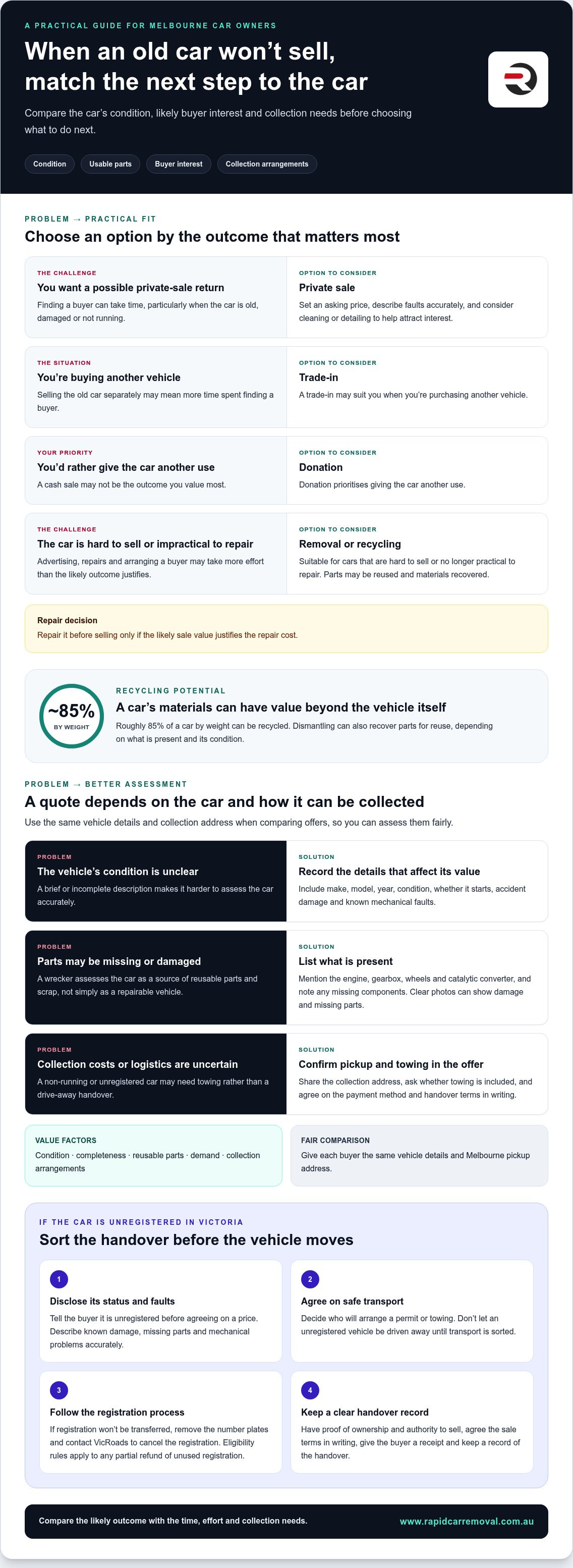
Victoria has specific steps for selling an unregistered vehicle. If its registration won’t be transferred, remove the number plates and cancel the registration. Give the buyer a receipt, and agree who will arrange a permit or towing. Don’t let an unregistered vehicle be driven away until its transport arrangements are sorted.
A car that won’t start or has engine trouble may still interest someone looking for parts or a repair project. Describe what happens when you turn the key, whether the engine starts and which parts are damaged or missing. A dismantler like Rapid Car Removal may assess it for reusable components, while a private buyer may see value in repairing it. Completeness and condition affect its appeal.
Before handing over an unwanted, damaged or scrap vehicle, work through these practical steps:
- Gather proof that you own the vehicle and have authority to sell it.
- Write down its make, model, year, condition and any known faults.
- Photograph damage and missing parts so buyers can assess the car accurately.
- Agree in writing on the sale price and who will arrange transport.
- Remove personal belongings and keep a record of the handover.
When selling a truck for dismantling, consider its size and collection needs as well as its condition. A non-running truck, for instance, may need towing rather than a drive-away handover. Describe it clearly so the buyer understands its condition and how it can be collected.
How much do you offer for complete vehicles?
A complete vehicle can still have value even if it’s old, damaged or no longer running. Its condition, reusable parts and collection arrangements all shape the quote. Describe the car accurately before comparing cash offers.
Cash Quotes and Offers
Cash-for-cars quotes assess the vehicle as a whole, including its make, model, age, condition and completeness. Tell the buyer whether it starts, whether major components are missing, and if it has accident damage. An instant cash offer from a car removal service can take under 2 minutes. Use the same details for each quote to make comparisons fair.
Ask what the offer includes, particularly collection and towing. Rapid Car Removal provides free towing and removal across Melbourne, with no charge for paperwork. Confirm the agreed amount and handover terms in writing. An offer reflects the vehicle’s condition, parts and collection needs, so provide accurate details when requesting a quote.
Wrecker Payments for Old Cars
Wreckers assess an old car differently from private buyers. They consider whether parts can be reused, how complete the vehicle is and the value of recoverable materials. A complete car with sought-after components may be more useful than a stripped shell, while major damage can reduce what can be salvaged.
Give an accurate description before accepting an offer. Note whether the engine, gearbox, wheels and catalytic converter are present, and disclose known mechanical faults. A wrecker can then assess the car as a source of parts or scrap rather than assuming it can be repaired and resold.
Recycling, Removal and Location
Dismantling can recover parts for reuse and separate materials for recycling. Roughly 85% of a car by weight can be recycled. Ask how the vehicle will be collected and processed, especially if it can’t be driven. A car removal service can arrange towing without requiring you to pay for a tow truck.
Collection location matters. For a pickup in Melbourne, provide the Melbourne address and describe the vehicle’s actual condition. Confirm that the collection arrangements are included in the offer, and compare quotes using the same address and vehicle details.
Prepare before requesting a quote: record the make and model, list missing parts, describe damage, and take clear photos. These details help buyers assess a complete vehicle without relying on a brief description. If you’re weighing up an offer against collection arrangements, discuss your vehicle’s quote and pickup details.
Private sale, trade-in, donation, car removal and recycling compared
Choose an option by weighing the car’s condition against the time and effort involved. Repair it before selling only if the likely sale value justifies the repair cost.
Comparing Sale and Removal Options
A private sale lets you set the asking price, but finding a buyer can take time. Cleaning and detailing may help attract interest. A trade-in may suit you if you’re buying another vehicle, while donation prioritises giving the car another use. Removal and recycling suit cars that are hard to sell or no longer practical to repair.
Compare the outcome you value most: a possible private-sale return, less effort, or reuse of parts and materials. A disposal firm sale avoids advertising and repair costs. Recycling also recovers materials: roughly 85% of a car by weight can be recycled.
Wrecker and Private Buyer Quotes
Ask private buyers and wreckers for quotes using the same details, including the car’s condition, missing parts and known faults. A private buyer may value a repair project or particular component; a wrecker assesses reusable parts and recyclable material. Compare offers and collection arrangements, then put the agreed sale price in writing.
Negotiation can be part of either discussion. Keep the terms clear, including who arranges collection and how payment will be made. A higher offer may not be the better option if it requires extra repairs, advertising or transport that you must organise.
For a private sale, prepare the car and listing before setting an asking price. Clean it, photograph the interior and exterior, and describe faults plainly. Include the make, model, year, registration status and service history if available. For example, say the engine doesn’t start instead of describing the car simply as needing attention.
Make the handover clear and keep a record of the sale. Write down the agreed price, vehicle details and collection arrangements. Rapid Car Removal handles the paperwork for your sale. Keep a copy of the signed documents and note when the keys and vehicle change hands.
Use these checks to compare the options:
- Estimate repair needs before paying for work to prepare a sale.
- Compare private-buyer and wrecker offers against the same vehicle details.
- Include advertising, repairs and collection effort in your comparison.
- Choose donation or recycling if reuse matters more than a private sale.
If buyers keep passing over the car, review the asking price, listing details and repair needs. Then compare a fresh private-buyer offer with a wrecker’s assessment, and choose the option that best fits the vehicle and your priorities.
Car removal pickup, towing and payment
Before arranging collection, agree on the pickup location, towing arrangements and payment terms. A typical car-removal transaction takes about 20-30 minutes, so prepare the vehicle and paperwork beforehand.
Pickup Arrangements
Give the collector the vehicle’s exact location and explain any access issues, such as a narrow driveway or underground parking. Say whether the car rolls, steers and is accessible to a tow truck. Remove personal belongings before pickup, and have the keys and ownership documents ready. Confirm the sale terms and payment method before the vehicle leaves.
Towing the Vehicle
A car that won’t start or is unregistered may need towing rather than drive-away collection. Rapid Car Removal provides free towing and removal. Explain any access limits, such as a blocked wheel or low-clearance garage, so the collection can be planned around the vehicle’s position.
Use a simple handover checklist to keep collection organised:
- Confirm the pickup address and where the car is parked.
- Tell the collector if it won’t start, roll or steer.
- Remove personal items and check the boot and glovebox.
- Have the keys and relevant paperwork ready.
- Keep a record of the agreed sale terms and handover.
Paperwork matters as much as transport. Rapid Car Removal handles the paperwork for your sale. Read each document before signing and make sure it reflects the agreed vehicle details and sale terms. Keep a copy for your records. If a document differs from your agreement, pause the handover until the wording is resolved.
Agree on payment before collection. Rapid Car Removal pays instantly by cash, cheque or bank transfer through Osko®/PayID. Confirm the method and make sure payment has been received before handing over the keys or signing a receipt that records payment. Don’t pay a wrecker upfront; sellers shouldn’t be asked to pay for removal or towing.
Leave space for the tow truck to approach and load the vehicle. For example, move another car from in front of a non-running sedan and clear loose items from around it. If the vehicle is in a shared car park, arrange access with the property manager before pickup. These steps help the collector load it safely.
Be present during handover so you can match the paperwork to the vehicle and confirm payment. Record the collection time, sale terms and transfer of the keys to close the transaction clearly.
How much do car wreckers pay for old cars in Australia?
A car wrecker’s offer depends on whether the vehicle has reusable parts or is worth mainly as scrap. Completeness, condition and collection requirements all matter. Deciding what to do with an old car that won't sell starts with identifying what remains usable, not assuming age alone determines its value.
A scrap-only car is assessed differently from one with components suitable for reuse. An intact engine, gearbox, doors or wheels may make a complete vehicle more useful for dismantling. Severe damage or missing parts can reduce what’s available. Describe these details accurately when requesting an assessment.
An offer depends on the vehicle and is provided after you request a quote. Relevant factors include its make and model, condition, reusable parts, missing components and collection needs. Accurate details help a wrecker assess the car as it actually is.
Prepare a clear inventory before requesting an offer. Note whether the car starts, list known faults and identify missing components. Photos of the exterior, interior and engine bay can show damage and which parts remain. For example, mentioning a damaged bonnet and intact gearbox gives a more useful picture than simply calling the vehicle scrap.
- List faults such as engine trouble or accident damage.
- Identify missing components, including wheels or doors.
- Describe whether the car starts and can be moved.
- Explain where it’s parked and any access limits.
Compare wrecker offers using the same information for each assessment. Consider the sale terms and collection arrangements alongside the amount, and put the agreed price and handover details in writing. If a wrecker assessed the car without knowing about missing parts, update the details before comparing its offer with another.
A complete car with a damaged engine may still contain parts a dismantler can reuse. A stripped vehicle with extensive damage may have fewer reusable components and be assessed mainly for its materials. That’s why cars of a similar age can receive different assessments.
Before removing parts yourself, consider how it could affect the vehicle’s overall value. A component you plan to keep may be included in a wrecker’s assessment. If you’re still deciding what to do with an old car that won't sell, compare a parts assessment with the effort of selling components separately. Factor in storage, listing and handover arrangements.
For an assessment of an old vehicle, request a car quote with its condition and collection details.
Rapid Car Removal: Cash for Cars
Rapid Car Removal offers Cash for Cars when a private listing hasn’t found a buyer or the vehicle needs removal. Its Free Car Removal can suit an unwanted car that’s difficult to move, while Scrap Truck Removal and Cash for 4x4s address other vehicle types.
Share the vehicle’s make, model, condition and collection location when requesting a quote. Include whether it starts, has accident damage or is missing parts. These details give a clearer picture and help you weigh the offer against your other options.
If removal suits your situation, contact Rapid Car Removal to discuss your vehicle.
Choose the next step that clears the way
Deciding what to do with an old car that won't sell starts with a practical question: do you want to keep trying to find a private buyer, or move on from the vehicle? Set a point at which you’ll stop relisting it, then choose an option that fits your time, the car’s condition and your plans for the space.
Before you act, gather the vehicle details and decide what matters most. You might prioritise another sale attempt or prefer a straightforward handover that clears the car from your property. A clear choice can save time spent maintaining a vehicle you no longer need.
Rapid Car Removal can be a next step if you’re ready to discuss a vehicle sale or removal. Share the car’s condition and collection details so the conversation can focus on your situation. Contact Rapid Car Removal to discuss what happens next, and take the next step when you’re ready.
Frequently Asked Questions
Do you buy cars with critical engine issues?
Yes. Rapid Car Removal buys vehicles with major engine problems, including cars that won’t start. Describe the symptoms, such as overheating, unusual knocking or loss of power, and mention any repairs already attempted. Explain whether the car can roll and where it’s parked. Clear details help the team understand the vehicle before discussing a quote and collection.
How does it work?
Share your vehicle’s make, model, condition and location to request a quote. If the offer suits you, agree on collection and handover. Tell the team if the car is in a locked garage or has missing keys. Have proof of ownership and relevant vehicle paperwork ready, then read the sale documents before signing.
How do I get rid of my old car?
Choose between another private sale attempt, donation, dismantling or removal. If you want the car gone without preparing another listing, request a removal quote and describe its faults and access. Before collection, clear personal belongings from the boot, glovebox and cabin. Keep items such as toll tags and parking permits, and make a note of anything left in the vehicle.
How long does it take to get paid and have a vehicle removed?
In Melbourne, Rapid Car Removal states that payment is instant, with cash, cheque or bank transfer via Osko or PayID. It also states that pickup is within 60 minutes of offer acceptance. Make sure the vehicle’s location and access arrangements are clear when organising collection. If you choose bank transfer, the stated payment method uses PayID rather than requiring BSB or account numbers.
How much is my scrap car worth in Australia?
A scrap car’s value depends on its materials, completeness, condition and reusable parts. A vehicle with an intact engine or gearbox may be assessed differently from a stripped shell. For a useful assessment, provide the make and model, list missing components, describe damage and share clear photos. Compare offers using the same vehicle details and collection address.
How do I sell an unwanted old car for parts in Australia?
Contact an automotive dismantler and describe the car as a parts vehicle. List usable components, such as doors, wheels or interior fittings, alongside faults and missing items. You can offer the whole car for dismantling instead of removing parts yourself. Before handing over the keys, put the sale terms in writing, including the vehicle being sold and whether collection is included.
How do I get a free car removal quote from an Australian wrecker?
For a Melbourne vehicle, request a quote from Rapid Car Removal and provide its make, model, condition and collection location. Include details that may affect loading, such as a blocked driveway or a car that won’t roll. The business states that its online quote request takes 30 seconds. Use accurate details so the quote relates to the vehicle you want removed.
Can I donate an old car to charity in Australia, and is it tax deductible?
You can donate an old car if a charity accepts it and can arrange handover or collection. A donation isn’t automatically tax-deductible. Before claiming a deduction, establish whether it qualifies and keep the charity’s receipt and related records. If the car has finance owing or unclear ownership, resolve those matters before transferring it.


