

Most Melbourne car owners leave hundreds of dollars on the table because they're worried about shonky tow truck drivers or confusing VicRoads paperwork. You've likely looked at that rusted ute or non-running sedan and wondered if it's even worth the hassle of moving. It's a common frustration. Nobody wants to deal with unreliable buyers who fail to show up or offer pennies for a vehicle that's just taking up valuable driveway space. You need a straightforward process that respects your time and your property.
Learn how to turn your scrap vehicles for cash today without the typical headaches or legal uncertainty. This guide explains how to handle Melbourne's 2026 car disposal requirements while ensuring you get a fair price and peace of mind through ethical recycling. We'll walk you through the latest VicRoads registration cancellation rules, current scrap market trends, and the simple steps to arrange a free professional removal from your property. Clear your space and get a fast payment via secure EFT in one decisive move.
Key Takeaways
- Identify the exact moment your car becomes a scrap vehicle by comparing rising repair costs against its current market value.
- Maximise the return on scrap vehicles for cash by understanding how vehicle weight and global metal market trends influence your local Melbourne quote.
- Navigate VicRoads requirements with ease by learning the correct 2026 procedures for cancelling registration and handling your number plates.
- Streamline the removal process with a practical 5-step checklist to ensure your personal belongings are safe before the tow truck arrives.
- Avoid the frustration of private sales and the need for a Roadworthy Certificate by choosing a professional disposal service that prioritises speed and efficiency.
Understanding Scrap Vehicles: When is Your Car Ready for the Recycler?
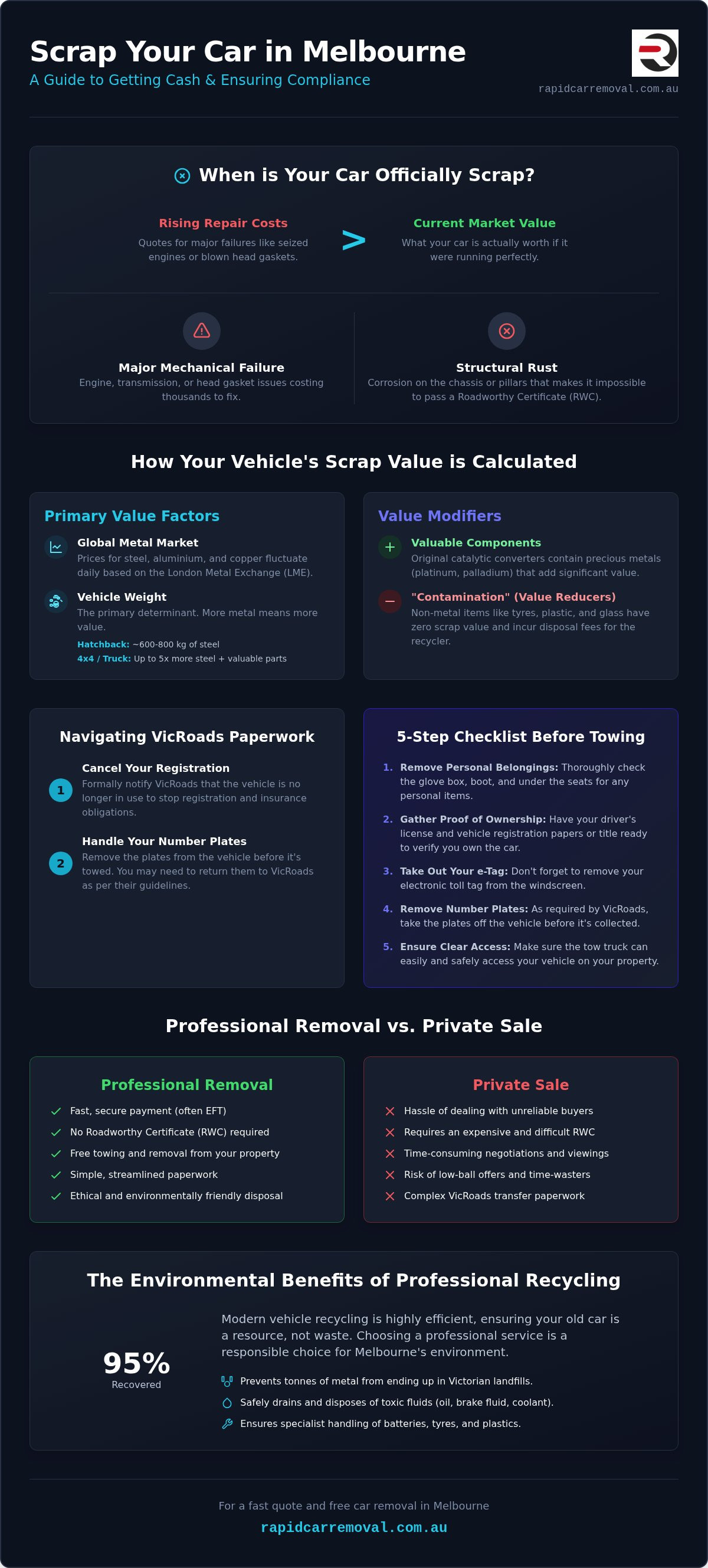
Determining if your vehicle has reached the end of its road is usually a matter of simple arithmetic. A vehicle is officially considered "scrap" when the cost of necessary repairs exceeds its fair market value. For many Melbourne drivers, this realisation happens at the mechanic's workshop after receiving a quote for a blown head gasket, a seized engine, or a failed transmission. These major mechanical failures often cost thousands of dollars to rectify, making the car a financial liability rather than an asset.
Structural rust is another definitive sign. Once corrosion compromises the chassis or safety pillars, the vehicle will fail a Roadworthy Certificate (RWC) inspection; this makes a private sale nearly impossible. Instead of letting a dead car occupy space, many owners choose to trade their scrap vehicles for cash to clear the driveway and recoup some value immediately. An "End-of-Life" (ELV) vehicle is better off in a recycling facility where its materials can be repurposed, rather than sitting idle. Leaving a junk car on your property isn't just an eyesore. It poses environmental risks. Over time, seals perish and hoses crack, leading to hazardous fluid leaks like engine oil, brake fluid, and coolant seeping into the soil.
Scrap vs. Damaged: What's the Difference?
The distinction between a damaged car and a scrap one often comes down to salvageable parts. A damaged vehicle might have been in a minor accident but still contains high-value components like a working gearbox, healthy interior trim, or intact electronic modules. Professional wreckers look for these parts when providing a quote. In contrast, a scrap vehicle is valued primarily for its raw material weight. Whether it's a rusted shell, a burnt-out ute, or an aging commercial truck, the focus is on the ferrous and non-ferrous metal content. When you request a quote, experts assess whether your car can be dismantled for parts or if it's destined for the metal baler.
The Environmental Impact of Proper Disposal
Choosing professional disposal is a win for the local Melbourne environment. The modern vehicle recycling process is incredibly efficient; roughly 95% of a car's materials are recovered or repurposed. This prevents tonnes of metal from ending up in Victorian landfills. Professional wreckers are equipped to safely drain and dispose of toxic fluids that would otherwise contaminate local waterways or soil. By opting to sell your scrap vehicles for cash, you ensure that lead-acid batteries, tyres, and plastics are handled by specialists who keep our suburbs clean and sustainable. It's the most responsible way to handle a vehicle that's no longer fit for the road.
How Scrap Value is Calculated: Metal Weight vs. Salvageable Parts
Understanding how wreckers arrive at a figure helps you avoid low-ball offers. The foundation of any quote for scrap vehicles for cash is the global commodities market. Local Melbourne prices fluctuate based on the London Metal Exchange (LME), which dictates the daily rate for steel, aluminium, and copper. This connection to global trade is supported by established exporters like Australian Recycling & Equipment, who help ensure that recovered metals from across Australia are efficiently processed and supplied to international markets. It's a pragmatic system based on real-time supply and demand for raw materials.
Weight is the most predictable factor in this calculation. A standard hatchback contains roughly 600kg to 800kg of steel; a heavy commercial truck might contain five times that amount. Beyond raw weight, certain components hold hidden value. The catalytic converter is a prime example. These parts contain precious metals like platinum, palladium, and rhodium. Wreckers often pay a premium for vehicles with original converters still intact because of these materials. Conversely, "contamination" reduces your payout. Tyres, plastic dashboards, and glass have zero scrap value. Recyclers actually pay disposal fees to get rid of these non-metal items, which is why a stripped shell often fetches a lower price than a complete car.
Why 4x4s and Trucks Fetch Higher Cash Offers
Larger vehicles are consistently the most profitable to scrap in the Melbourne market. This is partly due to the sheer volume of high-grade steel found in their reinforced chassis and heavy-duty bodies. Additionally, there is a high demand for second-hand commercial parts across Australia. Engines, transmissions, and suspension components from popular 4x4 models often find a second life in other working vehicles. This salvage potential allows wreckers to offer a significantly better price than they would for a generic sedan. You can learn more about these specifics in our guide on Scrap Truck Removal Melbourne: 5 Common Myths Debunked.
Factors That Could Lower Your Quote
Several variables can pull a quote down unexpectedly. If major components like the engine, gearbox, or battery are missing, the vehicle's weight and salvage value drop significantly. Fire damage is another major hurdle. Intense heat alters the metal's molecular structure, turning it into lower-grade "burnt steel" which fetches less at the foundry. Finally, logistics play a role in the final figure. If your car is stuck in a boggy paddock or buried in a tight underground car park, the extra time and specialised equipment needed for recovery will be factored into the offer. If you want a firm figure without the guesswork, you can get an instant quote over the phone to see exactly what your vehicle is worth in today's market.
The Legal Side: VicRoads Paperwork and Registration Cancellation
Handling the legalities of car disposal in Victoria doesn't have to be a headache. The most critical step is ensuring you aren't legally tied to the vehicle once it leaves your property. When you trade scrap vehicles for cash, you must lodge a Notice of Disposal through your myVicRoads account immediately. This simple digital step protects you from future toll road fines, speeding tickets, or parking infringements. If you've lost your original registration papers, don't panic. A reputable wrecker can verify ownership using your Driver's Licence and the vehicle's unique VIN or engine number. This ensures the transaction is transparent and legally binding.
Failing to cancel your registration correctly can lead to unexpected costs. Even if the car is no longer running, the registration remains active in the VicRoads database until you take action. By finalising the paperwork before the tow truck arrives, you maintain complete control over the process. This proactive approach is the hallmark of a professional disposal, shifting the burden of the logistics away from you while keeping your legal record clean.
Step-by-Step: Removing Your Number Plates
Removing your number plates is a non-negotiable part of the process. You are legally responsible for these plates until they are handed back to VicRoads or destroyed. Currently, the quickest method is to cancel your registration online via a myVicRoads account. You will need to provide a photo of the plates cut in half or submit a statutory declaration if they were stolen or lost. While there is a current processing fee of A$22.10, you are often eligible for a pro-rata refund on the remaining months of your registration and a portion of the TAC fee. If you have personalised plates, ensure you specify that you are "retaining" them for future use so they aren't cancelled permanently.
ID Requirements for Cash Payments
Victorian law is very specific about how scrap metal transactions occur. It is actually illegal for any wrecker or recycler to pay physical cash for scrap metal. All payments must be made via Electronic Funds Transfer (EFT) to create a clear paper trail. To comply with these anti-theft regulations, you must provide a valid Australian photo ID, such as your Driver's Licence. This is a standard requirement for anyone looking to exchange scrap vehicles for cash in Melbourne. Avoid any operator offering "under-the-table" cash without asking for ID. These fly-by-night collectors often skip the proper disposal paperwork, leaving you legally vulnerable if the car is ever dumped or involved in an incident.
Preparing for the Tow: 5 Steps Before the Wreckers Arrive
Efficiency is the priority when you're ready to trade scrap vehicles for cash. A little preparation ensures the tow truck driver can winch your car and be gone in minutes. Start by clearing out the 'glovebox' and 'boot' completely. It's incredibly common for people to leave behind E-tags, high-quality sunglasses, or even important service records. Check under the seats and in the centre console for loose coins or personal electronics. These small items are easily overlooked but difficult to recover once the car reaches the crushing plant.
Next, check the status of the spare tyre and jack. Generally, these should remain with the vehicle as they contribute to the overall scrap weight. However, if you have a brand-new tyre on a matching alloy rim, you might choose to swap it for a bald one before the towie arrives. Regarding fuel, never attempt to siphon petrol or diesel yourself. It's a significant fire risk and highly dangerous without professional equipment. Simply leave whatever is in the tank; wreckers have specialised systems to drain fluids safely at the yard. Finally, move any other cars out of the way to create a clear path. A tilt-tray requires plenty of room to manoeuvre, so clearing the driveway saves time and prevents property damage.
Before the driver winches the car up, take a few clear photos of the vehicle's condition from all angles. This provides a digital record of the car before it leaves your property. If you're ready to clear your driveway today, book your free car removal now and get the process started.
The 'E-Tag' and Toll Account Check
Remove your CityLink or EastLink tags from the windscreen immediately so you don't get charged for the tow truck's travel on the M1 or EastLink. After the car is gone, log into your account online to de-register the vehicle's number plates and close the link to that specific VIN. This is the most common mistake Melbourne car sellers make, often leading to frustrating toll invoices for a car they no longer own.
Driveway and Access Logistics
Tilt-trays and cranes require significant overhead clearance to operate safely. Ensure there are no low-hanging tree branches or power lines that could obstruct the winch or the bed of the truck. If the car has flat tyres or is missing wheels entirely, mention this when booking so the driver can bring the right dollies or specialised equipment. If the truck needs to block a narrow suburban street briefly, a quick heads-up to your neighbours helps maintain local goodwill while you finalise the exchange of scrap vehicles for cash. Clear communication ensures the entire removal takes less than twenty minutes from arrival to departure.
Getting a Rapid Result: Why Professional Removal Beats a Private Sale
Selling a non-running vehicle on the private market is rarely worth the stress. In Victoria, a private sale typically requires a Roadworthy Certificate (RWC). If your car has major mechanical issues or structural rust, obtaining an RWC is a financial impossibility. Choosing to trade scrap vehicles for cash removes this legal hurdle entirely. You don't need to spend a cent on repairs or inspections. The transaction is handled as a disposal. This allows you to bypass the complexities of the used car market while still recouping value from the asset.
Beyond the paperwork, professional removal saves you from the frustration of 'tyre kickers'. Anyone who has listed a car on Facebook Marketplace knows the routine. You deal with endless messages, low-ball offers, and buyers who simply never show up. A professional service operates with a 'no-fuss' philosophy. You receive a firm quote over the phone. The car is often gone within 24 hours. This speed is unmatched by private listings. Listings can linger for weeks without a serious lead. For a detailed breakdown of how this compares to other methods, read our guide on Cash for Unwanted Cars: Comparing Your Best Disposal Options in Melbourne.
Why Rapid Car Removal is the Local Choice
We provide comprehensive Melbourne-wide coverage. Our team reaches every suburb from the high-density CBD to the furthest outer reaches. We function as an 'Efficient Local Expert'. We focus on logistical mastery rather than sales talk. Our fleet is purpose-built to handle more than just standard sedans. We utilise heavy-duty tilt-trays specifically equipped for scrap vehicles for cash transactions involving accident-damaged cars and oversized 4x4s. No matter the condition or location of your vehicle, we have the equipment to retrieve it safely and quickly.
Ready to Clear Your Driveway?
Turning your unwanted car or truck into money is a three-step process. It starts with a simple phone call to receive your instant quote. Once you accept, we coordinate a time that suits your schedule for a free removal. There are no hidden fees. There is no last-minute haggling. We handle the heavy lifting and the VicRoads requirements so you don't have to. Experience the relief of a clear driveway and a secure EFT payment. Get your instant cash quote from Rapid Car Removal today and see how easy professional disposal can be.
Take the Simple Path to a Clear Driveway
Disposing of an unwanted car in Melbourne doesn't need to be a logistical nightmare. By choosing a professional service, you bypass the stress of 'tyre kickers' and the impossible task of securing a Roadworthy Certificate for a non-runner. You now understand how global metal prices influence your quote and why handling your VicRoads registration cancellation correctly is vital to avoid future fines. Trading scrap vehicles for cash is the most efficient way to reclaim your space while ensuring your car is recycled ethically.
We make the process seamless with free Melbourne-wide towing and instant cash payments on the spot. Our team handles all the VicRoads paperwork for you; this gives you total peace of mind from start to finish. Stop letting that old ute or sedan take up valuable room on your property. Take the decisive step toward a cleaner driveway and a faster resolution today.
Get an Instant Cash Quote for Your Scrap Vehicle
Clear your space and get paid in one decisive move. It's the simplest path from a problem to a resolution.
Frequently Asked Questions
Do I need a Roadworthy Certificate (RWC) to sell my car for scrap in Melbourne?
No, you do not need an RWC to dispose of a vehicle for scrap. Because the car is being sold for recycling rather than for use on the road, the standard Victorian requirement for a certificate is waived. This allows you to sell a damaged or non-running vehicle without spending thousands on repairs just to pass an inspection.
How much cash can I realistically get for a scrap vehicle in 2026?
The value of your vehicle is primarily determined by its total weight and the current market price for steel, aluminium, and copper. Prices fluctuate daily based on global demand, but heavier vehicles like 4x4s and commercial trucks consistently fetch higher returns than small hatchbacks. We provide precise quotes over the phone based on your car's specific make and condition.
Will you still pick up my car if it has no wheels or is stuck in the mud?
Yes, we can retrieve vehicles in almost any physical state or location. Our fleet is equipped with heavy-duty winches and tilt-trays designed to handle cars missing wheels or those bogged in difficult terrain. Simply inform us of the vehicle's condition when you call so we can send the appropriate recovery equipment to your property.
What happens if I don't have the registration papers for the vehicle?
You can still sell your car if the original registration papers are missing. We can verify ownership by checking the vehicle's unique VIN or engine number against your photo ID. This ensures that the exchange of scrap vehicles for cash remains legally compliant while removing the stress of tracking down lost paperwork.
Can I sell a car for cash if it still has finance owing on it?
Generally, you cannot sell a vehicle for scrap until the finance has been paid in full. The lending institution holds a financial interest in the car, meaning you don't have a clear title to sell it. You should contact your finance provider for a payout figure and clear the debt before arranging a professional removal.
How long does the car removal process take once I accept the quote?
The entire process is designed for speed, often resulting in a same-day collection. Once you accept the quote, we can usually have a tow truck at your Melbourne location within 24 hours. The actual on-site process, including the vehicle inspection and paperwork, typically takes about 20 minutes before the car is winched away.
Do you provide cash for trucks and commercial vans as well as cars?
Yes, we are specialists in the removal of larger commercial vehicles, including vans, 4x4s, and trucks. These vehicles often contain a higher volume of recyclable metal and high-value salvageable parts, which is reflected in the offer. Our equipment is specifically rated to handle the extra weight and size of commercial fleet vehicles.
What do I do with my number plates after the car is removed?
You must remove the plates and return them to VicRoads or destroy them according to current 2026 regulations. This is a vital step in cancelling your registration and ensuring you are no longer liable for the vehicle. Lodging your Notice of Disposal online via myVicRoads is the fastest way to finalise the process and claim any eligible registration refunds.


