

Repairing a damaged car before selling it can leave you worse off if the repair bill outweighs the extra sale value. So, is it better to scrap or sell a damaged car in Melbourne? The answer depends on what the car is worth in its current condition, what it would cost to fix, and how much time and effort you’re prepared to put into selling it.
Repairs may attract more buyers, but damage, roadworthiness and write-off history can all affect interest. A private sale may bring a stronger offer, yet arranging inspections, transport and paperwork can be difficult if the car won’t run. Compare what you’re likely to keep after costs and effort, not just the headline offer.
This guide compares repairing and reselling, selling privately as-is, and choosing a scrap or car removal option. It explains what to consider for your vehicle’s condition and circumstances, including Victorian write-off considerations. If a private sale isn’t practical, you can also compare a quote from a Melbourne damaged-car buyer and confirm the collection and paperwork arrangements for your situation.
Key Takeaways
- To decide whether it is better to scrap or sell a damaged car, compare what you’d actually receive after repairs, preparation, transport and selling expenses.
- Consider an as-is private sale if buyers may value the car for repairs or parts, but allow for the extra time and effort involved.
- Gather the car’s make, model, year, odometer reading, damage details and clear photos to support a more informed assessment.
- Check the vehicle’s condition and any write-off history before choosing how to sell. Confirm relevant Victorian requirements with VicRoads.
- If private selling isn’t practical, compare a damaged-car quote and confirm collection and paperwork arrangements for your vehicle and location.
Damaged car: what are your options before you decide to sell or scrap?
Accident damage, mechanical faults and age can point to different selling options. A car with a dented door but a sound engine may suit a private buyer, while major mechanical trouble or structural damage can make repairs difficult to justify. Before deciding whether it is better to scrap or sell a damaged car, compare three paths: repair it and sell, advertise it privately in its current condition, or request an offer from a damaged-car buyer.
“Scrap” doesn’t automatically mean your car is worthless. A buyer may assess it for reusable parts or material recovery, and its condition, components and demand can affect whether it’s suitable. Compare the likely money left after costs with the time, effort, transport and uncertainty involved in each option. A higher possible sale price may not be the better practical outcome if it requires substantial repairs or a lengthy sale.
What does selling a damaged car as-is mean?
An as-is sale means a buyer considers the vehicle in its present condition and for its intended use, which could include repair or parts. You advertise it without first fixing known faults, unlike a repair-and-sell plan, where you pay for work before listing it. Describe damage and mechanical issues accurately to prospective buyers. Clear details set realistic expectations and can help avoid wasted viewings or disagreements.
What does scrapping a damaged car involve?
A vehicle buyer or recycler may assess whether parts can be reused or materials recovered. The vehicle recycling process generally involves dismantling vehicles for usable components and recycling materials, but acceptance and any offer depend on the individual vehicle and buyer. If the car won’t run, it may need collection rather than a road journey. Confirm transport arrangements before committing.
For Melbourne owners, a damaged-car buyer is another option to compare when repairs or a private listing don’t suit. Rapid Car Removal accepts damaged vehicles and offers free removal across metropolitan Melbourne. Check collection coverage and paperwork arrangements for your specific vehicle and location. You can review its damaged car removal option in Melbourne as part of your comparison. Don’t assume the first quote is the best offer.
Repair and sell, sell as-is or scrap: how each option works
Each route trades potential return against cost, time and effort. Repairing and reselling only makes sense if the repair costs are clear and buyers are likely to pay enough to cover them. An as-is sale avoids repair spending, while a damaged-car or scrap offer may make removal simpler. Use the table to compare the practical differences, rather than focusing only on the possible sale price.
| Option | Likely net proceeds | Time and effort | Transport and uncertainty |
|---|---|---|---|
| Repair, then sell | Sale proceeds less repairs, preparation and selling expenses | More work before advertising, followed by time to find a buyer | May need transport to a repairer. Final costs and resale interest can change |
| Sell as-is privately | Agreed sale amount, with less repair spending | Prepare an honest listing, answer enquiries and arrange viewings | Interest depends on condition and buyer needs. A non-runner needs a transport plan |
| Seek a damaged-car or scrap offer | Offer depends on the vehicle’s assessment | Can reduce the work involved in finding a private buyer | Confirm collection arrangements. The offer may change if the assessment differs from the details supplied |
When might repairing the car before selling make sense?
Get a written repair estimate before authorising work. Then compare the likely sale outcome after repairs with the repair bill and the extra effort of preparing and advertising the car. A clear fault and credible estimate make that calculation easier. If the damage is extensive or the diagnosis uncertain, pause before spending. The FTC’s US guide to checking for vehicle damage gives examples of issues to look for, including flood damage. It isn’t Victorian regulatory guidance.
When might an as-is sale or scrap offer suit better?
Consider these options if the car is unroadworthy, won’t start or needs costly repairs. A private buyer may want it for a project or parts, but finding that buyer can take time. A vehicle buyer assesses the car’s condition and intended use, so an offer isn’t guaranteed or automatically more profitable. Compare what you’d keep after costs, and confirm how a non-running vehicle will be moved.
If you’re weighing up whether it is better to scrap or sell a damaged car, use the same details to compare options: describe the faults accurately and ask what the assessment includes. You can request a damaged-car quote from Rapid Car Removal before deciding. Treat it as one comparison point, not a promise of the best outcome.
Is it better to scrap or sell a damaged car? Compare the real net outcome
A private sale can look attractive until you subtract the costs of getting the car ready, finding a buyer and moving it. Use the same calculation for each route, then compare the result with an assessed damaged-car offer:
Estimated net proceeds = expected sale proceeds minus repair, preparation, transport and selling expenses.
Keep your estimate realistic. Base a private-sale figure on the car’s disclosed condition, not on an undamaged version of the same model. For a repaired car, deduct the full repair estimate and any other costs you expect before and during the sale. Then account for the time and uncertainty involved in finding a buyer.
What costs and effort should you include?
List the expenses and tasks that apply to your vehicle. These may include repairs, a relevant inspection, cleaning or other preparation, advertising, negotiation, and arrangements to collect or transport the car. Not every seller will need every item. Include your time as well: repeated enquiries, viewings or delays can matter even if they don’t appear on a receipt.
If damage makes repair decisions harder, seek advice based on the actual vehicle and fault. You can also consult the Insurance Institute for Highway Safety’s vehicle safety ratings and research for background on vehicle safety. It won’t provide a repair estimate or determine your car’s resale value.
How should you compare an offer with a private sale?
Put the options side by side. For each one, write down the likely amount you’d receive, the costs to deduct, who arranges transport and what remains uncertain. Check whether an offer includes collection or whether you’d need to organise and pay for a separate move. Don’t compare a private-sale price before expenses with an assessed offer as if they were equivalent.
The highest headline offer isn’t always the best net outcome. What matters is what you keep after costs, transport and the effort of completing the sale. An assessed offer can change if the vehicle’s condition differs from the details provided. If damage, deductions or collection terms aren’t clear, ask for an explanation or seek another assessment before deciding.
To compare with a local option, request a quote through Rapid Car Removal’s Melbourne damaged-car buying service. Treat it as one point of comparison, not a guaranteed best offer. This helps you decide whether it is better to scrap or sell a damaged car based on your likely net result and circumstances, rather than the headline figure alone.
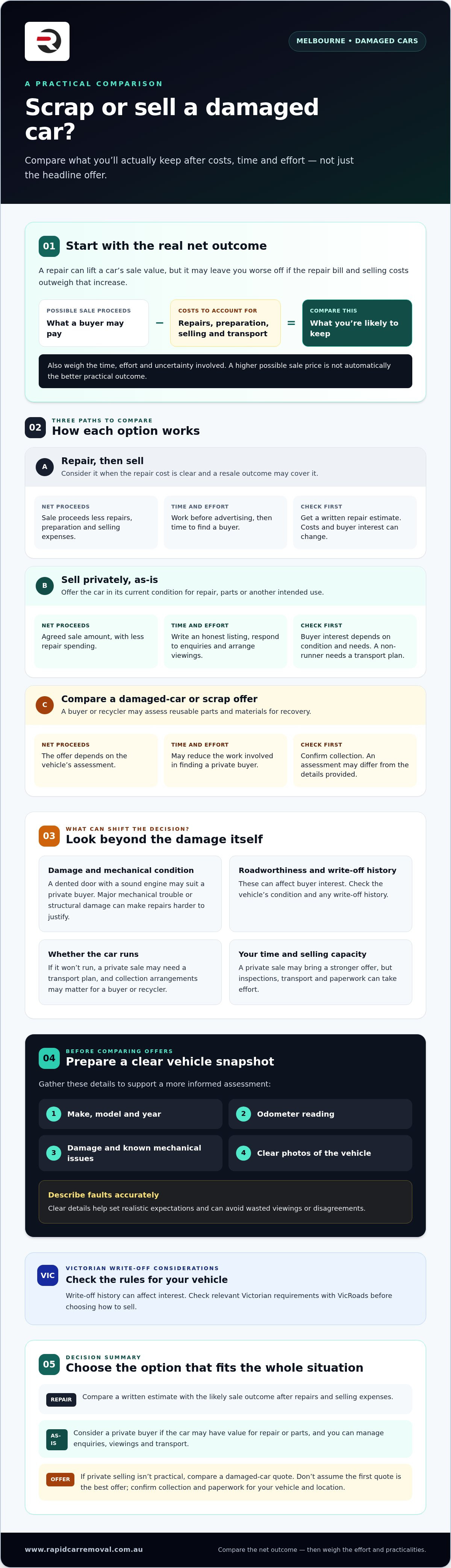
Checklist for what to do with your damaged car
A few checks can make the next step clearer and help you avoid surprises during an assessment or handover. Work through this list before committing to repairs, a private sale or a damaged-car offer.
- 1. Assess the condition. Note visible damage and mechanical faults, and whether the car starts or can move safely.
- 2. Get repair advice. Ask for a written estimate if you’re considering repairs, and clarify what it does and doesn’t cover.
- 3. Estimate your net outcome. Deduct likely repair, preparation, transport and selling expenses from a realistic sale estimate.
- 4. Compare offers. Describe the car accurately and compare any assessed offer with what a private sale could realistically return.
- 5. Confirm logistics. Before agreeing, check collection arrangements, payment method and paperwork with the buyer.
What information should you prepare for an assessment?
Have the make, model, year and odometer reading ready. Record known damage and mechanical issues, and say whether the vehicle starts or can move. Take clear photographs from several angles, including close-ups of damaged areas. Gather ownership and vehicle details, then ask what documents are required for your chosen transaction. Be upfront about faults so the assessment reflects the car’s actual condition.
If the vehicle has been assessed as written off, check its status and current Victorian requirements before deciding how to sell it. The article’s guide to selling a written-off car may help you identify questions to follow up. Verify registration, number-plate and written-off vehicle steps with VicRoads or the relevant authority, as requirements can depend on the vehicle and situation.
What should you check before handing over the vehicle?
Confirm who you’re selling to, how and when payment will be made, whether collection is included, and what paperwork each party needs to complete. Don’t assume the same steps apply to every vehicle. Check current Victorian guidance before changing registration or dealing with plates, and clarify how the vehicle’s written-off status affects the transaction if relevant.
For a general comparison, review the Melbourne cash-for-cars service and confirm the collection and paperwork arrangements for your vehicle and location. If you’re ready to discuss your car, request a quote for your damaged car before deciding whether it is better to scrap or sell a damaged car.
Selling a damaged car in Melbourne: choose the practical next step
Repair the car only if its condition, a reliable repair assessment and realistic resale interest support that decision. If the figures don’t stack up, compare an as-is private sale with a damaged-car or scrap offer. Whether it is better to scrap or sell a damaged car depends on what you’ll receive, the work involved and how you’ll move the vehicle.
Rapid Car Removal is a Melbourne option for damaged vehicles, with cash offers and free removal across metropolitan Melbourne. A quote gives you another point of comparison before you authorise repairs or commit to finding a private buyer. It isn’t a guarantee of acceptance or the best available offer, so review the details and terms before deciding.
How does a damaged-car quote help you decide?
Share the vehicle’s make, model, year, odometer reading, known damage, running condition and location. Accurate information helps clarify the assessment and whether collection arrangements suit your situation. Compare the quote with a realistic private-sale estimate, including likely costs and effort. You can request a quote for your damaged car before choosing a route.
What happens when you are ready to move on?
If you decide to proceed, start by requesting an instant quote and confirming the vehicle details. Before agreeing, check the offer, payment method, collection arrangements and paperwork with the buyer. Rapid Car Removal assists with paperwork and offers free professional removal across metropolitan Melbourne. Confirm collection coverage and the arrangements for your particular vehicle and location.
You don’t need to settle on a decision before comparing your options. Gather the car’s details, explain its condition clearly and ask questions about the assessment or handover. Then choose the route that best fits your vehicle and circumstances.
Contact Rapid Car Removal about your damaged car to discuss the vehicle and request a quote. Review the details before deciding whether to proceed.
Choose your next step with confidence
So, is it better to scrap or sell a damaged car? Repairing may suit when the condition and likely resale outcome justify the expense. Otherwise, compare an as-is private sale with a damaged-car offer, weighing what you’ll keep against the time, effort and transport involved.
A quote can give you another option before you commit. Rapid Car Removal provides cash offers for damaged vehicles, free professional removal across metropolitan Melbourne, instant quotes and assistance with paperwork. Share accurate details about the car, then confirm the offer, collection arrangements and paperwork before deciding. A quote is a comparison point, not a promise of acceptance or a particular value.
If you’d like to explore that option, request a quote for your damaged car. Compare your choices, then move ahead with the one that best fits your vehicle and circumstances.
Frequently Asked Questions
Is it better to scrap or sell a damaged car?
Neither option is always better. Whether it is better to scrap or sell a damaged car depends on repair costs, realistic buyer interest, the vehicle’s condition, collection needs and how much time you can spend selling it. Compare the estimated net return from repairing and selling with an as-is private sale or assessed damaged-car offer. Get a repair estimate and request a quote before deciding.
Can I sell a damaged car privately in Victoria?
You can explore a private sale, but describe known damage and faults accurately to prospective buyers. Before advertising or arranging a handover, check the car’s registration and status, as requirements may differ depending on its circumstances. Don’t assume every damaged vehicle can be registered or driven. For current Victorian guidance on the relevant steps, check with VicRoads or the appropriate authority.
Is it worth repairing a damaged car before selling it?
It may be, if a credible repair estimate leaves room for a realistic resale outcome. Compare the likely sale value in the repaired condition with repair costs, preparation, time and the uncertainty of finding a buyer. Check whether the repair assessment accounts for the known damage and any further faults that may emerge. Repairs may not make financial sense if the cost and effort outweigh the likely improvement in sale outcome.
Can I scrap a car that is damaged or does not run?
Some vehicle buyers assess damaged or non-running cars, but acceptance and any offer depend on the vehicle and the buyer. Be clear about visible damage, mechanical faults, whether the car starts and whether it can move. A non-running vehicle may need collection rather than a road journey. Before agreeing to a sale, confirm whether collection is available for your location and what arrangements apply.
How do I compare a scrap offer with a private sale?
Estimate the private-sale amount for the car’s actual disclosed condition, then subtract likely repair, preparation, advertising and transport expenses. Compare that net estimate with the assessed offer, checking whether collection is included or needs to be arranged separately. Allow for the time and uncertainty involved in finding a buyer. Ask what each offer includes and clarify any proposed deductions before choosing.
What happens if my damaged car has been written off?
A car recorded or assessed as written off has a different status from one that is simply damaged, and the implications depend on its specific classification and circumstances. Check the vehicle’s status and current Victorian requirements with VicRoads or the relevant authority rather than assuming it can be re-registered or driven. This guide to selling a written-off car can help you prepare. Confirm the required paperwork before handover.
Can Rapid Car Removal collect a damaged car in Melbourne?
Rapid Car Removal offers damaged-car removal and free professional removal across metropolitan Melbourne, subject to confirming your vehicle and location. Share accurate details about the damage, whether the car runs and where it’s located when requesting an instant quote. The quote is an option to compare, not a guarantee of acceptance, collection timing or offer value. Confirm the assessment, collection arrangements and paperwork before deciding to proceed.


