

A scrap car shouldn’t leave you waiting for a tow truck, negotiating a lower offer at your kerb or guessing what to do with the number plates. With scrap car recycling Melbourne, you can move from unwanted vehicle to responsible disposal without the hassle of a private sale.
If you’re worried about unreliable pickups, confusing VicRoads paperwork or what “cash for cars” really means, you’re not alone. In Victoria, payments for scrap metal can’t be made in physical cash, so legitimate payment is by electronic transfer or a non-transferable cheque. A clear process matters just as much as a fair offer.
This 2026 guide explains how vehicle value is assessed, what to prepare before collection and how registration cancellation and plate returns fit into the process. You’ll also learn what responsible recycling involves and how Rapid Car Removal makes the practical steps easier, with free professional towing across Melbourne and help handling disposal paperwork. The aim is simple: a straightforward sale, prompt payment and greater peace of mind about where your vehicle goes next.
Key Takeaways
- Discover how scrap car recycling melbourne can recover reusable metals and contribute to a circular economy.
- Learn what happens during dismantling, including how reusable parts and hazardous vehicle fluids are separated.
- Understand why trader credentials and a clear written record matter when arranging a vehicle sale.
- Use a practical checklist to find personal belongings and organise ownership documents before collection.
- See how Rapid Car Removal makes vehicle handover straightforward across Melbourne, from Werribee to Dandenong.
The Hidden Value of Scrap Car Recycling in Melbourne
That old “rust bucket” may still hold value beyond what you can see. A vehicle contains ferrous metals such as steel and non-ferrous metals such as aluminium and copper, along with components that may be suitable for reuse. In scrap car recycling melbourne, the offer reflects more than the car’s appearance: its weight, condition, reusable parts and the value of recovered materials all matter.
Recycling helps keep useful materials in circulation. Recovered metal can become feedstock for manufacturing and construction, reducing the need to rely solely on newly mined resources. The global vehicle recycling process shows how end-of-life cars can be dismantled so materials and parts are recovered rather than sent straight to landfill.
Why Private Sales Fail for End-of-Life Vehicles
Private listings can mean repeated messages, tyre kickers and buyers who try to renegotiate after inspecting the car. An old vehicle that needs repairs may also need work before it can meet roadworthy requirements, making a private sale less practical. If it won’t run, arranging viewings and discussing collection can add more hassle. Having unfamiliar buyers visit your home may feel uncomfortable, too. A direct vehicle removal sale offers a simpler route for cars that are no longer road-ready.
The 2026 Scrap Metal Market in Victoria
Recovered metal has a commodity value, so global market movements can influence what recyclers are prepared to offer locally. Melbourne’s construction and manufacturing activity also creates demand for metal inputs, while market rates change over time. In 2026, reported scrap metal rates have been trending upwards, with infrastructure demand and tighter global copper supply among the factors cited. These movements don’t translate into a fixed offer for every car: condition, weight and the parts that can be recovered still affect its value.
Ferrous metal is iron-based metal, including the steel commonly found in a car’s body and structural components.
A vehicle sold for parts is assessed for components that can be reused, while a scrap-weight sale focuses more on the recoverable metal in the vehicle. A complete car may retain value in both its parts and materials; a stripped or badly damaged one may be valued more on what can be recovered as scrap. Larger 4x4s and commercial vans can contain more metal and useful components, which may support a higher offer, depending on their condition and current demand.
For an end-of-life vehicle, cash for cars in Melbourne gives you an alternative to managing a private listing and arranging transport yourself.
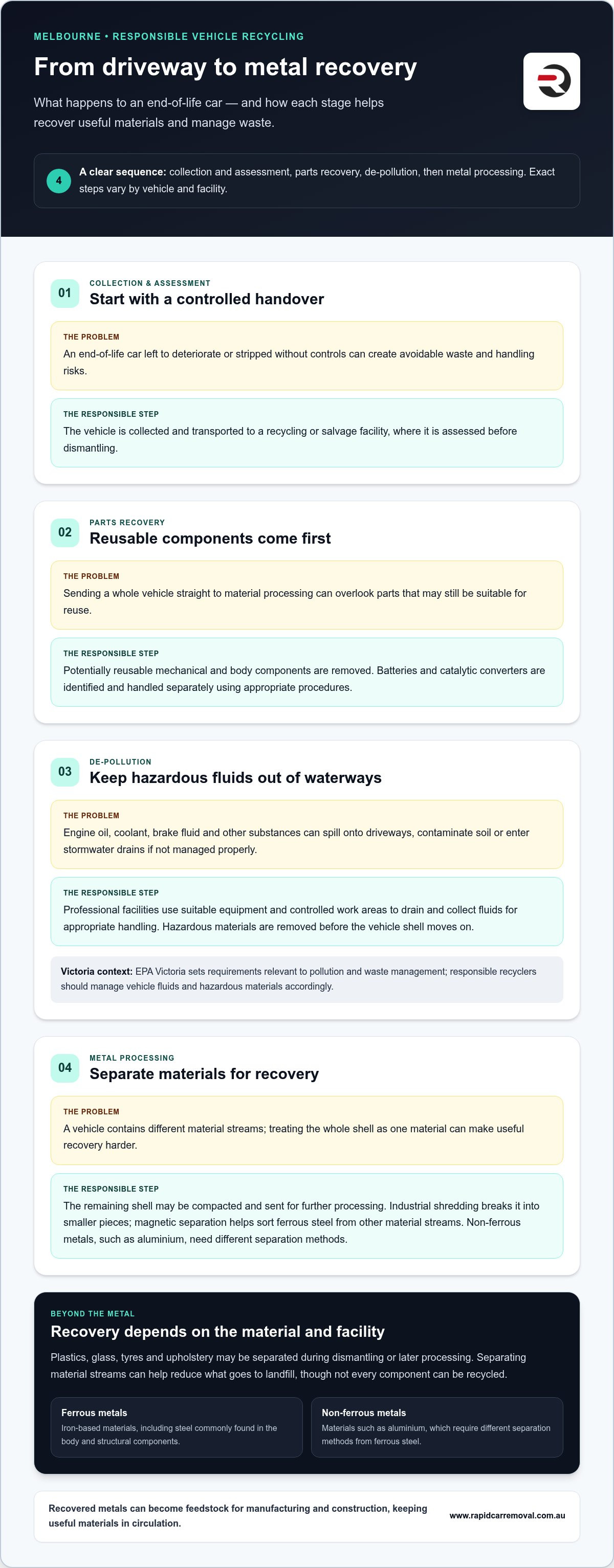
The Professional Recycling Process: From Driveway to Foundry
Responsible scrap car recycling melbourne involves more than towing a vehicle away. Once it reaches a recycling facility, the car is assessed, reusable parts may be removed, and hazardous fluids and materials are separated before the remaining shell is processed. The exact steps vary by vehicle and facility, but each stage helps recover useful resources and manage waste more carefully.
De-pollution: Protecting Melbourne’s Waterways
Cars can contain engine oil, coolant, brake fluid and other substances that shouldn’t leak onto a driveway or enter stormwater drains. If a vehicle is dismantled without proper controls, spills can contaminate soil and waterways. Professional facilities use suitable equipment and controlled work areas to drain and collect fluids for appropriate handling. EPA Victoria sets requirements relevant to pollution and waste management; responsible recyclers should manage vehicle fluids and hazardous materials accordingly.
Batteries and catalytic converters are also identified during assessment. They may contain materials that can be recovered or require careful handling, so trained staff remove them using appropriate procedures. Choosing reputable auto wreckers supports a more responsible route from collection to dismantling, rather than leaving an end-of-life vehicle to deteriorate or be stripped without controls.
The Lifecycle of a Recycled Ute or Sedan
The journey from driveway to metal recovery generally follows a clear sequence:
- Pickup and transport: The vehicle is collected and taken to a recycling or salvage facility for assessment.
- Parts recovery: Reusable components, which may include suitable mechanical or body parts, are removed for potential reuse. Batteries and catalytic converters are handled separately.
- De-pollution: Fluids and other materials requiring controlled handling are drained or removed before the vehicle shell moves further through the process.
- Metal processing: The remaining shell may be compacted and sent for further processing. Industrial shredding breaks it into smaller pieces, and magnetic separation helps sort ferrous steel from other material streams. Non-ferrous metals, including aluminium, need different separation methods.
Metal isn’t the only material in a vehicle. Plastics, glass, tyres and upholstery may be separated during dismantling or later processing. What can be recovered depends on the material and facility; separating these streams can help reduce the amount sent to landfill, though not every component can be recycled.
For a no-fuss first step, Rapid Car Removal provides free professional towing across Melbourne, connecting vehicle removal with the next stage of responsible disposal. Discuss your vehicle removal and make a plan for getting your unwanted car off the driveway.
Choosing a Reputable Wrecker vs. "Solar Cowboys"
A smooth collection starts with clear terms, a traceable business and no surprises at your driveway. In the scrap car recycling melbourne market, a “solar cowboy” is a casual term for an operator who gives a tempting estimate, then cuts the offer when the truck arrives. Protect yourself by agreeing on the vehicle details, price and payment method before you hand over the keys.
The Importance of an LMCT Licence in Victoria
A Licensed Motor Car Trader (LMCT) licence identifies a business registered to trade in motor vehicles in Victoria. It’s a useful legitimacy check, but it isn’t a substitute for clear sale paperwork or proof of what you agreed. Ask for the trader’s details and verify them through the relevant Victorian government register before committing. Keep a written record of the agreed terms and the vehicle handover. A licence alone shouldn’t be treated as a guarantee against future disputes or liability.
Before collection, ask for a written quote that reflects the car’s make, model, condition and whether it’s complete. If the offer changes on arrival, ask the operator to explain exactly what has changed. Don’t feel pressured to accept a revised amount on the spot. A professional transaction gives you time to understand the terms and provides a receipt or sale record once the vehicle is handed over.
Red Flags in the Melbourne Scrap Industry
Look beyond the headline offer. These warning signs deserve attention:
- Price changes without explanation: The driver offers less than the agreed quote despite no new information about the vehicle.
- No written terms or receipt: You’re asked to hand over the car without a record of the buyer, agreed amount or collection.
- Pressure to rush: The operator pushes you to decide before you’re ready or before you’ve dealt with your number plates.
- Hard-to-identify operators: The truck is unmarked, the driver can’t clearly identify the business, or the company’s contact and business details are difficult to establish.
An unmarked truck or limited online information doesn’t prove wrongdoing on its own, but it’s reasonable to pause and verify who is collecting your vehicle. Confirm the business name and collection details before the tow truck arrives. Don’t hand over your keys or sign paperwork until the terms are clear, and follow VicRoads guidance for registration cancellation and number plates.
Rapid Car Removal keeps vehicle collection straightforward with professional towing and paperwork handling. A clear quote, identifiable collection and documented handover help you move on without a driveway negotiation or a lingering question about who took the car.
Preparing Your Vehicle for Recycling and Maximum Cash
A few simple checks can make collection smoother and help the assessment reflect your vehicle accurately. Before your scrap car recycling Melbourne pickup, clear out personal items, gather the paperwork you have and give the tow truck a clear path to the car.
- Check the cabin carefully: Look in the glovebox, centre console, door pockets, seat-back pockets and boot. Check under seats and in the spare-wheel well, too.
- Remove personal devices: Take out your E-Toll tag, garage remote, phone charger and any personal number plates or accessories you want to keep.
- Gather documents: Have proof of ownership and identification ready, along with the vehicle’s keys and logbook if available.
- Prepare access: Move other cars, bins or obstacles so the tow truck can reach the vehicle. Mention access restrictions or a locked steering wheel ahead of collection.
VicRoads Requirements and Plate Cancellation
VicRoads guidance says to cancel the vehicle’s registration and remove its number plates before disposal. You can manage registration cancellation through your myVicRoads account. Follow VicRoads’ current instructions for returning the plates, including whether to take them to a Customer Service Centre. If you’re seeking a refund for eligible unused registration, check VicRoads’ current criteria and application process; don’t assume every remaining period qualifies.
Maximising Your Instant Quote
Give an accurate picture of the car before collection. Be upfront about whether the engine starts, whether the transmission works, and any major parts that are missing. This helps avoid confusion if the vehicle’s condition differs from what was described.
Also mention useful details such as newer tyres or aftermarket additions. Keys and logbooks can help identify and assess the vehicle, but they don’t guarantee a higher offer. The final assessment depends on the car’s condition, completeness and reusable parts.
Before the tow truck arrives, confirm the agreed offer and payment method, then keep your sale or handover record. Rapid Car Removal provides free professional towing across Melbourne and handles disposal paperwork, helping keep the handover straightforward. Arrange your vehicle collection and get the process moving.
Why Rapid Car Removal is Melbourne’s Trusted Recycling Partner
Getting rid of an unwanted vehicle shouldn’t mean juggling a private sale, arranging your own tow and guessing what happens after collection. Rapid Car Removal keeps the process practical: free professional towing across Melbourne, immediate payment and help with disposal paperwork. That local, no-fuss approach makes scrap car recycling melbourne easier to organise, whether you’re clearing a driveway or moving on a damaged vehicle.
Coverage spans Melbourne’s suburbs, from Werribee to Dandenong. The team also handles 4x4s, vans and commercial scrap trucks. For larger vehicles, see the truck wreckers in Melbourne service. Every vehicle is different, so share accurate details about its condition and location to help get the collection process moving smoothly.
A Simple Collection Process
The steps are straightforward, with the vehicle details and handover arranged directly rather than through a drawn-out private listing.
- Share the vehicle details: Get in touch by phone or online and describe the car, including its condition and any major missing parts.
- Arrange removal: Organise professional towing at the agreed collection time. Towing is free across Melbourne suburbs.
- Complete the handover: Confirm the vehicle and sale details, receive payment and have the car removed for recycling. Rapid Car Removal also handles disposal paperwork.
“Cash for cars” is a familiar phrase, but Victoria’s scrap-metal rules mean scrap payments must be made by electronic funds transfer or a non-transferable cheque, not physical cash. The important thing is knowing the payment method and agreed terms before the handover, so there are no surprises on collection day.
Responsible Vehicle Disposal
Recycling a vehicle involves more than taking it off the road. Suitable parts and materials can be recovered, while fluids and other waste need responsible handling. Rapid Car Removal connects its free vehicle removal service with vehicle recycling, helping unwanted cars, vans, 4x4s and trucks move on to the next stage rather than remain unused on your property.
No responsible operator should promise that every part of every vehicle will be recycled. What can be recovered depends on the vehicle and the materials involved. The practical aim is to direct reusable parts and recoverable materials into appropriate recycling streams and manage remaining waste responsibly. For an overview of the service, visit car wreckers in Melbourne.
Turn Your Unwanted Car Into a Fresh Start
Scrap car recycling Melbourne can put an end-of-life vehicle to better use, recovering reusable parts and materials while saving you the hassle of a private sale. A clear quote, honest details about the car and the right paperwork help make the handover smoother. Remember to remove personal belongings and number plates, and follow current VicRoads instructions for registration cancellation.
Rapid Car Removal keeps the practical side simple with free professional towing across Melbourne and prompt payment by an appropriate method. As a Licensed Motor Car Trader, the team helps handle the disposal paperwork, too. You can move on knowing your unwanted car is being collected for recycling, without arranging transport yourself.
Ready to get started? Request an instant quote for your scrap car and take the next step towards a clearer driveway and a straightforward vehicle handover.
Frequently Asked Questions
Do I need a Roadworthy Certificate (RWC) to sell my car for scrap in Melbourne?
Generally, a Roadworthy Certificate isn’t needed for a vehicle sold for scrap and collected by tow, rather than driven on the road. RWC requirements can depend on the type of sale and vehicle circumstances. Rapid Car Removal collects unwanted and damaged vehicles across Melbourne. If you’re unsure how the rules apply to your situation, check current VicRoads guidance before completing the sale.
Will you still buy my car if it is not running or has been in an accident?
Yes. Rapid Car Removal buys vehicles in a range of conditions, including cars that don’t run and vehicles damaged in an accident. Share an accurate description when arranging the quote, including any major damage or missing parts. That helps the team assess the vehicle and organise suitable towing. Free professional removal is available across Melbourne, so you don’t need to get a non-runner back on the road.
How long does the car removal process take from start to finish?
Rapid Car Removal can provide an instant quote, but the time from your first enquiry to collection depends on the arrangements and the vehicle’s location and access. The collection itself includes confirming the vehicle details, completing the handover and towing it away. Payment is made at handover using an appropriate method. Share access details early so the collection can be organised as smoothly as possible.
What happens to my insurance and registration after the car is recycled?
Contact your insurer to cancel or update your policy once the vehicle has been sold. For registration, remove the number plates and follow VicRoads’ current instructions to cancel the registration. You may be eligible to apply for a refund of unused registration, depending on VicRoads’ criteria. Keep your sale or handover record, as it can help you manage follow-up with VicRoads and your insurer.
Can I scrap a car if I have lost the keys or the logbook?
Losing the keys or logbook doesn’t automatically mean you can’t arrange a scrap sale. Tell Rapid Car Removal what’s missing and have proof of ownership and the vehicle’s registration details ready. The collection team can then guide the paperwork process based on the information you have. If the car is locked or its steering can’t be unlocked, mention that too, as it may affect how it’s loaded.
Do you provide scrap car recycling for commercial fleets and trucks?
Yes. Rapid Car Removal provides scrap truck removal and handles vehicles including trucks, vans and 4x4s across Melbourne. For a commercial vehicle or fleet, prepare the vehicle details and note its condition, location and access arrangements. This helps organise towing and the handover. The team also handles disposal paperwork, making it simpler to move unwanted work vehicles out of your yard or premises.
What documents do I need to show the driver when they arrive?
Have proof of ownership and the vehicle’s registration details ready for the handover. Photo identification may also be useful. Keep any sale or collection paperwork provided, and have the keys and logbook available if you still have them. Rapid Car Removal handles disposal paperwork, but having your vehicle information organised helps the collection proceed with fewer delays and gives you a record of the transaction.
How is the final cash offer for my scrap car calculated?
The offer can reflect the vehicle’s make and model, weight, overall condition, completeness and parts that may be suitable for reuse. Current scrap metal market values can also influence the assessment. For scrap car recycling Melbourne, a complete vehicle with reusable components may be assessed differently from one that’s stripped or badly damaged. Describe the car accurately, including its engine, transmission and any missing parts, for a clearer quote.


