

What’s the simplest way to sell my car after an accident? It depends less on the accident itself than on the damage, the car’s official status and how much time you want to spend on repairs or a private sale. After a crash, it’s natural to wonder whether repairs are worth the cost, whether buyers will be concerned about the history and what Victorian paperwork applies.
Start by recording the car’s condition and checking whether it has an official written-off status. Then compare selling it as-is with repairing it first or listing it privately. This guide explains what to disclose, which records to gather and how Victorian registration and written-off vehicle processes can affect your next steps.
If you’d rather avoid arranging repairs or managing a private sale, Rapid Car Removal buys accident-damaged vehicles in any condition. You can get an instant quote, arrange free professional towing across metropolitan Melbourne and have the sale paperwork handled as part of the process. Read on to see how to move from damage assessment to a straightforward sale and collection.
Key Takeaways
- Separate visible damage from official write-off status before deciding what to do with the vehicle.
- Compare a private sale, repairing the car first and specialist as-is removal by the effort and documentation involved.
- To sell my car after an accident, record known damage, repairs and unresolved faults accurately for prospective buyers.
- Gather the vehicle records you have, then follow a clear sequence from condition notes to quote and collection arrangements.
- If the car may be unsafe, don’t drive it. Arrange suitable collection instead.
Sell My Car After an Accident: First Assess the Damage
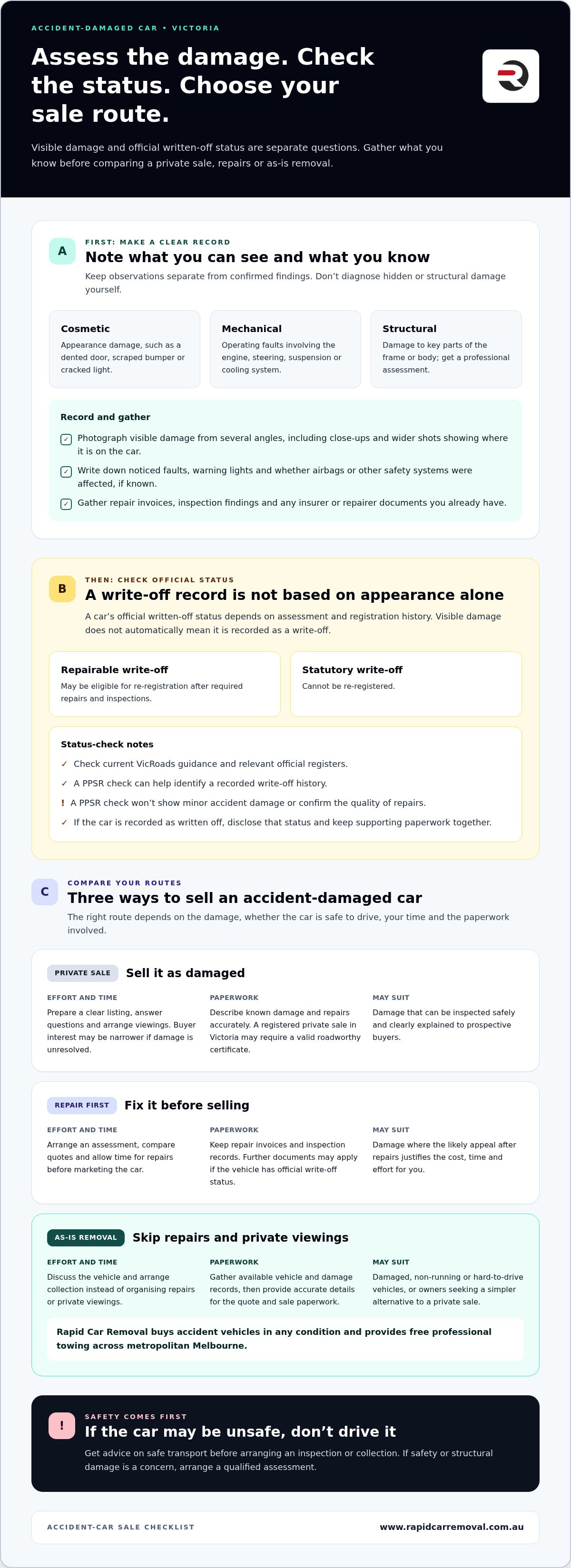
An accident doesn’t automatically prevent you from selling your car. First, record what you can see and establish whether the vehicle has an official written-off status. These are separate questions: visible damage doesn’t necessarily mean a car is recorded as a write-off, and its official status depends on assessment and registration history, not appearance alone.
Don’t try to diagnose hidden or structural damage yourself. Note visible issues, gather existing records and arrange a qualified assessment if safety or structural damage is a concern. If you think the car may be unsafe, don’t drive it. Get advice on safe transport before arranging an inspection or collection.
What type of accident damage does the car have?
Start by noting whether the damage appears cosmetic, mechanical or structural. Cosmetic damage affects appearance, such as a dented door, scraped bumper or cracked light. Mechanical damage affects how the car operates, including problems with the engine, steering, suspension or cooling system. Structural damage involves key parts of the vehicle’s frame or body and needs professional assessment.
Make a practical record without taking risks:
- Photograph visible damage from several angles. Include close-ups and wider shots that show where each damaged area is on the car.
- Write down faults you’ve noticed, warning lights and whether airbags or other safety systems were affected, if known.
- Gather repair invoices, inspection findings and any insurer or repairer documents you already have.
Keep your observations separate from confirmed findings. For example, describe a panel as visibly bent rather than calling the vehicle structurally damaged unless a qualified assessment confirms it. This makes it easier to compare sale options and request a useful quote. The broad term Traffic collision covers incidents often described as crashes, but for a sale, the useful details are the actual damage and any known repairs.
Is the car recorded as a written-off vehicle?
A write-off record is an official status, not simply a description of how badly damaged a car looks. In Victoria, a repairable write-off may be eligible for re-registration after required repairs and inspections; a statutory write-off cannot be re-registered. Check the vehicle’s status using current VicRoads guidance and relevant official registers. A PPSR check can also help identify a recorded write-off history, but it won’t show minor accident damage or confirm the quality of repairs.
If the car is recorded as written off, disclose that status to a buyer and keep supporting paperwork together. For more detail on the process, see Cash for Written Off Cars Melbourne: The 2026 Seller’s Guide. Knowing both the car’s condition and its official status helps you weigh up repairs, a private sale or an as-is option. With those details in hand, you can sell my car after an accident with fewer surprises.
Repair It or Sell It As-Is? Compare Your Accident-Car Options
A damaged car can still have a practical sale route. The right choice depends on the type of damage, whether the vehicle is safe to drive, how much work you’re prepared to take on and the paperwork involved. Compare the options before committing to repairs or advertising the car.
| Option | Effort and time | Paperwork | May suit |
|---|---|---|---|
| Private sale as damaged | Allow time to prepare a clear listing, answer questions and arrange viewings. Buyer interest may be narrower if the damage is unresolved. | Describe known damage and repairs accurately. Victorian requirements for a registered private sale may include a valid roadworthy certificate. | Cars with damage that can be inspected safely and clearly explained to prospective buyers. |
| Repair before sale | Arrange an assessment, compare quotes and allow time for repairs before marketing the car. | Keep repair invoices and inspection records. Further documents may apply if the vehicle has an official write-off status. | Damage where the likely appeal after repairs justifies the cost, time and effort for you. |
| Specialist as-is removal | Avoid organising repairs or private viewings. Discuss the vehicle and arrange collection. | Gather available vehicle and damage records, then provide accurate details for the quote and sale paperwork. | Damaged, non-running or hard-to-drive vehicles, or owners seeking a simpler alternative to a private sale. |
When might repairing the car make sense?
Get a written repair estimate and compare it with the car’s likely appeal after the work is done. Consider its age, overall condition, damage history and whether the proposed repairs address safety issues as well as appearance. Weigh the estimate against your budget and the time repairs may take. Repairs don’t guarantee higher sale proceeds, so include any insurance process already underway in your decision.
When is selling an accident-damaged car as-is practical?
Unresolved faults can make private buyers cautious, particularly when they can’t tell whether the car is safe or what repairs it needs. An as-is removal option may suit a vehicle that’s damaged, won’t run or shouldn’t be driven. Rapid Car Removal buys accident vehicles in any condition and provides free professional towing across metropolitan Melbourne. Explore Cash for Damaged Cars Melbourne as an as-is route if arranging repairs or a private sale doesn’t suit you.
If you’re deciding whether to sell my car after an accident, compare the repair estimate with your sale options before spending money on work. For an accident-damaged vehicle in Melbourne, you can discuss a quote and collection with Rapid Car Removal, then choose the option that works for you.
Accident History, Disclosure and Paperwork for Victorian Sellers
Clear information helps a buyer understand the car and reduces the chance of confusion later. Keep your description factual: explain what you know, identify anything that hasn’t been assessed and check current Victorian rules for your type of sale. Requirements can differ depending on whether the car is registered, sold privately or transferred to a business.
What accident details should you prepare for a buyer?
Write a short, factual summary of the incident and the car’s condition. Note when the accident happened, which areas were damaged, what repairs were completed and whether any faults remain. If hidden damage hasn’t been assessed, say so rather than guessing.
Keep records that support your description together so you can answer questions consistently:
- Repair invoices and receipts for replacement parts or completed work.
- Inspection reports, roadworthy documents or other assessment findings you have.
- Insurance correspondence related to the incident or repair decision.
- Clear photos of the damage, repairs and the vehicle’s current condition.
Distinguish evidence from assumptions. State that a bumper was replaced if an invoice confirms it. If a warning light is showing but you don’t know why, describe the warning rather than diagnosing the fault. Include whether airbags or other safety systems were affected if you know, and be upfront about anything unresolved. These details are useful for both a private listing and an as-is sale.
Which Victorian records or requirements should you check?
Before agreeing to a sale, check current VicRoads guidance for the registration, transfer and notice-of-disposal steps that apply to your circumstances. For a registered car sold privately in Victoria, current guidance requires a valid roadworthy certificate; it isn’t required when selling to a licensed dealer. VicRoads states that a notice of disposal must be lodged within 14 days of sale. Verify the process and timing directly before acting.
Check the vehicle’s written-off status through the relevant official records. In Victoria, written-off status must be disclosed to a buyer, and the Written-Off Vehicle Register records applicable write-offs. A Personal Property Securities Register (PPSR) search can help identify recorded write-off history, stolen status or finance owing, but it won’t reveal every accident or confirm repair quality. Keep any status information with your other sale documents.
If you’re preparing to sell my car after an accident, create a simple digital or paper folder with your incident summary, supporting records and current status checks. Then confirm the VicRoads steps that apply to your sale type. Rapid Car Removal handles paperwork as part of its selling process, and accurate vehicle details help keep the transaction straightforward.
How to Prepare and Arrange the Sale of an Accident-Damaged Car
A little preparation makes it easier to explain the car’s condition, get a useful quote and plan collection. Keep the steps simple: document the vehicle, gather the records you have, request a quote, then agree on collection details. You don’t need to repair the car before discussing an as-is sale.
- Document the condition. Take clear photos of the whole car and close-ups of each damaged area. Note missing parts, warning lights and faults you know about. Record whether the car starts or moves, but don’t test-drive it if you think it may be unsafe.
- Gather available records. Put registration details, repair invoices, inspection findings and relevant insurance correspondence in one place. Note any written-off status you know about. If information is missing, explain that rather than guessing.
- Request a quote. Share the vehicle details and damage description, and provide photos if available. Rapid Car Removal offers instant quotes for vehicles in any condition. Accurate details and available records help describe the car clearly when requesting a cash-for-cars quote in Melbourne.
- Agree on collection details. Confirm the vehicle’s location, access conditions and whether it can roll or steer. Discuss the collection arrangements before pickup.
What information helps you request an accident-car quote?
Have the make, model, year, location and registration details ready where available. Describe the accident damage plainly, including missing parts and whether the car starts, rolls or can be moved. Share photos of the whole vehicle and close-ups of the damage. If a fault hasn’t been diagnosed, say so. Clear, accurate details help the quote reflect the car you’re selling.
How can you make vehicle collection straightforward?
Before collection, check that the vehicle can be reached and mention tight driveways, locked gates, basement parking or other access restrictions. Remove personal belongings from the cabin, boot and glovebox. Keep keys and relevant vehicle records ready if you have them. If the car may be unsafe, don’t drive it to make collection easier. Explain its condition and arrange suitable removal instead.
For accident-damaged vehicles across metropolitan Melbourne, Rapid Car Removal provides free professional towing and handles paperwork as part of the selling process. Share the details you’ve gathered, discuss the quote and agree on collection arrangements. To take the next step, discuss your damaged car with the team.
Knowing the vehicle’s location, access and movement limits in advance helps avoid last-minute surprises. With those details ready, you can sell my car after an accident without first arranging repairs or trying to drive a car you believe may be unsafe.
Sell Your Accident-Damaged Car in Melbourne with Rapid Car Removal
If you’d rather not organise repairs or manage a private listing, an as-is sale can be a practical option. Rapid Car Removal buys accident-damaged vehicles in any condition and provides free professional towing across metropolitan Melbourne. Describe the car as it stands, request an instant quote and discuss collection without needing to get it roadworthy first.
Accurate details make the process clearer. Be upfront about the damage, missing parts and whether the vehicle can move. This gives the team useful information when preparing a quote and planning removal. Rapid Car Removal also handles paperwork as part of the selling process, keeping the steps together from quote through to collection.
What happens when you request a quote?
Provide the car’s make, model, year and location, along with registration details if available. Describe the accident damage in plain terms, including known faults and whether the car starts or can roll. Clear photos can show the whole vehicle and specific damaged areas. The quote is based on the information you share, so mention anything important and don’t guess about damage that hasn’t been assessed.
There’s no need to downplay a serious fault. A missing bumper, deployed airbags or a car that won’t start are all useful details to mention. The clearer the description, the easier it is to discuss the vehicle and next steps. If you’re comparing services, the Cash for Cars Melbourne page gives broader context about the company’s local vehicle-buying service.
How do you take the next step?
Keep the process to three actions: share the vehicle details, review the quote, then arrange collection if you decide to proceed. Before collection, agree on where the vehicle is and explain any access limits or movement issues. Don’t drive a car you believe may be unsafe. Let the team know if it’s hard to reach or cannot move under its own power.
- Share details: Give an accurate account of the car, its damage and location.
- Review the quote: Consider the offer and clarify the next steps before deciding.
- Arrange collection: Discuss access and collection details. Free professional towing is available across metropolitan Melbourne.
This route can suit owners who want to sell an accident-damaged car without arranging repairs, advertising it privately or organising towing themselves. If you’re weighing up how to sell my car after an accident, a clear description and direct quote can help you decide whether this option fits your situation.
Ready to discuss the vehicle? Contact Rapid Car Removal about your accident-damaged car to share its details and talk through the quote and collection process.
Choose the Next Step That Works for You
You don’t need to settle every repair or paperwork question before deciding what to do next. Use the information you’ve gathered to make a practical choice, whether that means getting a repair estimate or exploring an as-is sale. If you’re still weighing up how to sell my car after an accident, a quote gives you another option to compare with the cost and effort of repairs.
Rapid Car Removal handles accident car removal across metropolitan Melbourne, with free professional towing and instant quotes for vehicles in any condition. You can discuss the car’s condition and possible collection without arranging repairs first.
Take the next step when you’re ready. Contact Rapid Car Removal to discuss your accident-damaged car and share the details needed to get started.
Frequently Asked Questions
Can I sell my car after an accident if it still runs?
Yes, a car that starts and moves can still be sold, but running doesn’t prove it’s safe or free of hidden faults. A vehicle might pull to one side, show a warning light or have a damaged tyre after a collision. Describe what you’ve noticed and avoid test-driving it if you have safety concerns. You can compare a private sale, repairs and an as-is option, including a quote from a Melbourne damaged-car buyer.
Do I have to disclose accident damage when selling a car in Victoria?
Give prospective buyers an accurate account of damage and repairs you know about. Distinguish a replaced door from a suspected issue that hasn’t been diagnosed. Keep records that support your description, and don’t present an assumption as a confirmed inspection result. Exact legal obligations depend on the circumstances, so check current Victorian guidance for your type of sale if you’re unsure.
Can I sell a written-off car in Melbourne?
It may be possible, but the vehicle’s official status affects what can happen next. Find out whether it’s recorded as a repairable or statutory write-off. A statutory write-off can’t be re-registered in Australia, while a repairable write-off may be eligible for re-registration after required repairs and inspections. Check current Victorian requirements and disclose the recorded status. A quote for an accident-damaged vehicle can help you consider an as-is sale.
Should I repair my accident-damaged car before selling it?
Not necessarily. Consider the repair estimate alongside the car’s age, condition before the crash and any remaining faults. Cosmetic repairs, for example, may not address a separate mechanical problem, so check what the estimate covers before comparing options. Factor in the time and budget you can commit, too. Repairs don’t guarantee a better sale result, so compare the likely outcome with an as-is option before deciding.
How much is my car worth after an accident?
There’s no reliable figure without knowing the car and its condition. Make, model, age, damage, missing parts, repair history and demand can all affect an offer. Share clear photos and details of known faults when requesting a quote. Compare offers on the same basis, including whether collection is part of the arrangement. An undamaged example isn’t a like-for-like guide to a damaged car’s sale prospects.
Can I sell my accident-damaged car without a roadworthy certificate in Victoria?
It depends on the sale. VicRoads guidance says a valid roadworthy certificate is required when selling a registered car privately in Victoria, but isn’t required when selling to a licensed dealer. Don’t assume that rule applies to every transaction or use requirements from another state. Check current VicRoads guidance for your vehicle and sale type before proceeding. If the car may be unsafe, arrange transport rather than driving it.
Will someone collect an accident-damaged car that cannot be driven?
Yes, a car that can’t be driven may still be suitable for removal. Tell Rapid Car Removal it’s immobile when requesting a quote, and describe whether it can roll or steer. Share the exact location and any access limits, such as a narrow driveway or locked parking area, so collection can be planned with those details in mind. Free professional towing is available across metropolitan Melbourne. Don’t drive a vehicle you believe may be unsafe.


