

Having finance owing doesn’t automatically prevent you from selling your car in Australia. You can use the sale proceeds to pay off the remaining loan, but only the amount left after settlement can go towards a down payment. If you’re selling your car for a down payment, disclose the finance to prospective buyers and account for any lender fees or shortfall.
It’s understandable to focus on how much cash the sale will leave you with. First, find out the loan payout amount. Then plan how payment and handover will be coordinated so the loan, vehicle and funds are handled in the right order.
This guide explains how to check what you owe, prepare your car and paperwork, and manage payment and handover in Melbourne. You’ll also learn how the car’s condition and finance balance affect your options, and when a straightforward car sale can help fund your next vehicle.
Key Takeaways
- Work out the lender’s payout amount first so you can estimate how much of the sale proceeds may remain for your next deposit.
- Prepare the car for inspection by making its condition easy to assess and gathering relevant vehicle details.
- Organise your paperwork before the appointment to help keep the sale and ownership transfer on track.
- Coordinate payment and handover carefully, and don’t transfer ownership before you’ve received payment or a trade.
- Consider a car removal service if your vehicle is unwanted, damaged or difficult to sell privately.
What if my car has finance owing?
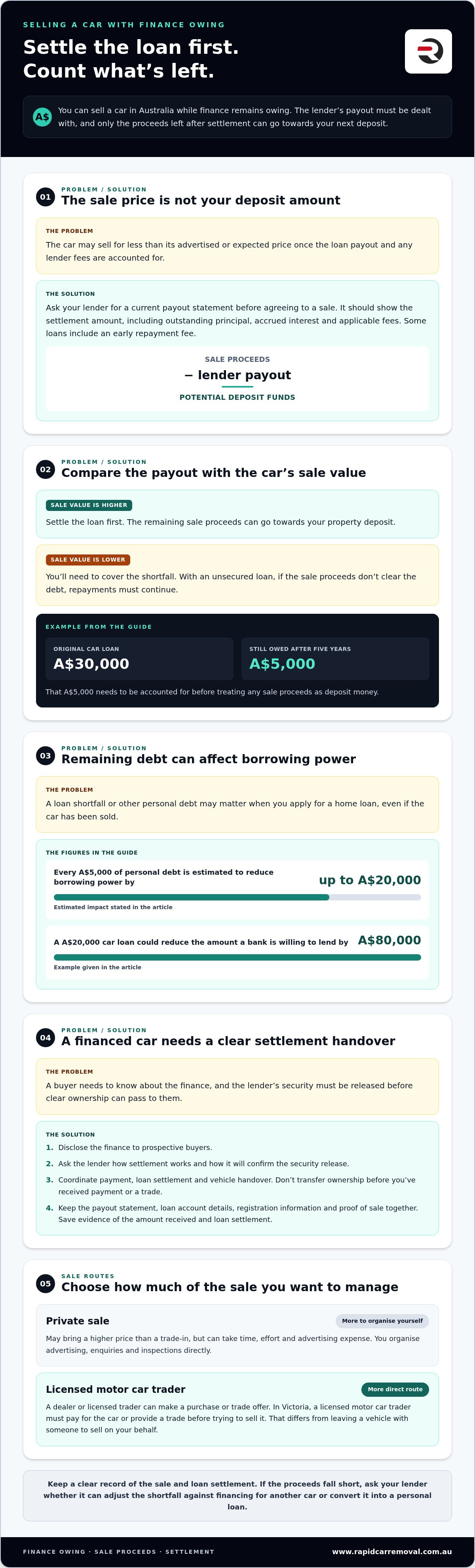
You can legally sell a car in Australia while finance remains owing. The loan still needs to be dealt with, and the lender may require it to be paid and closed when the vehicle is sold. If you plan to sell your car for a down payment on a Melbourne property, calculate the loan payout first. Only the proceeds left after settling the debt can contribute to your deposit.
Ask your lender for a payout statement. It should show the amount required to settle the loan, including outstanding principal, accrued interest and applicable fees. Some loans include an early repayment fee. For example, a borrower who took a A$30,000 car loan and still owes A$5,000 after five years must account for that A$5,000 before treating sale proceeds as deposit funds.
Compare the payout figure with the car’s likely sale value. If the vehicle sells for more than the balance, you can put the remaining proceeds towards the property deposit. If it sells for less, you’ll need to cover the shortfall. With an unsecured loan, if the sale proceeds don’t clear the debt, repayments must continue. The lender releases its lien after the loan is paid, allowing clear ownership to pass to the buyer.
The remaining debt can also matter when you apply for a home loan. In Australia, every A$5,000 of personal debt is estimated to reduce borrowing power by up to A$20,000. A A$20,000 car loan could reduce the amount a bank is willing to lend by A$80,000. These figures show why the payout and any remaining debt deserve attention alongside the deposit amount.
Before agreeing to a sale, disclose the finance to prospective buyers. Keep the payout statement, loan account details, registration information and proof of sale together. Ask the lender how to complete settlement and how it will confirm the security release.
A private sale may bring a higher price than a trade-in, but it can take time, effort and advertising expense. Selling to a licensed motor car trader offers a more direct route. In Victoria, a licensed motor car trader must pay for the car or provide a trade before trying to sell it. This is different from leaving a vehicle with someone to sell on your behalf.
Once the sale is complete, keep evidence of the amount received and the loan settlement. A clear record helps show where your deposit funds came from and distinguish them from any remaining loan obligation. If the sale proceeds fall short, ask your lender whether it can adjust the shortfall against financing for another car or convert it into a personal loan.
Preparing the vehicle and its documentation for sale
Inspect the car before advertising it or arranging an appraisal. Remove personal items, clean the cabin and boot, and make the vehicle identification number, odometer and visible condition easy to check. Note dents, warning lights, missing accessories and recent repairs. Accurate details help buyers assess the car and avoid surprises during inspection.
In Victoria, a registered car sold privately must come with a Certificate of Roadworthiness if the new owner intends to drive it on the road. The certificate must be less than 30 days old, and it’s valid for 30 days from issue. Allow time to arrange the inspection, then keep the certificate with the registration transfer paperwork.
Choose a sale method based on how much of the process you want to manage. As a private seller, you can organise advertising, respond to enquiries and arrange inspections directly. A dealer or licensed motor car trader can make a purchase or trade offer. If trading in, compare the total amount payable to trade your old vehicle and drive away in the replacement, not just the trade-in figure.
Prepare documents that explain the vehicle’s history and ownership. Gather the registration details, service records, repair invoices, owner’s manual and spare keys. If there’s a car loan, get a current payout statement before accepting an offer. Put the sale proceeds towards settlement, then record the loan payment and any funds remaining for your next deposit.
An instant offer can speed up the decision stage, but offer timing and payment timing are separate steps. Customer testimonials report sale payments arriving on the same day, while another reports funds reaching the account within 24 hours. Keep the agreed amount, payment method and handover timing in writing. Save the sale record and related receipts for your financial and tax records, especially if the vehicle had business use.
Registration rules differ between states. In NSW, vehicle registration must be transferred within 14 days of a sale to avoid late fees, according to Service NSW. For a Melbourne sale, use Victoria’s transfer paperwork and ensure the buyer and seller sign the transfer form. Keep your copy and record the sale date.
Once the vehicle and paperwork are ready, organise the sale steps around inspection, payment and transfer. If you’re ready to discuss your vehicle sale, get in touch about your car.
What do I need to bring to my appointment?
Bring the vehicle’s registration details, service records and repair invoices to the inspection. These help the assessor match the car to its history and understand work already completed. Have all keys, including any spare, ready. Remove personal belongings so the cabin, boot and storage areas can be viewed easily.
Before leaving home, check that the number plate and vehicle identification details are visible. Note warning lights, unusual noises, missing equipment and known faults. Be ready to explain when a problem started and whether a mechanic has inspected it. Clear, accurate information helps show how the car’s condition affects its valuation.
An inspection considers more than appearance. Service-record completeness, modifications, rust, title history and wear can affect a valuation. Mileage, servicing and repairs also shape a used car’s value. Don’t conceal damage or remove modifications without discussing them. A clear list of features and faults gives the assessor a fuller picture than a quick clean alone.
For a buyer inspection, keep the registration and ownership details available, along with the service history. If a prospective buyer asks for a test drive, check their driver’s licence and go with them. Agree on the route before setting off, and make sure the vehicle is ready to drive. Afterwards, note any change in condition or new issue.
For a scheduled appointment, confirm the meeting place and make sure the vehicle can be accessed safely. Bring the documents that relate to the car, rather than unrelated paperwork. If it has a roadworthy certificate, include it with the service records. In Victoria, a registered car sold privately needs a certificate less than 30 days old when the new owner intends to drive it on the road.
Keep registration transfer details close at hand, separate from anything you haven’t agreed to sign. The seller and buyer both sign Victoria’s transfer of registration form. Record the sale date and retain your copy so you can follow up if the transfer isn’t completed. This matters because the vehicle should be removed from your name from the sale date.
If a car loan is still active, bring the lender’s payout statement and account details. Keep repayments up to date until the lender confirms settlement, as timely car-loan payments can help your credit rating. Once the loan is paid, save the settlement record with your sale documents. Across Australia, this paper trail helps you track the loan closure, vehicle transfer and funds intended for your next purchase.
Coordinating payment and vehicle handover
Agree on the payment method, timing and handover sequence before finalising the sale. In Victoria, payment or a trade should come before you sign ownership-transfer paperwork.
Arranging Payment Timing
Agree with the buyer on the amount, payment method and when funds should arrive. Keep the agreement in writing, including any arrangement to settle finance with your lender. Sale-payment experiences vary: some sellers report receiving funds on the same day, while others report payment arriving within 24 hours. Allow for the agreed method’s processing time, rather than planning around an assumed instant transfer.
Before releasing the keys, confirm the payment in your own bank account or receive the agreed trade. A payment screenshot or transfer receipt alone doesn’t show that cleared funds are available. If a lender must be paid from the sale, follow its settlement instructions and keep proof of payment. Record the remaining amount separately so you know what proceeds are available for your next purchase or deposit.
Handing Over the Vehicle
Plan the handover for after payment or the agreed trade. Match the vehicle to the sale paperwork by checking its registration details and vehicle identification number. Then hand over the keys, service records and other items included in the agreement. Note the handover date and time, the condition discussed and anything still to be supplied. A written record gives both parties a clear account of what changed hands.
Remove personal belongings before handing over the vehicle. Check the glovebox, boot and storage compartments, and delete personal information from connected devices if applicable. If the vehicle has a loan, make sure the agreed settlement process is underway before treating the sale as complete. Keep copies of the payment record and signed sale documents with your lender correspondence.
Transferring Ownership and Cancelling Registration
For a Melbourne sale, complete Victoria’s transfer of registration form with the buyer. Both seller and buyer must sign it. The buyer must send the transfer form and seller-provided roadworthy certificate to VicRoads within 14 days of the sale. Keep your copy and record the sale date, so you can follow up if the transfer remains outstanding.
Make sure the car is out of your name from the sale date. This helps prevent the buyer’s fines from being recorded against you. Don’t sign transfer paperwork before receiving payment or the agreed trade. If you’re cancelling registration rather than transferring it, treat that as a separate task and retain the relevant transaction records. Keep the sale receipt, transfer copy and lender settlement confirmation together, especially if the proceeds will fund another purchase.
Documents and details to bring
Put the sale paperwork that identifies you, the vehicle and any loan in one folder. For a Melbourne appointment, bring the registration certificate or current registration details, your photo identification, and the vehicle’s make, model, year, registration number and VIN. Matching the details helps prevent errors in the sale record and transfer paperwork.
Add documents that show how the car has been maintained. Service books, workshop invoices and receipts for replacement parts can help establish its history. Include records of repairs, accident damage or modifications, even if the work happened some time ago. If a warning light or fault remains, write down what you know and bring any mechanic’s report.
Use this checklist to organise the key items before leaving home:
- Registration details and photo identification that match the registered seller.
- Service records, repair invoices, manuals and any spare keys included in the sale.
- Loan payout statement and lender account details if finance remains owing.
- Roadworthy certificate, if one applies to the planned sale.
- A written list of known faults, modifications and items included with the vehicle.
For a financed car, the lender’s payout statement is particularly useful. It shows the settlement amount and helps distinguish the loan balance from proceeds you may retain. Bring the lender’s payment instructions and account details needed to identify the loan. Keep settlement evidence with the sale papers rather than relying on a verbal update.
Prepare a simple sale record with the agreed amount, payment method, vehicle details and handover date. Before signing, check that the registration number and VIN match the car. In Victoria, the seller and buyer sign the transfer of registration form. Keep your copy and proof of payment so you can trace the transaction if a question arises later.
If someone else is attending for you, bring written authority and their identification details. This clarifies who is handling the paperwork and who can discuss the car’s history. Keep original documents together, but hand over only the records agreed as part of the sale. Make copies or take clear photos first, especially of service invoices and signed forms.
Before the appointment, place the folder, all keys and the vehicle together. That simple final check reduces the chance of leaving an essential item behind. To discuss the details of your vehicle sale, send your vehicle sale enquiry.
Rapid Car Removal: Cash for Cars
Rapid Car Removal helps people sell unwanted vehicles and put the proceeds towards their next goal. If coordinating a private sale feels difficult, car removal offers a direct alternative. Free Car Removal is available for unwanted vehicles, while Scrap Truck Removal is an option for trucks you no longer need.
Before arranging the handover, have your vehicle details and any finance paperwork ready. This helps keep the sale steps clear, particularly if a lender needs to be paid from the proceeds. Keep the payment record and ownership-transfer documents with your other sale paperwork.
For help with your vehicle sale, contact Rapid Car Removal.
Take the next step towards your deposit
Selling your car can be one practical part of planning a property purchase. Treat the sale as a financial decision, not just a vehicle handover: consider how the proceeds fit your deposit plans, any remaining loan commitments and the timing of your next purchase. If you want to sell your car for a down payment, choose a sale method that suits your vehicle and the amount of work you’re prepared to manage.
Rapid Car Removal offers Cash for Cars, Free Car Removal and Scrap Truck Removal. These services can suit different needs, from selling an unwanted car to arranging removal for a truck you no longer need. To take the next step, share your vehicle details with the team and discuss the sale.
Contact Rapid Car Removal today to discuss your vehicle sale. A clear plan can help you move towards your next purchase with confidence.
Frequently Asked Questions
How do you value my car?
A car’s value depends on its specific features and condition, not just its badge. Assessors may consider make, model, age, kilometres, service history, modifications, rust, title history and visible wear. In Victoria, you can also compare advertisements for similar models in similar condition to understand the market. Keep repair and service records handy to help explain the vehicle’s history during valuation.
How long does it take me to get paid?
Rapid Car Removal pays instantly for accepted vehicle sales, using cash, cheque or bank transfer through Osko or PayID. Its website states that Osko or PayID payments reach the seller’s bank account within 60 seconds of acceptance. Confirm the agreed payment method and amount before handover, then check your account or receive the agreed payment before transferring ownership documents.
Is it legal to sell a car under finance?
Yes, selling a car that still has finance owing is legal in Australia. Tell prospective buyers about the finance before agreeing to the sale, and follow the lender’s settlement process. The lender may require the loan to be paid and closed as part of the sale. If the sale proceeds don’t clear the balance, you remain responsible for the shortfall and any required repayments.
Where can I sell a car quickly in Australia?
In Melbourne, you can sell through a private sale, a licensed motor car trader or a cash-for-cars service. A private listing may involve advertising, buyer enquiries and inspections, while a direct sale can reduce those steps. Rapid Car Removal offers Cash for Cars in Melbourne. Consider your vehicle’s condition and how much time you want to spend arranging viewings before choosing a route.
What documents do I need to sell a car in Australia?
Have proof of sale and the vehicle’s identifying details ready, including its registration number and VIN. Gather service records, repair invoices and any lender settlement information relevant to the transaction. State and territory transfer steps differ, so use the correct registration transfer form or notice of disposal for your location. Keep a signed copy of the sale record showing the buyer, seller, vehicle and sale date.
How can I use car sale proceeds as a home loan deposit?
Put the proceeds remaining after any required loan settlement towards your deposit savings. Keep a clear record of the sale, payment received and any amount paid to the lender. For example, match the sale receipt with the bank statement showing the funds arriving. This creates a clear record of where the money came from when you organise your home loan application.
Will lenders accept money from selling a car as a home loan deposit?
Yes, proceeds from a car sale can contribute to a home loan deposit. Keep evidence of the vehicle sale and the funds received, particularly if a loan payout reduced the amount deposited into your account. A lender assesses your full application, including income, debts and deposit funds. Clear records of the sale proceeds help distinguish them from borrowed money or unexplained transfers.


