

A Triton’s engine figures matter, but they don’t set its cash offer on their own. The 2.4-litre bi-turbo diesel produces 150 kW of power and 470 Nm of torque, while its four-wheel-drive system, model year and condition also shape an assessment for cash for a Mitsubishi Triton in Melbourne.
It makes sense to want a clear idea of what your ute’s capability means when you’re selling. Power and torque indicate what the engine can deliver, while the vehicle’s overall condition and drivetrain help show its appeal as a complete vehicle or for its parts.
This guide explains how engine output, torque and four-wheel drive can relate to an offer, and what else may affect an assessment. You’ll also learn what information helps assess your Triton and what to expect when arranging its sale and removal.
Key Takeaways
- Use comparable Melbourne listings as a guide, but weigh your Triton’s model year, variant and condition before estimating its value.
- Choose between a dealer, private sale or removal service by weighing the likely sale process against the time and effort involved.
- Have ownership and vehicle details ready to help the sale proceed smoothly, and understand which documents apply to your situation in Victoria.
- Be upfront about kilometres, damage and service history, as these details help shape an accurate assessment of your ute.
- Look for clear communication about the offer, collection and payment before agreeing to sell.
What is a Mitsubishi Triton worth in Melbourne by model year and condition?
Melbourne listings span a wide range of Mitsubishi Tritron model years and configurations. These are advertised prices, not guaranteed sale amounts or cash offers. Treat them as examples of asking prices, not a fixed valuation for your ute.
Older examples vary too. The figures show why model year alone can’t explain a listing. Variant, transmission, drivetrain, condition and seller expectations all differ. Compare vehicles with similar specifications before using an advertised price as a reference.
Listings from similar model years can still differ. Trim and vehicle details matter alongside age.
Four-wheel drive can affect the comparison. These listings aren’t identical vehicles, so the figures don’t show drivetrain as the only factor. Match body style, transmission and model year wherever possible.
Condition shapes how a Triton compares with an advertised vehicle. A sound engine, functioning transmission and usable four-wheel-drive system suggest a different assessment from mechanical faults or accident damage. Worn panels, missing components and interior condition also affect how complete the vehicle is. Service records help explain its maintenance, while accurate kilometre details put its use in context.
For a practical estimate, record the year, GLX or other trim, transmission, 4x2 or 4x4 drivetrain, body style, kilometres and known faults. Then compare those details against Melbourne listings with similar specifications. Don’t treat a newer model’s asking price as the value of an older Triton. A cash offer depends on the vehicle’s actual condition and the assessment, not simply one advertised figure.
How do dealers, private buyers and car removal services compare for selling a Triton?
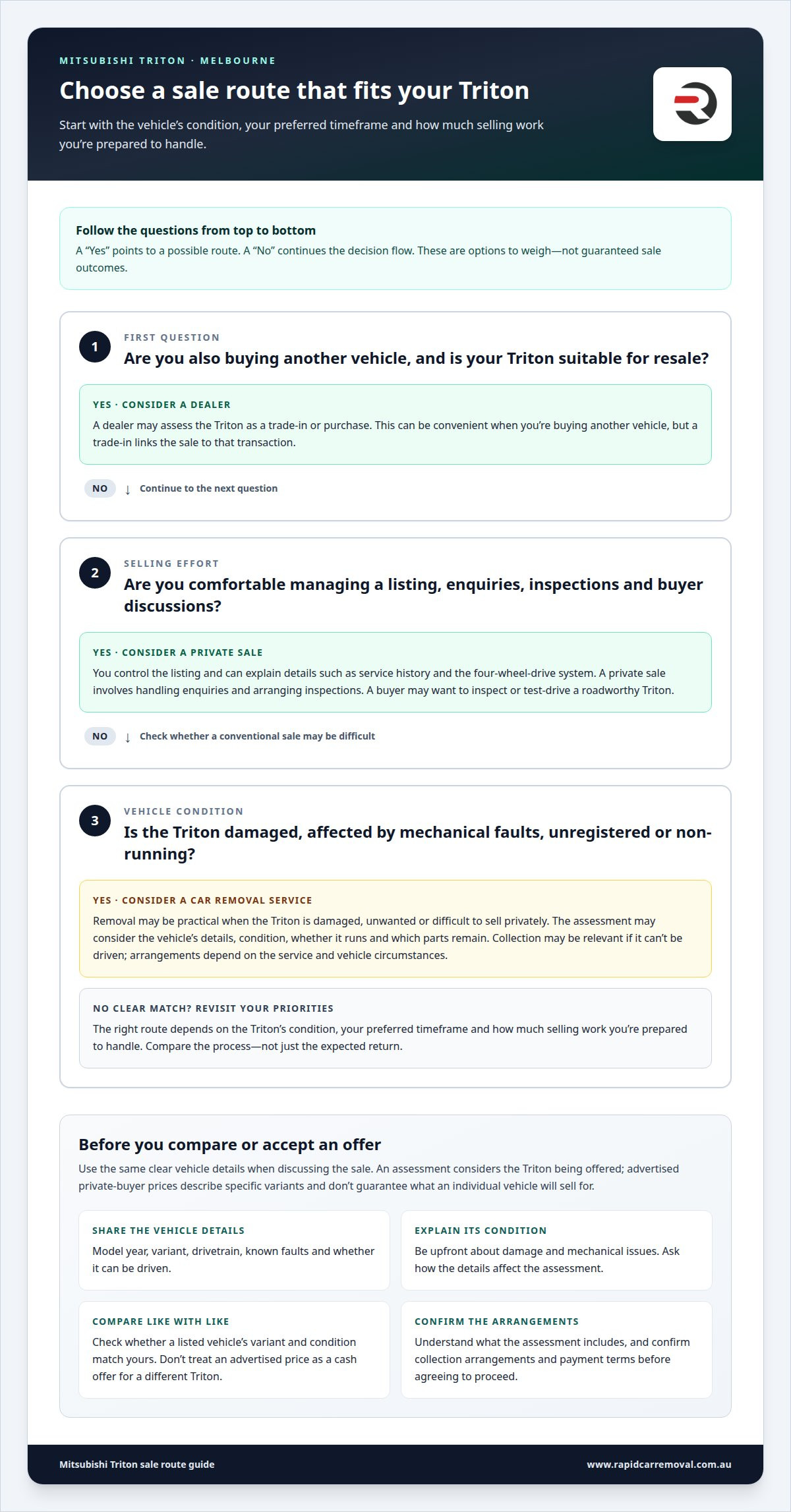
The right sale route depends on your Triton’s condition, your preferred timeframe and how much selling work you’re prepared to handle. A tidy, roadworthy ute may suit a dealer or private buyer. A damaged, unregistered or non-running Triton may be harder to sell through those channels. Compare the process, not just the expected return.
A dealer can assess a Triton as a trade-in or purchase, particularly when it’s suitable for resale. This can be convenient if you’re also buying another vehicle. The dealer considers its condition, specification and resale prospects. A trade-in links the sale to another transaction, so it may not suit someone who only wants to sell their ute.
A private sale lets you present the Triton directly to prospective buyers. You control the listing and discussions, and can explain details such as its service history or four-wheel-drive system. In return, you handle enquiries, arrange inspections and talk with each interested person. A buyer may want to inspect or test-drive a roadworthy vehicle before deciding.
A car removal service can be a practical route when a Triton is damaged, unwanted or difficult to sell privately. The assessment focuses on the vehicle’s details and condition, including whether it runs and which parts remain. Collection can be relevant when the ute can’t be driven, but the arrangements depend on the service and vehicle circumstances. Clarify what the assessment includes before agreeing to proceed.
- Choose a dealer if trading in suits your next vehicle purchase and the Triton is suitable for resale.
- Choose a private sale if you’re comfortable managing the listing, inspections and buyer discussions.
- Consider removal if damage, mechanical faults or an unusable vehicle make a conventional sale less practical.
Before accepting an offer, describe the Triton accurately. Include its model year, variant, drivetrain, known faults and whether it can be driven. Ask how those details affect the assessment, and confirm collection arrangements and payment terms before proceeding. For example, disclose accident damage early rather than waiting until inspection. Clear information helps ensure the vehicle described matches the one assessed.
If you’re weighing a direct sale against a removal option, you can discuss your Triton’s sale and the details that may affect its assessment.
Advertised private-buyer prices can provide a reference when comparing sale routes, but they don’t guarantee what an individual Triton will sell for. Those figures relate to the named variants, so don’t treat them as an assessment of a different Triton or its condition.
For a seller, the useful comparison is whether the ute’s variant and condition match an example, and whether managing a private sale suits their circumstances. A dealer or removal assessment considers the vehicle being offered, while private-buyer prices describe advertised variants. Keep those differences in mind alongside the Triton’s faults, drivability and collection needs when considering an offer.
What documents are needed to sell a Mitsubishi Triton in Victoria?
For a Mitsubishi Triton sale in Victoria, prepare identification, ownership information and vehicle records. The paperwork depends on how the ute is registered and the sale arrangement. Keep useful documents together before discussing the sale. This helps identify the Triton and explain its history.
Proof of identity and ownership: Have photo identification ready and gather paperwork that connects you to the Triton. Examples include purchase documents or records showing how ownership was transferred to you. If the vehicle is registered in another person’s name, involve them in the sale process. The buyer needs to understand who can authorise the transaction.
Registration and vehicle details: Keep the registration certificate or available registration information nearby. It can help match the vehicle’s details, such as its registration number and Vehicle Identification Number, or VIN. The VIN identifies the specific Triton. Where available, compare it with the vehicle’s identification plate and paperwork to help ensure the correct vehicle is assessed.
Finance documents: If a lender has an interest in the Triton, gather the relevant loan and account details. These help explain the vehicle’s financial status and what steps remain before the sale can proceed. Don’t describe the ute as unencumbered if finance is still attached. Discuss the arrangement openly before accepting an offer.
- Photo identification and available proof of ownership.
- Registration details and the Triton’s VIN.
- Loan information if finance is attached.
- Service books, invoices and maintenance receipts.
- Accident, repair or insurance records, if relevant.
Service and condition records: Service books and invoices can show work completed, including engine servicing or transmission repairs. If the Triton has accident damage, keep relevant repair estimates or insurance paperwork together. These records help explain what has happened to the vehicle and distinguish documented repairs from faults that still need attention.
Before collection or handover, keep copies of sale-related paperwork and record the agreed vehicle details. Make sure the description reflects the Triton’s model, registration information and known condition. If you can’t locate a service book, say so and provide any invoices you still have. Accurate records help avoid confusion about the vehicle being sold.
For a registered Triton, keep registration information accessible. For a damaged or unregistered one, ownership and vehicle identification details are still useful. Put the documents in one folder, then share relevant details during the assessment. This preparation gives the buyer a clearer picture and helps keep the sale organised.
Involve the registered owner if the Triton is registered in someone else’s name. Before handover, keep copies of sale-related paperwork and record the agreed vehicle details, including its registration information and known condition.
What affects a Mitsubishi Triton's cash offer, including kilometres, damage and service history
A Triton’s cash offer reflects more than its model year. Kilometres, mechanical condition, accident damage, service records, variant and drivetrain all help describe the vehicle being assessed. Share an accurate picture from the outset. A clear account of the ute’s faults and features helps the assessment reflect its actual condition.
Kilometres provide context. Melbourne listings include a 2021 Triton GSR MR with 117,353 km and a 2021 GLX MR with 144,118 km. A 2019 GLX+ MR listing showed 116,924 km. These examples show the odometer readings of individual vehicles, not a universal value threshold. A reading makes more sense alongside the Triton’s age, variant, maintenance and overall wear.
Damage changes what can be assessed. Describe collision damage, dents, rust, broken glass and missing components. Mechanical issues matter too. Disclose engine problems, transmission faults or a four-wheel-drive system that doesn’t engage correctly. A damaged Triton may still have usable components, but its condition and completeness affect its assessment. Don’t describe a vehicle as running normally if it has faults.
Service history adds useful detail. A logbook, invoices and repair records can show what maintenance has been completed. Records for engine servicing or transmission work help distinguish documented maintenance from an owner’s recollection. If the Triton’s history has gaps, explain what you know and identify any missing records. Clear information is more useful than expecting the buyer to infer maintenance from appearance.
Specification also matters. The Triton’s 2.4-litre bi-turbo diesel produces 150 kW and 470 Nm of torque. Those engine figures describe its capability, but they don’t establish a cash offer by themselves. A 4x2 and 4x4 are different configurations, and cab chassis and ute body styles can suit different buyers or uses. Include the exact variant and drivetrain when describing your vehicle.
Before an assessment, organise the details in a short vehicle summary:
- Model year, variant, transmission and 4x2 or 4x4 configuration.
- Odometer reading and whether the Triton starts and drives.
- Known mechanical faults, accident damage and missing parts.
- Available service records and completed repairs.
These details help the assessor understand the Triton as a whole, rather than relying on one listing or feature. A cash offer depends on the vehicle being assessed and follows a quote request. Accurate information about kilometres, damage and service history gives the assessment a sound basis.
How can I check a cash-for-cars buyer is reputable in Melbourne
Start with the buyer’s process, not just a headline offer. A Melbourne buyer should explain how the Triton is assessed, what collection involves and when payment occurs. The explanation should reflect the details you provide, including the model, condition and whether it runs. Clear answers make it easier to understand what you’re agreeing to.
Ask for the offer and its conditions in writing before arranging handover. The record should identify your Mitsubishi Triton and state what could change the offer after inspection. For example, if you’ve disclosed a damaged tailgate, the assessment should account for it rather than treating it as a surprise. A clear written explanation helps you compare the terms with the vehicle being collected.
Check the collection arrangements carefully. Confirm the pickup address, who will attend and how the Triton will be moved if it doesn’t start. If the vehicle is in a shared driveway or restricted-access area, explain that before agreeing to collection. Questions about access and vehicle condition help clarify the process.
- Request a written offer with any conditions explained plainly.
- Confirm what happens if the inspection finds an undisclosed fault.
- Agree on the collection location and how a non-running Triton will be handled.
- Clarify payment timing and method before handing over the keys.
- Keep a record of the agreed vehicle details and sale arrangements.
Pay attention to how the buyer handles questions about payment. Ask when funds will be transferred and what confirmation you’ll receive. Avoid relying on a verbal assurance if the timing or method remains unclear. A straightforward buyer can explain the steps without pressuring you to decide immediately. Take time to read the terms and make sure they match the discussion.
Communication is another useful test. Notice whether the buyer records the Triton’s year, variant, drivetrain, kilometres and disclosed damage accurately. If you described a 4x4 with a mechanical fault, the assessment should refer to those specifics. A mismatch between your description and the written terms is a reason to pause and get the details corrected before proceeding.
Finally, keep a copy of the written agreement and any handover record. Make sure the documents identify the vehicle and reflect the agreed arrangements. A reliable transaction should leave you clear about the offer, collection and payment, rather than unsure about what happens next. If you’re ready to discuss your Triton’s assessment, send through its details and ask about the next steps.
Rapid Car Removal
Rapid Car Removal helps Melbourne owners sell unwanted vehicles, including Tritons, with an assessment based on the details and condition provided. If your Triton is a 4x4, its four-wheel-drive configuration is relevant when describing it. If it’s damaged or no longer useful, explain its faults and whether it can be driven so the assessment reflects the vehicle accurately.
Rapid Car Removal offers cash for cars and free car removal across Melbourne. This suits owners who want to sell an unwanted Triton without finding a private buyer or arranging separate collection. Share the model details, condition and location to request a quote.
Contact Rapid Car Removal to discuss selling your Triton.
Take the next step with confidence
Choose a sale path that fits what you need from the handover, then make your next conversation specific to your Triton. A clear description keeps the discussion focused on the vehicle and arrangements that matter to you. For cash for a Mitsubishi Triton in Melbourne, share the details with Rapid Car Removal to discuss the next step, without committing before you’re ready.
Before proceeding, make sure you understand the proposed arrangements and feel comfortable with them. A considered decision can make the change from unwanted ute to completed sale more straightforward. You’re in control of whether to move ahead.
Contact Rapid Car Removal to discuss your Triton and take the next step when it suits you.
Frequently Asked Questions
Who buys Mitsubishi Tritons for cash in Melbourne?
Rapid Car Removal buys unwanted vehicles through its Cash for Cars service, including Mitsubishi Tritons. For cash for a Mitsubishi Triton in Melbourne, Rapid Car Removal can assess the ute for resale, parts or recycling. Share the Triton’s model details and describe its condition clearly. This helps the team understand which vehicle is being assessed and explain the next steps for the sale.
How much do Melbourne car wreckers pay for a Mitsubishi Triton?
There isn’t one fixed cash amount for every Triton, because each offer depends on the vehicle being assessed. Model, variant, drivetrain, kilometres, mechanical condition and usable components all help shape its value. A private-sale asking price is different from a wrecker’s cash offer. Give the buyer accurate details about faults, damage and missing parts so the assessment reflects the Triton you’re selling.
Are free towing and same-day cash pickup available for Triton removals in Melbourne?
Yes. Rapid Car Removal provides free vehicle removal and same-day pickup across Melbourne. Payment is made on the spot by cash or cheque, or by instant bank transfer through Osko or PayID. Share the Triton’s location and whether it can be driven when arranging collection. This helps organise pickup for the vehicle and access conditions, including if the ute is damaged or won’t start.


