

A HiAce’s model year is only one factor in its advertised price.
It’s easy to focus on age, but kilometres, condition and specification also matter when comparing asking prices. These are advertised prices, not guaranteed sale values or cash offers. Treat them as a starting point and compare similar vans wherever possible.
This guide explains how model year and kilometres relate to Melbourne HiAce listings, why vans from the same year can have different asking prices, and how to use advertised prices as a reference when deciding what to do with an older van.
Key Takeaways
- Compare Hiaces with similar model years, kilometres and specifications to make advertised prices more useful as a guide.
- Assess whether a private sale, trade-in or cash sale best suits your van’s condition and how much time you want to spend selling it.
- Have the relevant ownership and vehicle details ready to help keep the sale process clear and straightforward.
- Before accepting an offer, clarify what it covers, including any removal arrangements or other costs.
- Use clear communication and confirm the payment and handover details to help protect yourself from scams.
Do Melbourne Hiace buyers accept unregistered, damaged or non-running vans?
Registration status, damage and mechanical faults affect how buyers assess a HiAce, but don’t automatically make it impossible to sell. The key distinction is between a van suitable for road use and one valued for repair or parts. Give the buyer an accurate picture so they can assess its condition and collection needs.
For an unregistered HiAce, explain its registration status upfront. Registration and roadworthiness are separate considerations when assessing a vehicle. Don’t describe an unregistered van as ready to drive. Include its model year, body style and known issues in your description. For example, a 2017 LWB and a 2019 SLWB are different configurations, even before their condition is considered.
Describe damage clearly, including affected areas such as body panels, doors, glass or the cabin. Explain whether the van has collision damage, rust or missing parts. Photos show visible damage, but not mechanical problems, so provide both to help the buyer assess the whole vehicle.
A non-running HiAce needs a practical collection plan. Explain whether the engine starts, the wheels turn and the van can roll. Mention access issues, such as a narrow driveway or another car blocking it. These details help the buyer plan loading and removal before agreeing to proceed.
Odometer readings give useful context, but they don’t tell the entire story. Melbourne listings include a 2017 HiAce LWB with 165,049 km and another with 347,713 km. Those examples show why year alone cannot describe a van’s use. Buyers also weigh its condition, configuration, service history and whether it runs.
- Unregistered: State its status and whether it can move under its own power.
- Damaged: Describe each known fault, not only the most visible one.
- Non-running: Explain what happens when you try to start it.
- Hard to access: Describe the location and any obstacles around the van.
Keep your description consistent from first contact through collection. If a fault changes or you discover another issue, update the buyer before finalising arrangements. For example, mention a flat tyre or a door that won’t open. Clear details help avoid mismatched expectations when assessing an old HiAce, including one that cannot be driven away.
Cash for cars vs private sale or trade-in for Hiace
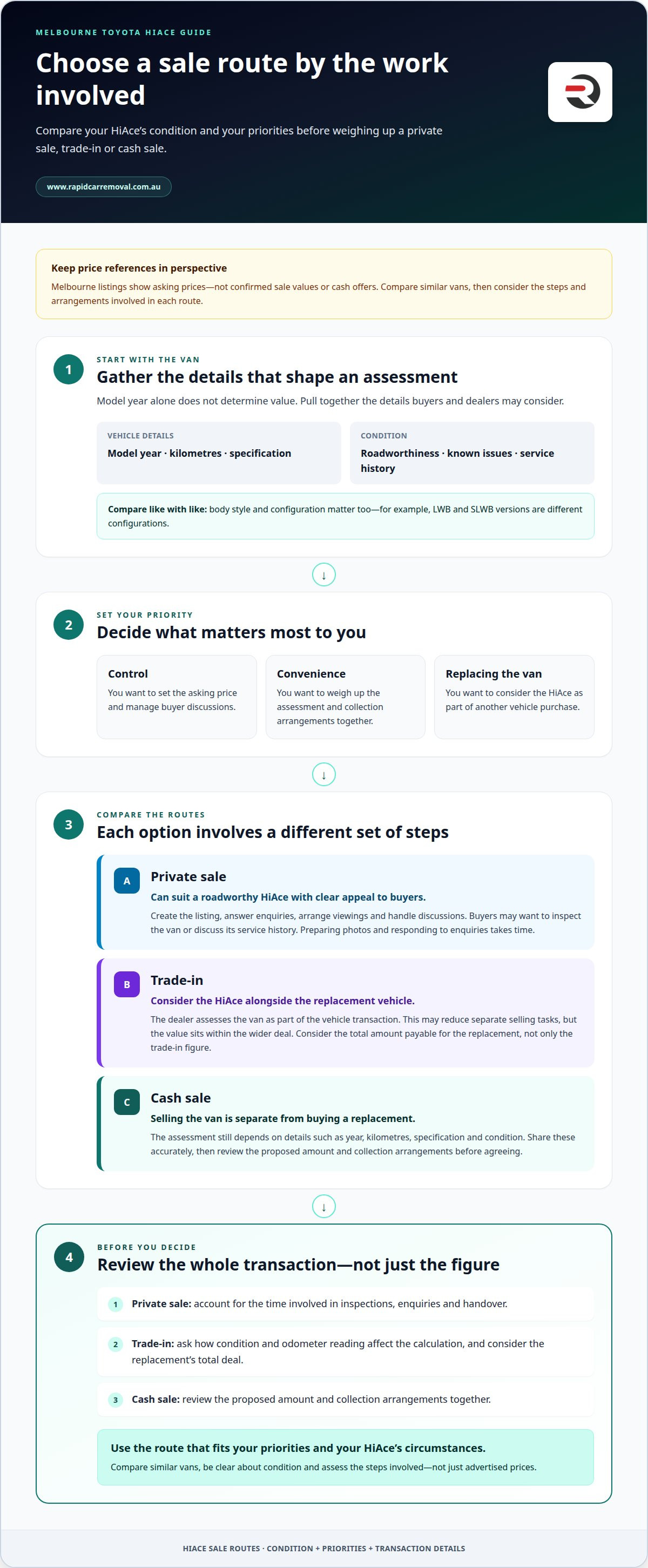
Choose a selling route based on your HiAce’s condition, your priorities and how much time you have. A private sale gives you control over the advertisement and buyer discussions. A trade-in links the van’s value to another vehicle purchase. Cash for an old Toyota HiAce in Melbourne is another option. Compare the steps involved, not just the advertised figure, and consider the time needed for inspections, enquiries and handover.
A private sale can suit a roadworthy HiAce with clear appeal to buyers. You create the listing, answer enquiries and arrange viewings. Buyers may want to inspect the van or discuss its service history. These are asking prices, not confirmed sale prices or cash offers.
These examples show why model year alone doesn’t determine value. Compare body style, kilometres, condition and equipment. A HiAce’s configuration differs between LWB and SLWB versions. Use listings as reference points, then consider whether your van’s condition meets private buyers’ expectations. Preparing photos and answering enquiries also takes time.
A trade-in can be practical when you’re replacing the HiAce. The dealer assesses it as part of the vehicle transaction. This may reduce separate selling tasks, but the value sits within the wider deal. Consider the total amount payable for the replacement, not just the trade-in figure. Ask how the HiAce’s condition and odometer reading affect the calculation.
If you’re weighing up cash for an old Toyota HiAce in Melbourne, consider whether a direct sale fits your plans. It separates selling the van from buying a replacement. The assessment still depends on details such as year, kilometres, specification and condition. Share these accurately, then review the proposed amount and collection arrangements before agreeing.
- Private sale: Set the asking price and manage enquiries, inspections and negotiations yourself.
- Trade-in: Consider the HiAce alongside the replacement vehicle’s total deal.
- Cash sale: Compare the assessment and collection arrangements as one transaction.
- Advertised prices: Treat Melbourne listings as asking-price examples, not guaranteed sale values.
To compare routes, write down your priority first: control, convenience or replacing the van. Match that priority against the steps each option requires. If a cash sale for your old Toyota HiAce in Melbourne seems worth considering, you can discuss your HiAce sale options before deciding which route fits.
Documents needed to sell a Toyota Hiace in Victoria
Prepare paperwork that identifies you and the HiAce. The documents needed depend on the sale arrangement. This practical list can help you organise information, but it isn’t a complete statement of legal requirements. Keep originals secure and share copies only when needed for the transaction.
Start with documents showing your connection to the van. Registration papers, purchase documents or other ownership records can help identify the vehicle and seller. If someone else is handling the sale, gather paperwork showing their authority to act. For an estate or business vehicle, organise the relevant executor or business records before discussing handover.
Have your photo identification available to confirm your identity. The name should match the seller information used during the sale. If the HiAce is registered under another name, explain this before finalising arrangements. This helps clarify who is selling the vehicle and who can sign the sale paperwork.
Gather the HiAce’s identifying details in one place. Use registration papers or vehicle records to note its registration number, VIN, model year and variant. Add the odometer reading and whether the van runs. For example, distinguish an LWB from an SLWB. Accurate details help prevent confusion between similar HiAce models.
- Identity: Have current photo identification available.
- Vehicle records: Gather registration papers or other records showing its details.
- Ownership or authority: Prepare relevant purchase, estate or business documents.
- Condition details: Note the odometer reading, faults and missing items.
- Sale record: Keep a written record of the agreed terms.
Service receipts and repair invoices can provide useful history. Group them by date or type of work, including records for major repairs, replacement parts or recent servicing. These documents don’t replace a description of current faults. They add context, such as whether a noted repair was completed or remains outstanding.
If the HiAce has finance attached, gather the relevant loan paperwork. It can help establish the account details and steps needed to complete the sale. Don’t assume the vehicle is unencumbered just because repayments are up to date. Clarify the finance position as part of agreeing the transaction.
Before handover, keep a copy of the final sale record. It should identify the parties, the HiAce, the agreed terms and the handover date. Keep any payment record with it. Remove personal items and retain documents containing private information. An organised file makes it easier to track what was agreed and what changed.
Keep the HiAce’s identification, ownership, service and sale records in one folder. This makes missing details easier to spot before arranging handover.
What fees or towing costs should I check before accepting a cash offer
Ask for the full amount payable for your HiAce. Confirm whether collection is included, and get the answer in writing before agreeing. A verbal figure can leave room for different assumptions. The offer depends on the van’s model, year, kilometres, condition and collection requirements, and is provided after you request a quote.
Separate the vehicle offer from each possible deduction. Ask whether towing, loading or handling changes the amount you receive. A non-running HiAce may need different loading arrangements from a van that drives. Explain its condition and location accurately. Then ask whether those details change the agreed amount or collection plan.
Confirm that the quoted amount includes pickup from your address and clarify any access details that could affect collection. For example, a HiAce parked behind another vehicle may need extra manoeuvring. A narrow driveway or underground parking can also affect how a tow vehicle reaches it.
Confirm the collection area and any distance-related conditions. Give the suburb and the van’s exact position, such as a street, driveway or workshop. If it’s at a repairer, check access times with that business. Ask whether the quoted amount remains the same for that location. Don’t assume a phone estimate covers every collection detail.
Ask about possible administration or cancellation charges before accepting. Find out whether any charge applies if the vehicle details differ from your description. For instance, an undisclosed missing engine or an inaccessible parking spot could change the collection plan. Get any revised terms explained before the HiAce is loaded.
- Collection: Confirm whether towing and loading are included.
- Access: Explain narrow driveways, gates or restricted parking.
- Deductions: Ask what could reduce the amount paid.
- Changes: Clarify what happens if the van’s condition differs.
- Payment: Confirm the payment method and timing before handover.
Keep the written offer and collection details together. Check that they identify the correct HiAce, its location and the agreed amount. If someone gives a revised figure at pickup, pause before handover. Ask what changed and request the revised terms in writing. Don’t rely on a verbal promise while the vehicle is being loaded.
Before accepting, summarise the key terms: amount, included collection, any deductions, payment method and handover arrangements. That short record makes differences easier to spot. To discuss the details for your van, send a HiAce sale enquiry with its condition and collection location.
How can I avoid scams when selling an old Toyota HiAce for cash in Melbourne
Document every step of the HiAce sale. Start with a written offer identifying the van, its condition and the agreed amount. Check that the buyer’s name and business details match their messages and paperwork. If the offer changes, request revised terms in writing before proceeding. Pressure to decide immediately is a reason to pause.
Be cautious about requests for upfront payments. A buyer shouldn’t need your online banking password, one-time security code or card PIN. Don’t follow unexpected payment links or install software to receive money. If a buyer says they’ve transferred funds, check your bank account directly. A screenshot or message alone doesn’t prove payment arrived.
Agree on payment and handover details before collection. Record the payment method, timing and amount in writing. Don’t hand over keys or documents based only on a transfer confirmation. Confirm the funds through your bank first, then keep the agreement and payment record with the HiAce’s identifying details.
- Unclear identity: Pause if names differ across messages and paperwork.
- Advance payment request: Don’t pay to unlock a supposed vehicle payment.
- Changed offer: Get the new amount and reason in writing.
- Payment screenshot: Check your account independently before handover.
- Unexpected link: Avoid entering banking details through messages.
- Urgent pressure: Take time to read the sale terms.
Share only the information needed for the transaction. A buyer may need vehicle details, but not your banking login. Keep identity documents secure and don’t send unmasked copies casually through unfamiliar messaging accounts. If a document is necessary, use a direct, trusted communication channel and retain a record of what you shared.
Match the paperwork to the actual HiAce. Check its registration details, VIN and model description against the sale record. Make sure the buyer’s details and agreed terms are clear. Don’t sign a blank form or leave fields unfinished. Keep a complete copy before the vehicle leaves your possession.
For example, if a buyer offers one amount by phone, then asks for an extra towing payment at pickup, stop and review the written terms. Don’t let a loaded vehicle pressure you into accepting new conditions. Ask for an explanation and revised agreement before proceeding. Clear records help identify what changed.
For a documented sale discussion, send your HiAce details securely and keep the written terms for reference.
Rapid Car Removal
Rapid Car Removal can help if you’re ready to sell an unwanted HiAce and want a straightforward removal option. Its car removal service suits owners who don’t want to manage private-sale enquiries, while free car removal can help with the collection side. The team handles unwanted vehicles in different conditions, so a damaged or non-running van can still be discussed.
When requesting a quote, share the HiAce’s model year, kilometres, condition and location. These details help assess the vehicle and plan collection. The offer depends on the van, so review it alongside the removal arrangements before deciding whether they suit you.
If you’d like to discuss your van, contact Rapid Car Removal.
Choose the next step that suits your HiAce
An old van can sit in limbo while you weigh up what to do. Set a clear outcome: keep it, repair it or move on. That turns browsing advertised prices into a practical next step without treating a listing as a promise of what your own vehicle will sell for.
If cash for an old Toyota HiAce in Melbourne is the option you’re considering, ask for an assessment based on your van’s details. Review the terms and consider whether they fit your plans. You’re in control of the decision and don’t need to agree until you’re comfortable with the arrangement.
Ready to take the next step? Start a HiAce sale conversation with Rapid Car Removal. A clear decision can make moving forward feel much simpler.
Frequently Asked Questions
Which Melbourne companies buy old Toyota HiAce vans for cash?
Rapid Car Removal buys unwanted vans, including Toyota HiAce models, for cash in Melbourne, with free removal. Older, damaged or non-running vans can be assessed. Share the HiAce’s model, condition and location when requesting a quote. You can then review the offer and sale arrangements before deciding whether to proceed.
How much can I get for an old Toyota HiAce in Melbourne?
There isn’t one set cash amount for every old HiAce. Melbourne listings show asking prices, not what a particular buyer will pay for your van. A cash assessment depends on details such as its model, kilometres, condition and specification. Rapid Car Removal provides an offer after a quote request. Compare it with your priorities, not just an online listing.
What affects the cash offer for a Toyota HiAce, including age, condition, model and kilometres?
Age, condition, model and kilometres all affect an assessment. A newer HiAce may differ from an older one, while an LWB, SLWB or Commuter has a different configuration. Buyers also consider whether it runs, visible damage, missing parts and mechanical faults. Give an accurate description, including the odometer reading and known issues. For example, disclose a starting problem even if the body looks tidy.
Do Melbourne buyers offer free HiAce pickup and same-day payment?
Rapid Car Removal offers free same-day vehicle pickup across Melbourne, with collection within 60 minutes of offer acceptance. Payment is made on the spot by cash, cheque or instant bank transfer through Osko or PayID. With bank transfer, funds land in your account within 60 seconds of acceptance. Confirm the agreed HiAce details and sale terms before handover so the collection and payment relate to the correct vehicle.


