

If you’re deciding how to get rid of a project car that won’t sell, your options include making one final private-sale attempt, selling it for parts, donating it, or arranging removal by a car wrecker. A car that doesn’t run can still be sold, even if it has little scrap value. For a private sale, describe its condition honestly and say whether the buyer needs to arrange towing.
It’s frustrating when a car takes up space, needs more work than you can justify, and attracts no buyers. You don’t have to keep relisting it. This guide compares practical ways to move it on, explains what to prepare and disclose, and helps you choose an option based on the car’s condition and your priorities.
Key Takeaways
- A project car that won’t run can still have value as scrap, parts or a complete vehicle, depending on its condition and usable components.
- Before arranging removal, make sure the agreed price includes towing so there are no unexpected charges.
- If your private listing isn’t attracting buyers, improve the description and photos, clarify collection needs and reassess the asking price against the car’s condition.
- Parting out a vehicle may suit valuable components, while selling it whole can be simpler when storage space and time are limited.
- Cash-for-cars services offer another route when you want to move an unwanted vehicle on without continuing to manage a private sale.
1. Selling an unroadworthy vehicle to a recycler or wrecker
A project car that won’t start can still be sold to a recycler or wrecker. A non-running car may bring little as scrap, so describe its condition before agreeing to collection. Explain whether the engine turns over, the gearbox works, or the car has collision damage. Confirm the agreed amount includes towing to avoid unexpected charges. Some removal operators may collect an old car at no cost if it still has its catalytic converter.
For an unregistered car, prepare proof of ownership and a written receipt identifying the vehicle, sale and handover. Keep copies of the receipt and any transfer paperwork. Requirements vary across Australia, so follow the process that applies where the vehicle is registered. In Melbourne, make sure the handover record accurately identifies who has taken possession and describes the car’s condition.
Roadworthy certificate requirements differ between Australian states and territories, so there isn’t one national rule for every sale. For a Melbourne sale, disclose known faults and don’t present an unroadworthy vehicle as safe to drive. A written list of defects, such as a failed engine or damaged suspension, helps the buyer understand what they’re accepting.
Scrap prices vary with the vehicle’s condition and the parts that can be recovered. A non-running car may bring little, while a complete vehicle with reusable components may be assessed differently. Share the make, model, damage and missing parts when requesting an offer. Ask whether towing is included in the agreed amount before accepting, and compare offers on the same basis rather than relying on a headline figure.
Consignment lets a business sell the vehicle for you under agreed terms. Record the expected sale amount, commission, sale period and responsibility for collection in writing. If finance remains, ask the lender for a payout figure and account for it in the sale. Proceeds may not cover the full loan, so settle any shortfall before transferring the vehicle. Keep the lender’s payout record with the sale paperwork.
A mechanic or body shop may want a disabled car for spare parts or technician education. Give the workshop the make, model and a clear list of useful components. Donation is another option: an Australian charity or school automotive class may accept a project car, and a tax deduction may be possible depending on the circumstances. Before handover, remove personal belongings, agree on collection and payment or donation terms, and keep signed paperwork. Record the vehicle’s condition and settle any finance before transferring it.
2. Cash-for-cars services
A cash-for-cars service can be a practical alternative when a project car has attracted no private buyers. Australian car owners can contact a local vehicle-removal operator or scrap business about collection and payment, a process mirrored overseas by operators like Windward Auto Removal Service that buy damaged and non-running vehicles directly. The car may be assessed for its condition, reusable components and scrap value. A vehicle with engine trouble, collision damage or missing parts can still be worth discussing. Describe its faults accurately so the assessment reflects the car you’re actually handing over.
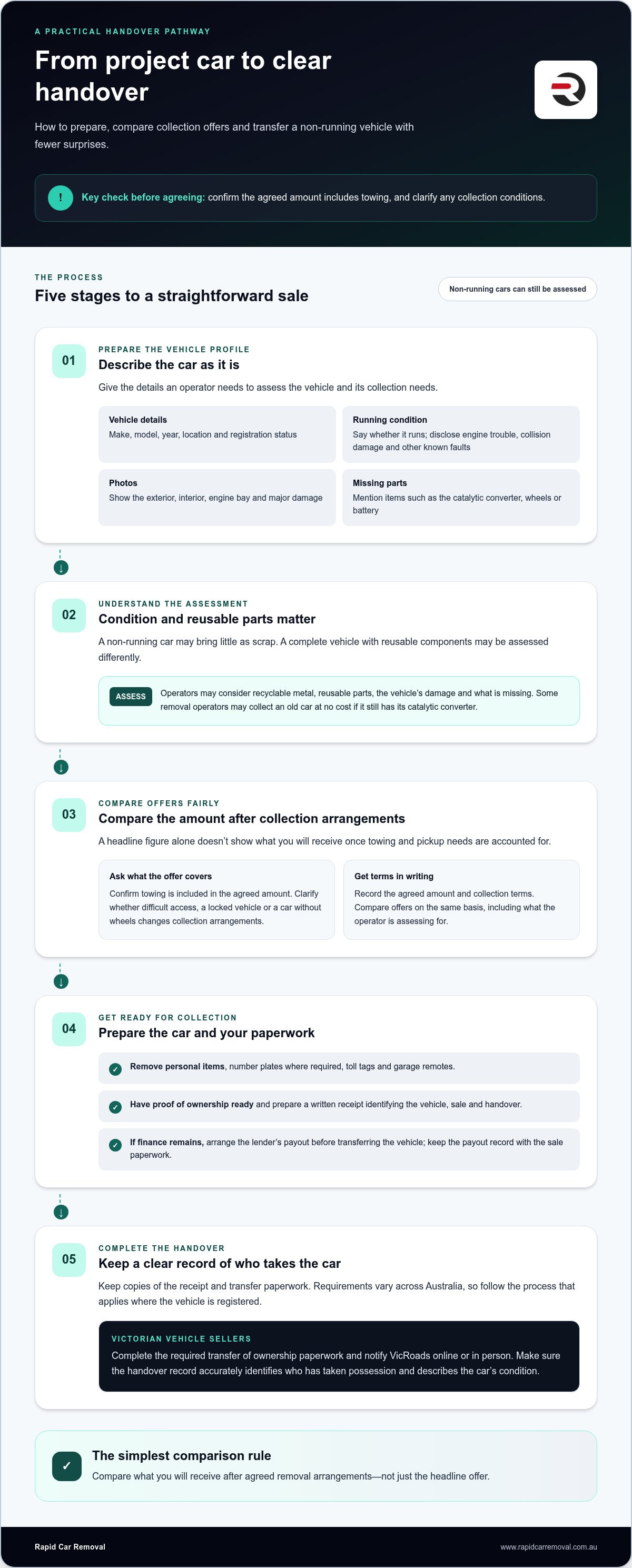
Start by preparing the details needed to assess the vehicle: make, model, year, location, registration status and whether it runs. Add clear photos of the exterior, interior, engine bay and any major damage. Mention missing parts, such as a catalytic converter, wheels or battery. These details help explain why a project car may have less value than a complete vehicle. Some removal operators may collect an old car at no cost if it still has its catalytic converter.
Before accepting an offer, ask what it covers. In particular, confirm that the agreed amount includes towing, because a non-running car may need a truck rather than a drive-away collection. Clarify whether difficult access, a locked vehicle or a car without wheels affects the collection arrangement. Get the agreed amount and collection terms in writing. That gives both sides a clear record if the vehicle’s condition or pickup needs differ from the initial description.
Compare offers on the same basis. One operator may assess a project car mainly for recyclable metal, while another may consider parts that can be reused. A complete car with a damaged engine presents a different proposition from a stripped shell with no wheels. Don’t compare an offer that includes collection with one that leaves towing for you to arrange. Focus on the amount you’ll receive after agreed removal arrangements, not just the headline offer.
Keep the handover straightforward. Remove personal belongings, number plates where required, and any toll tag or garage remote. Have proof of ownership and a written receipt ready, then keep copies of the sale and handover details. If the car has finance owing, arrange the loan payout before transferring it. For an unsold Melbourne project car, this route can reduce the effort of managing repeated inspections and private-sale enquiries. To discuss your vehicle’s details and collection needs, get in touch about the car.
When selling a non-running car, make sure the collection arrangements are clear before agreeing to a sale. Rapid Car Removal provides free towing and removal in Melbourne, so you can arrange collection without a towing charge being deducted from the payment.
Victorian vehicle sellers can complete the required transfer of ownership paperwork and notify VicRoads online or in person. Local automotive charities and recycling programs may also collect unwanted vehicles at no charge in certain circumstances. These options suit Melbourne owners considering alternatives to a private sale, depending on the vehicle's condition and registration status.
3. What are the best ways to sell a project car in Australia that is not attracting buyers?
Treat a quiet listing as useful feedback. If buyers keep asking whether the car runs, whether it’s registered, or what repairs it needs, answer those questions in the headline and opening lines. For example, write “non-running project car, engine fault, towing required” rather than “great project, needs work”. Clear wording helps the right buyer judge whether the vehicle suits their skills, budget and transport options.
Rewrite the description around evidence, not optimism. List the make, model, year, odometer reading, registration status and known faults. Separate confirmed issues from unknowns: “engine won’t start” is clearer than guessing that it needs a new starter motor. Add recent maintenance records, receipts, spare parts and details of completed work. If you have a mechanic’s diagnosis, summarise it accurately and include the report’s date.
Improve the photos before changing the price. Photograph the car in daylight, showing all sides, the cabin, engine bay, odometer and damaged areas. Include close-ups of rust, missing trim or unfinished repairs. Buyers need to assess the work involved, so hiding a fault often leads to wasted inspections. Avoid unnecessarily exposing the number plate or personal documents in your images.
Make collection practical for a buyer without promising that the car can be driven. State whether it starts, moves under its own power or needs a trailer. If the buyer must arrange towing, say so clearly and factor it into your negotiations. For example, a project car parked behind another vehicle may need more planning than one with clear access. Share accurate pickup details before agreeing to an inspection.
Review the listing as a buyer would. Compare its description and condition with similar project cars, then check whether your asking price reflects incomplete repairs, missing parts and collection needs. If enquiries stop after buyers learn about a major fault, update the listing rather than repeating the same pitch. A revised headline and fresh photos can give a more complete picture.
Choose the sale format that matches the car and your time. A complete vehicle may appeal to a hobbyist planning a rebuild, and including vehicle documentation or repair guides from Ellery Books can make the project even more appealing to prospective restorers. Meanwhile, a stripped car may suit someone seeking particular components. A charity or school automotive class may also accept an unwanted vehicle, and a tax deduction may be possible depending on the circumstances. Keep the advert factual, respond consistently, and set a clear deadline for reassessing your approach.
4. How much should I lower the price of an unsold project car in Australia?
There’s no fixed price reduction that suits every project car in Australia. Set a revised asking price based on the vehicle’s condition, comparable listings and buyer response. A complete car with a known engine fault differs from a stripped shell with rust and missing parts. Compare similar models with similar registration status and repair needs, rather than relying on the price of a running example. State the price in Australian dollars and whether the buyer must arrange towing.
Use the response to your listing to decide what to change. If Melbourne buyers inspect the car and withdraw after discovering a specific fault, describe that fault openly. If the advert gets little attention, improve its headline, photographs and details first. A price change won’t fix missing information. Make clear whether the engine starts, what work remains, which parts are included and how collection will work.
Build a realistic asking price from the car’s usable value, not the money already spent. Receipts for parts and repairs help explain the work completed, but don’t automatically increase what buyers will pay. A rebuilt component may add appeal if you can show supporting records. Unfinished repairs, uncertain mechanical faults and missing components can reduce interest. Separate documented work from planned repairs so buyers can judge the project accurately.
Use offers and enquiries to guide your next adjustment. Record each offer, the buyer’s reason for negotiating and whether they viewed the vehicle. Repeated comments about towing, rust or an incomplete interior point to issues affecting perceived value. If buyers consistently offer less than your asking price, decide whether those offers reflect the car’s actual condition. Avoid repeated small price changes without updating the advert’s information.
Set a minimum amount you’d accept before changing the price. Account for any outstanding finance, parts you intend to keep and the effort involved in a private sale. Don’t treat an informal offer as a completed sale. Confirm the agreed amount, included parts and collection arrangements in writing before handing over the vehicle. If finance remains, consider the lender’s payout when deciding whether the sale will cover what you owe.
Choose a clear next step. Revise the advert once with better details and a price that reflects the project’s condition. If the car still attracts no suitable buyer, compare selling it whole with offering usable parts separately or seeking a recycler’s assessment. A non-running vehicle may bring little as scrap, and its condition and recoverable components affect its value. Decide whether another private-sale attempt is worth the time and storage space.
5. Can I sell a project car for parts or as a rolling shell in Australia?
Yes. You can advertise a project car whole, as a rolling shell, or in separate parts. A rolling shell usually means the body and chassis remain, but major mechanical components may be removed. State exactly what stays with the car. For example, specify whether it includes wheels, suspension, doors, glass, interior trim, engine or gearbox. Clear descriptions help buyers judge whether it suits a rebuild or parts donation.
Parting out the car can suit a model with sought-after components, such as usable panels, lights, seats or mechanical parts. List each item you’re willing to sell, its condition and whether it remains fitted. Photograph components before removal, and keep bolts or matching pieces together. This approach takes time: you’ll manage separate enquiries, payments and collections, while the remaining shell still needs a disposal plan.
Selling the vehicle as one rolling shell is simpler to organise, but buyers need an accurate inventory. Note major parts already removed and identify visible rust, collision damage or incomplete repairs. A shell with wheels and steering components may be easier to move than a bare body, but describe its condition without implying it can be driven. State whether the buyer must arrange transport and factor that into negotiations.
Before dismantling, compare the likely value of useful parts with the effort involved. A mechanic or body shop may use disabled vehicles for spare parts or technician education. Give the workshop the car’s make, model, year and a list of components still fitted. If you remove parts yourself, label them by location and keep a simple inventory. This makes it easier to answer questions about compatibility accurately.
Prepare a parts advert with specific details. Include the vehicle identification information available to you, each part’s condition, clear photographs and any known damage. For example, distinguish a cracked headlight from an intact one, or a complete door from one missing its window. Don’t describe a component as tested unless you have tested it. Keep a record of what you sell and remove personal belongings before the shell changes hands.
Set a practical cut-off point for individual parts sales. If the remaining body has little demand, or the time spent handling enquiries outweighs the benefit, consider selling the vehicle intact to a recycler or wrecker. A non-running car can still be sold for scrap, though the return may be modest. To discuss options for an unwanted vehicle, get in touch about your project car.
Rapid Car Removal: Cash for Cars
Rapid Car Removal offers Cash for Cars when a project car hasn’t attracted a private buyer or needs substantial repairs. It accepts unwanted vehicles in any condition, including damaged and non-running cars, and offers Free Car Removal. This can suit owners who would rather arrange a vehicle sale than keep managing listings, inspections and buyer enquiries.
Share the car’s make, model, condition and location when requesting a quote. Mention major faults or missing parts so it can be assessed accurately. Rapid Car Removal also handles accident-damaged vehicles, making it an option for project cars with collision damage.
To discuss your vehicle, contact Rapid Car Removal.
Choose your next step and move on
If you’re deciding how to get rid of a project car that won’t sell, start with the outcome you want most: one final private-sale attempt, less time managing the car, or space back in your driveway. Choose a next step that fits your priorities and lets you stop treating an unfinished project as an open-ended commitment.
For Melbourne owners deciding how to get rid of a project car that won’t sell, the next step is to gather the vehicle details and choose a practical way forward. Rapid Car Removal offers Cash for Cars and free removal for unwanted vehicles, including cars that are damaged or don’t run.
Contact Rapid Car Removal to discuss your vehicle. Make the decision that suits you, then move on with confidence.
Frequently Asked Questions
I Just Want to Get Rid of My Car - What Are My Options?
You can sell it privately, offer it for parts, donate it, or arrange removal through a car wrecker or cash-for-cars service. A private sale may suit you if you can manage enquiries and viewings; removal may be simpler if the car is taking up space. For a Melbourne car that won’t run, decide whether you want to sell it whole or spend time separating parts first.
How do I sell a non-running car to a wrecker or car dismantler in Australia?
Contact a local wrecker with the car’s make, model, year, location and a clear account of its condition. Mention whether it has its engine, wheels and catalytic converter, and explain access for a tow truck. Before handover, agree in writing on the payment and collection arrangements. Remove personal belongings, keep proof of the transaction, and don’t describe the vehicle as driveable if it needs towing.
What are typical scrap car prices in Australia and how are they calculated?
A non-running car may have little scrap value, while a complete vehicle with reusable components may be assessed differently. Offers depend on the car’s condition, make, model, damage and missing parts. Compare options on the same basis, including the collection arrangements.


