

Hassle-free car selling in Melbourne starts with a free, market-based valuation and an obligation-free offer. Review the offer before deciding whether to proceed, then arrange payment and vehicle collection if you accept.
Selling a car can feel like a lot to organise, especially when you want a clear idea of its value before deciding what to do. A quote gives you a starting point, and an obligation-free offer lets you consider the next step without committing to sell.
This guide explains what can affect a Melbourne car valuation, how an offer and sale work, and what to organise for payment and collection. It also covers selling registered and unregistered vehicles, so you can plan the handover with confidence.
Key Takeaways
- Get a free Melbourne market-based valuation by sharing accurate details about your car’s condition, age and key features.
- Review an obligation-free offer before deciding whether to sell, then agree on payment and vehicle collection arrangements.
- For a private sale of a registered car in Victoria, the roadworthy certificate must be no more than 30 days old.
- Lodge a notice of disposal within 14 days of a Victorian vehicle sale.
- An unregistered car can be sold, but it can’t be driven on public roads without an appropriate permit or exemption.
Payment and vehicle collection
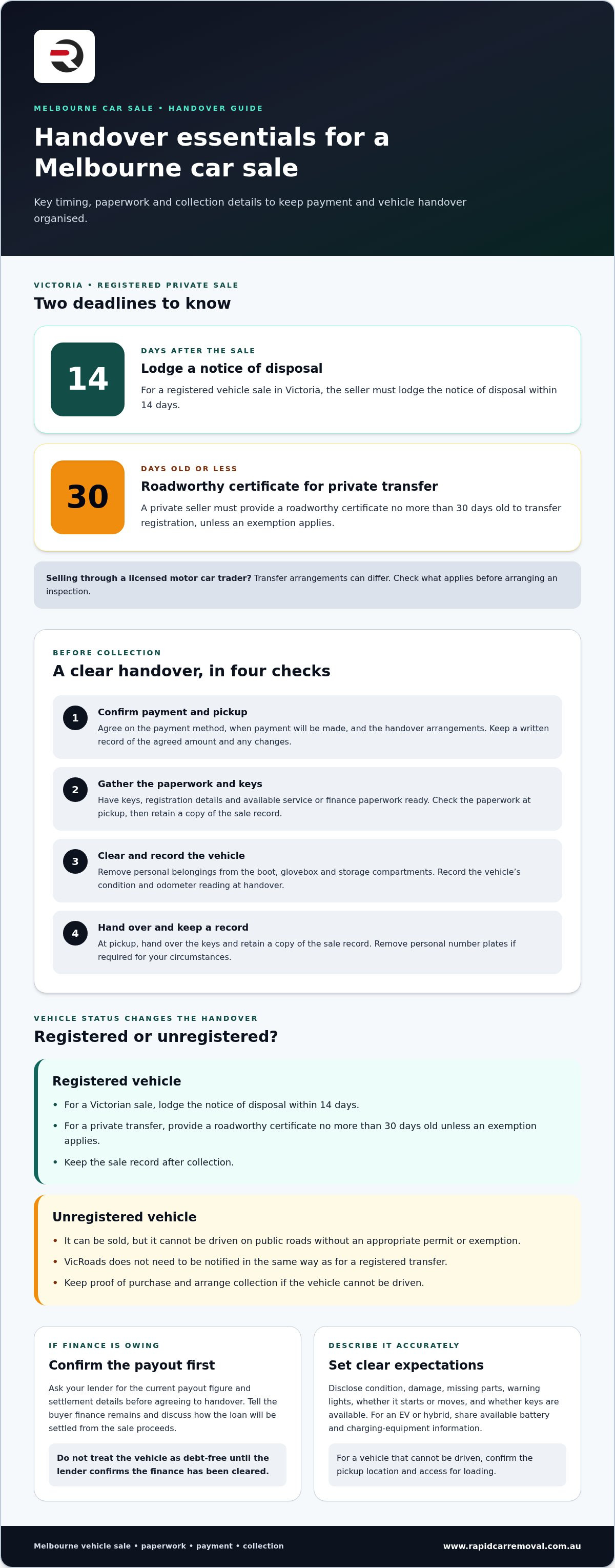
Before collection, confirm the vehicle details, agreed amount, payment method and handover arrangements. Keep a written record of the offer and any changes. At pickup, check the paperwork, hand over the keys and retain a copy of the sale record. This creates a clear record of the transaction.
For a registered car sold privately in Victoria, the seller must lodge a notice of disposal within 14 days. A private seller must also provide a roadworthy certificate no more than 30 days old to transfer registration, unless an exemption applies. Transfer arrangements can differ when selling through a licensed motor car trader, so check what applies before arranging an inspection.
An unregistered vehicle can still be sold in Melbourne. It can’t be driven on public roads without an appropriate permit or exemption. VicRoads does not need to be notified of an unregistered car sale in the same way as for a registered transfer. Keep proof of purchase, and arrange collection rather than driving the vehicle away without the required permission.
When discussing a sale, describe the vehicle’s condition and equipment accurately, whether it’s a conventional car, damaged vehicle, electric vehicle or hybrid. For an EV or hybrid, share available information about the battery and charging equipment. For a damaged car, describe visible damage and whether it starts or moves. Clear details help set expectations before collection.
If finance is owing, contact your lender for the current payout figure before agreeing to the handover. Tell the buyer that finance remains and discuss how the loan will be settled from the sale proceeds. Keep the lender’s settlement details with the sale paperwork. Don’t treat the vehicle as debt-free until the lender confirms the finance has been cleared.
Before collection, organise these practical details:
- Confirm the agreed payment method and when payment will be made.
- Gather keys, registration details and available service or finance paperwork.
- Remove personal belongings and check the boot, glovebox and storage compartments.
- Record the vehicle’s condition and odometer reading at handover.
For a vehicle that can’t be driven, confirm the pickup location and access for loading. Remove personal number plates if required for your circumstances, and keep the sale record after collection. Complete the notice of disposal within Victoria’s 14-day period for a registered sale. These steps help keep payment, paperwork and vehicle collection organised.
Getting an obligation-free instant car offer
Start with accurate vehicle details, then review the offer before deciding whether to sell. An instant offer from Rapid Car Removal gives you a direct option to compare with a private sale or dealer trade-in.
Free valuations and no-obligation offers
Request a free quote with your car’s make, model, year, kilometres and condition. Check that the offer reflects the details you provided, including its service history if available. An obligation-free offer lets you consider the amount without committing to sell. Read the written terms before accepting.
Offer eligibility and adjustments
Eligibility depends on the vehicle and the seller’s authority to transfer it. Have the registration details and ownership paperwork ready, and disclose finance owing, damage, missing parts or warning lights. An inspection may reveal differences from the description, such as unrepaired accident damage or a mechanical fault. Ask how any change affects the offer before agreeing to proceed.
Be specific when describing the car. Distinguish a cracked windscreen from major collision damage, and mention whether the engine starts, whether the car can move and whether keys are available. Include service history if you have it. Clear details help explain what the valuation covers and what could affect the offer.
Compare the offer with the work involved in a private sale. A private listing may require photographs, enquiries, viewings and negotiations. A dealer or licensed motor car trader may use a different assessment process. Consider the amount offered, any conditions, collection arrangements and payment terms, rather than relying on the headline figure alone.
Check the offer’s validity before planning the collection. If the written offer includes an expiry date or acceptance window, note it and decide within that period. If no timeframe is stated, don’t assume the offer remains open indefinitely. Keep the offer details handy while arranging paperwork or other sale plans.
Accept only when you understand the terms. Confirm the vehicle details, agreed amount, payment method and collection plan in writing. If you change your mind after accepting, contact the buyer promptly and review the agreed conditions. Whether you can cancel without consequence depends on the terms and stage of the arrangement.
Before responding, use this checklist:
- Match the offer against the vehicle’s actual condition and service history.
- Read any expiry, inspection or adjustment conditions.
- Confirm who can accept the offer and transfer ownership.
- Keep a copy of the offer and your acceptance.
For help discussing a vehicle offer, use the online contact form and include the car’s details.
Payment methods and payment before pickup
In Victoria, the buyer generally pays motor vehicle duty and the transfer fee when transferring a registered vehicle. Melbourne collection and payment can happen quickly: customer examples describe payment within 24 hours, or at 7pm after a 9am drop-off.
Payment methods and finance settlement
Before handover, confirm the payment method and when the funds will be available. Keep a written record of the amount and any conditions. If finance remains on the vehicle, contact your lender for a current payout figure and settlement instructions. Work out how the loan will be cleared, and what happens to any remaining proceeds, before signing paperwork or releasing the keys.
Agree on how any transfer costs will be handled and record the arrangement. Roadworthy status relates to registration transfer, not the payment method, and a roadworthy certificate does not prove that finance has been discharged. Keep lender correspondence, the sale record and payment confirmation together, especially if the lender is to receive part of the proceeds directly.
Payment timing and vehicle handover
Set the order of events before collection. A practical sequence is to confirm the final offer, verify payment, complete the sale paperwork, then hand over keys and vehicle. If payment is by electronic transfer, check that funds appear in your account rather than relying solely on a screenshot or payment notification. Note the handover time and vehicle condition in your records.
For a registered sale, the seller must lodge a notice of disposal within 14 days in Victoria. Keep your copy of the sale details after the vehicle leaves. If the car is unregistered, arrange collection without driving it on public roads unless an appropriate permit or exemption applies. These steps keep payment, transfer paperwork and possession aligned.
Collection and payment timing
How quickly can Melbourne car-buying services collect and pay for a vehicle? Customer examples describe payment within 24 hours of a sale, and payment at 7pm after a 9am drop-off. These are reported examples, not a timetable for every transaction. Confirm the agreed collection slot and payment point before arranging transport or taking time away from work.
Make the handover easier by preparing registration details, keys and finance paperwork in advance. Clear personal belongings from the car and ensure the collection area is accessible. If the vehicle cannot move under its own power, mention that when arranging pickup. This helps plan the loading and collection.
Any fee or charge should be clarified before you accept an offer. The offer depends on the vehicle’s condition, age, make, model and demand, and is given after a quote request. Keep agreed charges separate from the sale amount, then confirm the net payment and settlement arrangements in writing. A clear written record makes dealing with payment and collection easier.
Wondering how to sell a car in Melbourne?
Choose between managing a private sale and accepting an offer from a car buyer. The right option depends on your priorities: handling enquiries yourself or arranging a more direct handover.
Private sale or car buyer
Selling privately lets you set the asking price and deal directly with prospective buyers. You’ll also organise photographs, listings, inspections and negotiations, then manage the paperwork and transfer. With a direct car buyer, provide the vehicle details, review the offer and decide whether to accept. Compare the workload, payment arrangements and collection needs, not just the proposed amount.
Car wreckers may assess a vehicle for resale, parts or dismantling, depending on its condition and type. “Accredited” can refer to different credentials, so look for a clear business identity, written offer and documented sale terms. If an offer changes after inspection, compare the reason with the vehicle’s disclosed condition. Clear information and agreed handover steps help keep the sale straightforward.
Melbourne buyer coverage
Buyer coverage can differ between central Melbourne, established suburbs and outer metropolitan areas. Before arranging an inspection, provide the exact pickup suburb and whether the vehicle is parked on a street, in a driveway or inside a garage. Access matters for cars that cannot move under their own power. Confirm who will attend, what collection involves and how the buyer will communicate changes.
If a buyer can’t proceed, keep the vehicle description and photographs ready for another enquiry. Update details that may affect interest, such as damage, missing keys or unregistered status. You can also compare a private listing with a direct offer, based on the time you can spend handling viewings and buyer messages. Keep each offer and its conditions separate.
Sale risks and scams
Watch for pressure to hand over the keys before payment, unusual payment requests or an offer that changes without a clear reason after inspection. Check that the buyer’s name matches the sale paperwork, and keep a signed record of the agreed amount and vehicle details. Don’t rely on a payment screenshot as proof that funds have reached your account.
Protect your personal information during enquiries. Share the vehicle details needed for an offer, but avoid sending identity documents through unsolicited links or messages. Meet prospective private buyers in a practical, safe location, and don’t leave them alone with the car or its keys. If someone asks you to pay an unexpected fee to release funds, pause the handover and review the written agreement.
For a straightforward sale, prepare accurate details before requesting an offer: make, model, condition, registration status and pickup suburb. This helps assess the vehicle and explain any adjustment after inspection. Keep communication in writing, arrange collection details directly and retain copies of the offer and sale paperwork. A clear record helps resolve disagreements and complete the transaction with confidence.
Free car valuations based on Melbourne market data
Yes. Rapid Car Removal provides free car quotes and inspections in Melbourne. A quote gives you a basis for considering an offer, while an inspection assesses the vehicle’s actual condition.
Market-based valuation
A useful valuation considers more than the badge and model year. Share the make, model, variant, kilometres, service history and overall condition. Melbourne demand, comparable vehicles and the car’s likely resale or parts value can all influence an offer. A vehicle with complete records and minimal wear presents differently from one with missing history or major damage.
For hassle-free car selling in Melbourne, use a valuation as a reference rather than assuming every buyer will offer the same amount. Buyers assess vehicles for different purposes, so offers can vary. For a meaningful comparison, give each buyer the same details, including modifications, mechanical issues, accident damage and registration status. Missing information can make an initial estimate less representative of the vehicle.
Prepare a clear snapshot before requesting an assessment. Note the odometer reading, list known faults and gather service records or a roadworthy certificate if available. A complete service history can help explain how the car has been maintained, while a certificate provides relevant roadworthiness information. Neither document proves the vehicle’s full mechanical condition.
Valuations and inspections
A free quote can start with the information you provide. An inspection adds a closer view of the vehicle’s condition and helps identify differences between its description and actual state. Point out damaged panels, warning lights, worn tyres or missing parts. Accurate details make the assessment more useful and help explain how the offer relates to the vehicle.
Before an inspection, remove personal belongings and make the car accessible. Have the keys and available paperwork ready. If the vehicle cannot start or move, explain that when arranging the assessment. This helps plan the inspection appropriately. Ask how any condition found during inspection could affect the offer, and compare the answer with the details you originally supplied.
To compare valuations fairly, keep a simple record of each assessment. Note the vehicle description, stated condition, inspection findings and any offer conditions. Consider the offer alongside those details, not just how attractive it sounds. For hassle-free car selling in Melbourne, compare the same vehicle facts across a direct offer and a private sale, where presentation and negotiation can affect the result.
Get a valuation for your Melbourne vehicle by sharing its details for an assessment.
Rapid Car Removal: Cash for Cars
Rapid Car Removal offers Cash for Cars when you’re ready to sell an unwanted vehicle after reviewing its valuation and offer. Its service also includes Free Car Removal, helping arrange vehicle collection as part of the sale.
Turn to the team if you have a car to sell, a 4x4, or a truck requiring scrap removal. Share accurate vehicle details and condition so the offer can reflect the information provided. You can consider the offer before deciding whether to proceed.
Ready to sell an unwanted vehicle in Melbourne? Contact Rapid Car Removal for a free quote and arrange the next step.
Take the next step on your terms
When you’re ready to move forward, keep your vehicle details and paperwork handy. For hassle-free car selling in Melbourne, start by understanding the offer and deciding whether its terms suit your plans. You can consider your options before proceeding.
Rapid Car Removal offers Cash for Cars and Free Car Removal, as well as Scrap Truck Removal. These services can help when you want to sell an unwanted car or arrange removal for a truck. Share the vehicle’s condition and details to discuss the next steps.
Ready to discuss your vehicle? Send Rapid Car Removal your enquiry and take the next step at your pace. A clear starting point can make the process feel more manageable, whether you’re selling a car or arranging truck removal.
Frequently Asked Questions
Can I sell my car if it has finance owing on it?
Yes, you can sell a car with finance owing, but the loan needs to be addressed as part of the sale. Ask your lender for the current payout figure and settlement instructions, then include these in the sale arrangements. Keep the lender’s details and settlement confirmation with your records. If the sale proceeds won’t cover the payout, work out how you’ll cover the difference before completing the handover.
How much is my car worth in the current Melbourne market?
Your car’s value depends on its make, model, age, kilometres, condition and service history, along with buyer demand in Melbourne. A well-maintained car with complete records may be assessed differently from a similar vehicle with damage or mechanical faults. Share accurate details and compare offers based on the same description. Treat online estimates as a starting point, since an inspection may reveal condition details that affect the assessment.
Still have questions?
Yes. For a useful answer, have the vehicle’s make, model, registration status and main condition details ready. Mention any finance owing or collection challenges, such as a car that won’t start. Contact Rapid Car Removal with those details and explain what you’re trying to work out before deciding on your next step.
What documents are required to complete the sale of my car?
The paperwork depends on the sale type and the vehicle’s circumstances. Prepare proof that you own or can sell the car, its registration details and any finance payout information. Service records and a roadworthy certificate can also help explain the vehicle’s condition or support a private sale. Keep a copy of the offer and sale record, and ensure the buyer and seller details are recorded accurately.
What are the easiest ways to sell a car in Melbourne?
The main options are selling privately, trading with a dealer or accepting an offer from a car buyer. A private sale gives you control over advertising and negotiations, but you’ll manage enquiries and viewings. A direct buyer can simplify the transaction and collection arrangements. Compare each route by the time you can spend, the car’s condition and how much control you want over the sale.
How much can I get for my car in Melbourne from a dealer, instant buyer, or private sale?
There’s no single amount that applies across dealers, direct buyers and private sales. Offers depend on the car’s age, kilometres, condition, demand and the buyer’s intended use. A private asking price isn’t the same as a completed sale price, while a dealer or direct buyer may assess different costs and resale potential. Compare written offers using the same vehicle details, and consider the time and arrangements involved.
What paperwork is required to sell a car in Victoria?
For a registered car sale in Victoria, the seller must lodge a notice of disposal within 14 days. A private seller generally needs to provide a roadworthy certificate no more than 30 days old to transfer registration, unless an exemption applies. Transfer arrangements can differ when selling through a licensed motor car trader. Keep your sale records, and check that the vehicle and buyer details are accurate before submitting paperwork.


