

A fresh service isn’t always the best first move when you sell your car before moving house. A recent service doesn’t guarantee you’ll recover its cost through a higher offer, so compare the car’s value in its current condition before spending on preparation. The right choice depends on the offers you receive, the cost of taking the car interstate and how much time you have before the move.
It makes sense to want a straightforward sale, a fair return and fewer loose ends during a busy move. This guide explains how to value your car, compare private-sale and car-removal offers, weigh ongoing costs and decide whether to take it interstate. You’ll also learn what to prepare for handover and how to avoid payment scams, so you can make a practical decision without spending money on work that may not pay off.
Key Takeaways
- Compare offers for your car as it is before paying for sale preparation or a service that may not increase its value.
- Weigh the cost and hassle of driving the car interstate against selling it before you move.
- Factor in ongoing expenses while the car remains unsold, including insurance, registration and vehicle-related costs.
- Keep ownership documents unsigned until payment has arrived in your account or a dealer has provided a trade.
- Choose a selling option that fits your moving timeline and avoids unnecessary inspections, negotiations and delays.
Online valuations and selling without private viewings
Registration transfer steps vary by state or territory. In Victoria, submit a notice of disposal to VicRoads within 14 days of the sale; in Queensland, a registered car sold privately needs a current safety certificate before listing.
- Compare online valuations with the car’s actual condition. Enter accurate details, including make, model, year, kilometres and condition. Use more than one valuation to understand the likely range, then compare those estimates with a current offer for the car as it stands. An online estimate is a guide, not a final offer. Note what each estimate assumes about service history, damage and included features.
- Set your timeline before choosing a sale method. Traditional private sales in Australia can take more than four weeks. That leaves less time for a move if you need to arrange advertising, answer enquiries, host inspections and negotiate. Start weighing up options several weeks before an interstate move. A regional or remote destination can also make private viewings harder, because interested buyers may need to travel a long way.
- Compare private selling with a dealer offer. Selling privately gives you control over the asking price, but you’ll manage enquiries, inspections and negotiations yourself. A dealer offer provides a simpler point of comparison and may suit a tight moving schedule. Ask for the offer in writing and compare the amount, timing and conditions. If you’re trading in, compare the trade-in value separately from the price of your next vehicle.
- Decide whether a service is worth paying for. A recent service doesn’t guarantee a higher offer that recovers its cost. Before booking work or paying for detailing, get an estimate for the car in its current condition. A vehicle with cosmetic wear, for example, may not benefit enough from extra preparation to justify delaying the sale. Describe known issues accurately when arranging an inspection or discussing an offer.
- Prepare Queensland paperwork and your move-day plan. In Queensland, most light vehicles sold privately need a current safety certificate from an approved inspection station, unless exempt. Display it in the car window before listing, and provide the buyer with the required certificate copy when selling. After agreeing on a sale, plan what to do with your remaining belongings: pack them before handover, include them in your household removal arrangements or organise alternative transport for essential items. Plan how you’ll get around after the car is gone, such as arranging a lift or using public transport for your first trip.
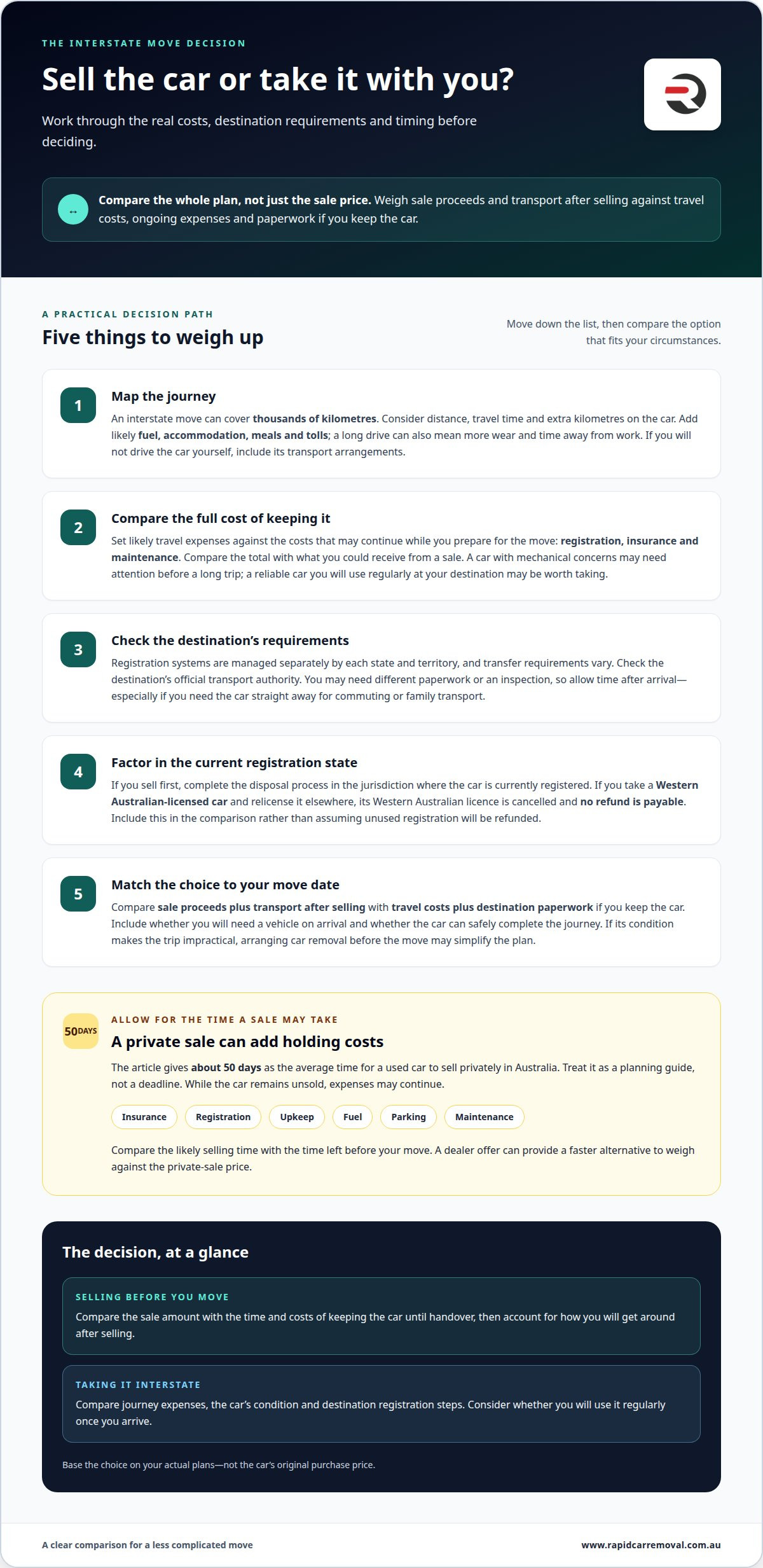
Deciding whether to sell or take the car interstate
- Map the journey and its practical demands. An interstate move can cover thousands of kilometres, making fuel, accommodation, meals and tolls part of the decision. Consider the distance to your destination, likely travel time and extra kilometres on the vehicle. A long drive, for example, may mean more wear and time away from work. If you won’t drive the car yourself, include its transport arrangements in your comparison.
- Compare the full cost of keeping the vehicle. List likely travel expenses, then consider registration, insurance and maintenance costs that may continue while you prepare for the move. Compare these with the amount you could receive from a sale. A car with existing mechanical concerns may need attention before a long trip, while a reliable vehicle you’ll use regularly at your destination may be worth taking. Base your choice on your actual plans, not the car’s original purchase price.
- Allow time for destination requirements. Australian registration systems are managed separately by each state and territory. Requirements for transferring an interstate vehicle vary by jurisdiction, so check the destination’s official transport authority before deciding. The process may involve different paperwork or an inspection. Allow time to complete those steps after arrival, especially if you’ll need the car straight away for commuting or family transport.
- Account for the registration state if you sell first. If you sell before leaving, complete the disposal process for the jurisdiction where the vehicle is currently registered. If you take a Western Australian-licensed car and relicense it in another state or territory, its Western Australian licence is cancelled and no refund is payable. That can affect the value of taking it, so include the licence position in your comparison rather than assuming unused registration will be refunded.
- Choose the option that fits your move date. Make a simple comparison: sale proceeds and transport after selling, against travel costs and destination paperwork if you keep the car. Include practical details such as whether you’ll need a vehicle on arrival and whether the car can complete the journey safely. If its condition makes the trip impractical, arranging car removal before the move may help simplify the plan. Free Car Removal is an option when you need to clear an unwanted vehicle rather than drive it interstate.
Holding costs while a car remains unsold
- Estimate how long the sale could take. The average used car in Australia takes about 50 days to sell privately. Treat that as a planning guide, not a deadline. During that period, the vehicle may continue to attract insurance, registration and upkeep costs. If your move date is fixed, compare the likely holding period with the time remaining. A dealer offer may be useful as a faster alternative to weigh against the private-sale price.
- List the costs that continue before handover. Write down each expense linked to keeping the car, such as insurance, registration, fuel, parking and maintenance. Separate regular payments from costs that arise only when you drive. A car parked while you move may use little fuel, for example, but insurance and registration can still continue. This makes it easier to compare waiting for a private buyer with accepting an offer sooner.
- Review insurance before cancelling or changing cover. Compulsory Third Party insurance is attached to the vehicle itself and covers injuries to people caused by car accidents. Other insurance arrangements may be linked to your policy and payment schedule. If you paid your premium as an annual lump sum, you may be entitled to a partial refund for unused cover when cancelling before expiry. Contact your insurer after the sale to arrange the policy change and ask how any refund is calculated.
- Track tolls and fines while registration remains in your name. In Queensland, a seller of a registered vehicle remains liable for tolls and fines while the vehicle is registered in their name. Keep the sale and registration-transfer steps moving together. If a buyer takes the vehicle before the ownership paperwork is completed, for example, a toll charge could still reach you. Keep a record of the handover and complete the relevant disposal process promptly.
- Cancel vehicle-linked services after the sale. Review insurance, toll accounts, parking arrangements, roadside assistance and vehicle-linked apps. Update or close accounts connected to the old car, and deal with personalised plates as part of the handover. If your toll account covers more than one vehicle, remove the sold vehicle rather than closing the whole account. This helps prevent ongoing charges or account activity being associated with a car you no longer own.
- Decide whether more spending can pay its way. Don’t automatically pay for an approaching service just because the car is for sale. A recent service doesn’t guarantee a higher offer that recovers its cost. Compare the service expense and the extra time the car stays in your possession with the likely benefit. If you’re moving soon and the car has no known urgent issue, getting an offer before booking routine work can help you decide whether keeping it longer makes sense.
Payment safety and scams
- Agree on payment terms before handover. Confirm the sale amount, payment method and handover arrangements in writing. Make sure the details match your understanding before signing transfer paperwork or giving the buyer the keys. A message saying payment has been sent isn’t proof that the money has arrived. For a registered vehicle, keep the paperwork and handover timing clear so there’s no confusion about who has the car.
- Wait until the funds are available in your account. An electronic funds transfer for a privately sold car in Australia can take a few days to arrive. Check your own bank account, not a screenshot, email or text supplied by the buyer. If the funds haven’t arrived, don’t hand over the vehicle or sign documents transferring ownership. Wait for the transfer to clear before completing the sale.
- Handle a dealer trade as a separate arrangement. A dealer may offer a trade rather than direct payment, so make sure the written sale or trade documents state what you’ll receive. Check that the agreed vehicle and amount match the deal before completing the handover. Don’t treat an informal promise of later payment as a completed trade. Keep copies of the signed paperwork and any payment record.
- Resolve finance before agreeing to the final handover. If money is owing, request a current payout figure from your lender and understand how the sale proceeds will be applied. Tell a private buyer about finance owing before the sale. Work out what will remain after the payout rather than assuming the full offer will be available to you. Keep the lender’s payout details and sale records together until the finance is cleared.
- Keep the handover controlled and documented. Meet at a suitable location, bring the vehicle documents you need, and record the date and time the buyer takes possession. Remove personal belongings and check the glovebox, centre console, boot and under the seats. Once payment is received and the transfer paperwork is complete, hand over the keys and any spare keys. Retain copies of the documents and update vehicle-related accounts after the sale.
- Pause if the payment story changes. If a buyer suddenly changes the payment method, amount or collection plan, stop and confirm the revised agreement in writing. Don’t share online banking passwords or one-time security codes to receive payment. A legitimate buyer doesn’t need access to your banking login. Keep communication and transaction records, particularly if several people are arranging collection.
Quickest way to sell a car privately or to a dealer
- Choose your route around the time available. A private sale involves enquiries, inspections, negotiations and the possibility of buyers changing their minds. A dealer sale gives you a direct offer to compare without managing a public listing. If your moving date is close, decide whether a potentially higher private-sale return is worth the extra coordination. Compare the amount offered, the steps involved and when you need the vehicle gone.
- Prepare the details before approaching buyers. Gather the registration details, service history, logbook, spare keys and maintenance receipts. Note the vehicle’s condition, kilometres and known faults so you can describe it accurately. If finance remains owing, obtain a current payout figure from your lender and disclose the finance to private buyers. Having these details ready helps avoid delays when a buyer or dealer asks about the car.
- Reduce avoidable delays in a private sale. Set a realistic asking price and make the listing clear about the vehicle’s condition, service records and included items. Arrange inspection times that suit your schedule, and have the documents ready for interested buyers. A mechanical inspection can add time to the sale process, so factor it into your moving timeline. Responding promptly also helps keep genuine enquiries moving.
- Check whether registration helps your sale. In New South Wales, having at least 3 months of registration remaining is advised to help sell a car quickly. A buyer may consider remaining registration when comparing similar vehicles, so include the expiry date in your listing. Requirements differ between states and territories. If you’re selling outside New South Wales, follow the rules that apply where the car is registered.
- Compare the final steps, not just the headline offer. Ask a dealer for the offer and conditions in writing. For a private buyer, agree on the price, payment method and handover plan before signing transfer documents. An electronic transfer can take a few days to arrive, so wait until the funds are received before transferring ownership. Keep your move date in view: an offer that fits your timing may be more useful than one that requires extra viewings.
Need to settle on a practical option before moving? Discuss your car sale arrangements and the next step.
Rapid Car Removal: sell my car melbourne
Rapid Car Removal can help when private viewings and buyer negotiations don’t fit your moving schedule. Its sell my car service in Melbourne offers a direct option for unwanted cars, while Cash for Cars and Free Car Removal can suit vehicles you don’t plan to take interstate. For an unwanted truck, Scrap Truck Removal is another relevant option.
Share the vehicle’s details and condition when arranging an offer, including any damage or issues that affect its use. This helps keep the sale discussion focused on the car you need to move on from. Contact Rapid Car Removal to discuss your vehicle and arrange free removal across Melbourne.
Set your car-sale deadline before moving day
Give the sale a clear place in your moving plan. Choose the latest date you can hand over the vehicle, then work backwards to allow time for decisions and paperwork. That deadline helps you judge whether a private sale still suits your schedule or whether a simpler option, such as Rapid Car Removal’s free car removal in Melbourne, is a better fit.
If you need to sell your car before moving house, focus on what matters most: keeping the move manageable while making a considered decision about the vehicle. Avoid leaving the choice until packing and travel arrangements compete for your attention. A clear plan now can make the final days less complicated.
When you’re ready to discuss the next step, contact Rapid Car Removal. You can move forward with a plan that fits your car and your move.
Frequently Asked Questions
Should you service the car before selling?
Arrange a service only if the work makes sense for the car’s condition and your sale plan. A service may help document maintenance, but it doesn’t guarantee a higher offer that covers the expense. If the car is due for routine maintenance, for example, compare the cost and time involved with its current value first. Keep existing service records ready, and describe the vehicle’s condition accurately to interested buyers.
What if there’s finance owing?
You can plan a sale with finance owing, but first request a current payout figure from your lender. Compare that amount with the offer so you know what proceeds would remain, or whether the sale amount would fall short. Tell a private buyer about the finance before agreeing to sell. Keep the lender’s payout information and sale details together so you can track how the outstanding balance will be addressed.
What should you organise before the sale?
Gather your registration details, photo identification, service history, logbook, spare keys and maintenance receipts. Keep them together so you can answer buyer questions without searching through moving boxes. Remove personal items, then check the glovebox, centre console, boot and space under the seats. Make a note of vehicle-linked accounts, such as tolls, parking and insurance, so you can update them after handover.
What’s involved when you’re selling a car in Australia?
Expect to describe the vehicle, agree on the sale terms, arrange any inspection, receive payment and complete the relevant transfer or disposal steps. The paperwork depends on where the car is registered. In Victoria, a seller must submit a notice of disposal to VicRoads within 14 days of the sale. Keep a copy of your sale records and note the handover date for your own files.
When should you sell before moving?
If you plan to sell your car before moving house, start exploring your options several weeks ahead, especially if you’re considering a private sale. This leaves time to prepare a listing, respond to enquiries and arrange inspections before packing week, when your focus shifts to coordinating with household movers such as Anspach Removals & Storage. Set a latest handover date that fits your travel and household plans. If a private sale is taking too long, compare a dealer offer with the time and ongoing costs involved.
Is it better to sell a car before or after moving house in Australia?
Selling your car before moving house may suit you if the drive, transport costs or destination registration process makes keeping the vehicle impractical. Taking it can make sense if you’ll need it at your new home and the journey fits your plans. Consider whether public transport or other options can cover your first weeks after arrival. Compare that practical need with the work involved in moving and registering the car.
How much can I sell my car for in Australia, and how do I value it?
There’s no single value for every car: make, model, age, kilometres, condition and service history all affect an offer. Use online valuation tools as a starting point, then compare vehicles with similar features and condition. Be realistic about damage, missing records or needed repairs. An asking price is not the same as a completed sale, so weigh actual offers against your timeline and the effort required to sell privately.
What paperwork is required to sell a car in Australia?
Prepare registration details, photo identification, service records and any finance payout information. The transfer and disposal paperwork varies between states and territories. In Victoria, a roadworthy certificate provided when selling a registered car must be less than 30 days old, and the seller must submit a notice of disposal to VicRoads within 14 days. Keep copies of sale documents and records of payment and handover.


