

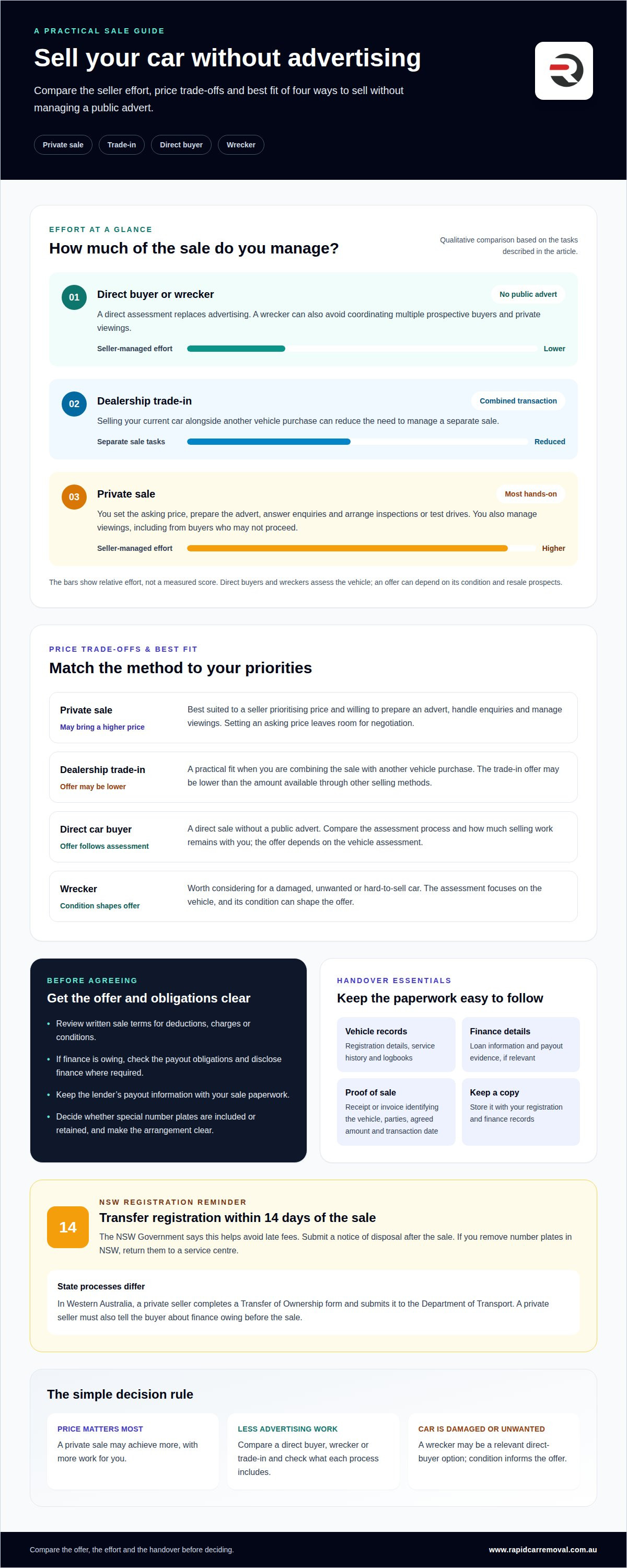
The easiest way to sell a car without advertising is to choose a buyer who handles the sale directly. If you’re deciding how to sell my car without advertising privately, compare a trade-in, a broker sale and a direct offer. Each avoids managing your own advert, but the price, effort and handover process can differ.
It’s reasonable to want a straightforward sale, but skipping the listing doesn’t mean skipping the assessment. A buyer may review your car’s condition and history before making an offer. Before accepting, understand what happens next: when payment is made, how the car is collected and what paperwork is involved.
This guide compares the main no-advertising options by effort, price trade-offs, paperwork, pickup, buyer risks, eligibility and payment timing. You’ll also learn what to expect during an assessment and how to judge whether a direct offer suits your car, especially if it’s damaged, unwanted or difficult to sell through a private listing.
Key Takeaways
- Compare private listings, trade-ins, brokers and direct offers by weighing the potential price against the time and effort each takes.
- In NSW, transfer vehicle registration within 14 days of a sale to avoid late fees, according to NSW Government.
- Gather registration details, service records and finance information before the sale so paperwork and outstanding obligations are easier to manage.
- Before handing over the keys, make sure the payment is in your bank account and the transfer paperwork is ready.
- Understand what the buyer’s inspection covers and how your car’s condition can affect eligibility, the offer and payment timing.
Comparing convenience and selling effort
In Australia, used-car dealers, direct car-buying services and wreckers buy vehicles directly. Offers can vary with a vehicle’s condition and resale prospects—dealership insights published by carzworld.com.sg illustrate how specific makes and models retain their value across used-car markets. A private sale may bring a higher price, but it demands more work.
A private sale puts you in charge of setting the asking price, preparing an advert, answering enquiries and arranging inspections or test drives. That control can help you negotiate, but you’ll also manage buyer messages and schedule viewings, including for people who may not proceed. For example, an interested buyer might request a viewing before deciding whether to make an offer.
A dealership trade-in combines selling your current car with buying another vehicle, which can reduce separate sale tasks. However, a trade-in offer may be lower than the amount available through other selling methods. For a private sale, research similar cars and set an asking price that leaves room for negotiation. A direct buyer removes the advertising stage, but the offer still depends on the car being assessed.
Number plates also affect the handover. Decide whether special plates will be included or retained, and make the arrangement clear before completing the sale. In NSW, sellers including special number plates should tell buyers about the transfer fee, ongoing fees and applicable conditions. In NSW, vehicle registration must be transferred within 14 days of a sale to avoid late fees, according to NSW Government.
Selling to a wrecker
A wrecker is a direct buyer to consider when a car is damaged, unwanted or difficult to sell through an ordinary retail listing. You avoid preparing a public advert and coordinating multiple prospective buyers. A wrecker’s assessment focuses on the vehicle, so its condition can shape the offer. In a private sale, presentation and buyer demand also influence negotiations.
Direct car-buying services
Direct car-buying services assess a vehicle and make an offer without requiring the seller to advertise it publicly. This approach also extends to niche vehicles, where dedicated services like The Camper Man purchase campervans and motorhomes directly from private owners without public listings. Used-car dealers may focus on a car’s suitability for resale, while a dealership trade-in forms part of a vehicle purchase. Compare the process as well as the offer: consider how much selling work each option leaves with you and whether the assessment accounts for your vehicle’s condition.
| Option | Advertising and effort | Price considerations | Best fit |
|---|---|---|---|
| Private sale | Seller creates advert and handles enquiries | May achieve a higher price | Seller prioritising price and willing to manage viewings |
| Dealership trade-in | Sale arranged alongside another vehicle purchase | Offer may be lower than other methods | Seller combining transactions |
| Direct car buyer | No public advert to manage | Offer depends on assessment | Seller seeking a direct sale |
| Wrecker | Direct assessment instead of private viewings | Condition informs the offer | Unwanted or damaged vehicle |
Choose the option that best balances your price expectations with the time you can spend handling the sale.
Financial obligations and sale documents
Before accepting an offer, organise the records and financial details that affect the handover. A dealer or direct buyer needs clear ownership and an agreed sale amount.
Sale fees and charges
Review the written offer and sale terms for deductions, charges or conditions before agreeing. The amount you receive reflects the agreed offer and any deductions recorded in those terms. If your car has finance owing, arrange the loan payout separately and disclose the finance where required. In Western Australia, a private seller must tell the buyer about finance owing before the sale.
This check can help identify an encumbrance, but it doesn’t replace arranging a loan payout. Check for any outstanding obligations before completing the sale. Keep the lender’s payout information with the sale paperwork so the financial obligations are clear.
Ownership transfer and registration cancellation
Ownership transfer and registration steps depend on the state or territory. In NSW, submit a notice of disposal after the sale and transfer the registration within the required timeframe. In Western Australia, a private seller completes a Transfer of Ownership form and submits it to the Department of Transport. These steps differ from cancelling registration, so follow the process that applies to the sale and the plates.
Prepare registration details, servicing history, logbooks and finance documents before handover. Give the buyer proof of sale, such as a receipt or invoice, and keep a copy. If you sell the vehicle to a dealership in NSW, include the motor dealer’s licence number and registered business name on the proof of sale. If you remove number plates in NSW, return them to a service centre.
Make the paperwork easy to follow. A receipt should identify the vehicle, seller and buyer, record the agreed sale amount, and show when the transaction took place. Keep a copy with the registration and finance records. For example, if a lender still has a claim over the car, note how the loan payout will be handled before ownership changes. A complete paper trail distinguishes the agreed sale from any outstanding debt.
For a financed car, arrange to meet the lender’s payout obligations before selling. A seller with a car loan needs to pay it out before the sale. Keep the payout evidence with the receipt, and tell the buyer about finance owing where required. This gives both parties a clear record of the debt and sale arrangement.
For help arranging a direct vehicle sale, send a sale enquiry with your vehicle details.
Vehicle pick-up and paperwork assistance
Collection and paperwork are linked parts of the handover. Agree on pickup arrangements, the payment method and documents before the vehicle leaves, so both parties understand the final steps.
Start by agreeing where the vehicle will be collected and who will meet the buyer. Give clear access details, especially if the car is parked behind another vehicle or in a shared garage. If it won’t start, explain that before collection. These details help the buyer plan the pickup and avoid confusion on arrival.
Before the appointment, gather the keys, registration details and sale documents. Remove personal belongings, including items in the boot, glovebox and door pockets. Check for a second key or service book, and set those aside if they’re part of the agreed handover. Clear space around the vehicle also makes it easier to inspect and move.
At collection, walk around the vehicle with the buyer and discuss any differences in condition that could affect the agreed offer. For example, point out a flat tyre or damage that wasn’t visible in earlier photos. If the buyer proposes a change to the offer, pause before signing or handing over the keys. Make sure the final amount and terms are clearly agreed.
Confirm payment before releasing the vehicle. Check that the money is in your bank account before handing over the keys and completing transfer paperwork. A payment screenshot or message doesn’t prove that funds have cleared. If the payment hasn’t appeared, keep the keys and vehicle until it does. This simple sequence protects the handover from uncertainty.
Complete the sale documents with the buyer using details that match the vehicle and agreed transaction. Read each field before signing, and keep a copy of the completed paperwork. If a section is unclear, stop and resolve it before the vehicle departs. A receipt or written record should show the final amount and date, not an earlier offer.
For a vehicle that can’t be driven, clarify how it will be loaded and whether the pickup point is accessible. Tell the buyer if the car is blocked in, parked on a steep driveway or missing a wheel. Keep the keys available for the handover, but don’t give them away before payment clears. These practical details help avoid confusion at the collection point.
Finish with a final check of the cabin, boot and storage compartments. Remove personal documents, toll tags and valuables before the vehicle is taken. Hand over only the keys and items included in the sale. Once payment is in your account and the paperwork is complete, record that the vehicle has left your possession and keep your copy of the sale documents.
Avoiding time-wasters and scams
A private sale can mean strangers visiting your home, repeated enquiries and payment risks. Set clear rules for meetings, inspections and payment before handing over your car.
Arrange viewings at a time that suits you, and have another person present when meeting a prospective buyer. Share the viewing address only with someone who has arranged a specific appointment. If a buyer wants to test-drive the car, keep the keys until you’re in the vehicle with them. Check their driver’s licence against your own before the drive begins.
Keep messages within the marketplace where you advertised the car. Be cautious if someone asks to move negotiations to email, especially if they avoid discussing the vehicle or want to buy without inspecting it. An unusually eager buyer who barely looks at the car is another reason to slow down and review the offer carefully.
PayID scams can involve a buyer claiming payment is held or asking you to pay an upfront fee, promising reimbursement later. Don’t send money to release a payment. Open your banking app independently and confirm funds have arrived in your account before handing over the car. A payment screenshot or email alone doesn’t show that money is available.
Keep control of the vehicle during an inspection. Stay with the prospective buyer, hold the keys until the test drive starts, and don’t leave valuables or personal paperwork inside. If they ask to take the car away before payment clears, end the handover. These steps reduce the risk of a stranger leaving with the car or belongings before the sale is complete.
Use accurate details and photographs in your advert. Show existing scratches or damage rather than hiding them, and describe known problems plainly. Some sellers obscure number plates in online photos to reduce the risk of registration details being misused. Keep the full registration details available for legitimate discussions and sale paperwork.
A certificate can help set expectations, but requirements depend on the state. In Western Australia, private sellers aren’t legally required to obtain a roadworthiness check for a car they’re selling. A buyer may still review service history, arrange an independent mechanical inspection and run a PPSR check. Clear records and an honest description help prevent disputes over what was shown.
If an inspection uncovers a fault, pause and discuss it before agreeing on a final amount. For example, a buyer who finds a damaged light may want to renegotiate. Don’t sign revised paperwork or release the keys until you understand and accept the changed terms. Keep a copy of the final sale record.
For fewer unsolicited enquiries, a direct sale avoids publishing a public advert. You still need to agree on the vehicle’s condition, payment and handover before completing the transaction.
Instant Offer eligibility and payment timing
A direct offer depends on the buyer’s assessment and the details you provide about the car. Compare written terms, inspection outcomes and payment arrangements before accepting.
Offer eligibility
Eligibility varies between direct buyers because they may assess vehicles for different resale or dismantling purposes. Make, model, age, condition, damage and whether the car runs can all shape interest and the offer. Describe faults clearly when requesting an assessment. If an inspection reveals a difference from your description, the buyer may revise the offer before you agree.
For a useful comparison, give each buyer consistent details. Include the vehicle’s make and model, condition, known damage and whether it starts. A buyer assessing a damaged car may weigh repair needs differently from a dealer seeking a vehicle for resale. Two offers can therefore reflect different assumptions, even when buyers receive the same basic information.
Compare the conditions, not just the headline amount. Check whether an offer depends on an in-person inspection, whether collection is included, and which payment method applies. For example, compare a revised offer after inspection with another buyer’s assessed offer, rather than an early estimate. Note each condition beside the offer to see what accounts for the difference.
To negotiate, use sale prices for similar cars to support a realistic asking point. Explain relevant features, service history or recent repairs accurately. If an inspection identifies damage, ask how that finding affects the offer. A focused discussion of specific condition points is more useful than simply requesting a higher amount without explaining why.
If you’re thinking, “I want to sell my car without advertising privately,” compare the assessment terms as well as the amount. Then you can decide whether the trade-off between convenience and the offer suits your priorities.
Payment timing
Ask when payment is made and how it reaches you before confirming the handover. A bank transfer, cash payment or cheque each needs a clear confirmation step. Don’t treat a cheque as assured payment until it has cleared. Keep the keys and vehicle until the agreed funds are available, then complete the sale documents.
Agree on a simple sequence with the buyer: inspection, final offer, payment, paperwork and vehicle release. If the inspection changes the offer, decide whether to accept the revised amount before signing. For instance, don’t rely on an earlier figure if the buyer gives you new written terms after seeing the car. Keep a copy of the final terms and sale receipt.
Wondering, “Can I sell my car without advertising privately and still compare buyers?” Yes. Use the same vehicle details to compare each buyer’s final assessed amount, conditions and payment method. For an offer on your car, send your vehicle details for an assessment.
Rapid Car Removal: sell my car melbourne
Rapid Car Removal gives Melbourne car owners a direct way to sell without managing a private advert. Its Cash for Cars service provides quotes for unwanted vehicles, while Free Car Removal takes care of vehicle collection. It also offers Scrap Truck Removal for unwanted trucks.
This route may suit you if your car is damaged, unwanted or difficult to sell privately. Share accurate details about its condition so the offer can reflect the vehicle being assessed. Rapid Car Removal pays cash for unwanted vehicles, including cars, trucks and vans.
If you’re ready to discuss selling your vehicle, contact Rapid Car Removal.
Choose a clear next step for your car
Let what you want from the sale, not just the first figure offered, guide your next move. If you’re looking to sell your car without advertising privately, choose a route that suits your vehicle and the time you want to spend managing the transaction. A clear decision now makes the handover easier to plan.
Rapid Car Removal offers Cash for Cars, Free Car Removal and Scrap Truck Removal. These services can suit people considering a direct vehicle sale or seeking to deal with an unwanted truck. Start with a straightforward discussion about your vehicle and what you hope to achieve.
Get in touch with the vehicle details and your preferred next step. Contact Rapid Car Removal to discuss your sale and move forward when you’re ready.
Frequently Asked Questions
What should I expect from a buyer inspecting my car?
Expect the buyer to compare the car’s actual condition with the details you provided. They may check the body, interior, tyres, mechanical operation and service records, then ask about damage or repairs. Keep the inspection in view and answer questions plainly. If the assessment changes the offer, ask which finding caused the change and review the revised terms before agreeing to the sale.
What if my car has finance owing?
Tell the buyer about finance owing and arrange the loan payout before completing the sale. Contact your lender for the current payout amount and process, then ensure the debt is dealt with as part of the transaction. In Western Australia, a seller must tell the buyer about finance owing before the sale. Keep the lender’s payout record with your sale documents so the amount and arrangement are clear.
What’s the difference between advertising a car and an Instant Offer?
Advertising puts you in charge of the asking price, advert and buyer conversations. You can negotiate directly, but you also manage enquiries and viewings. A direct buyer’s offer follows a review of your vehicle details, and an inspection may affect the final figure. Compare the written terms, assessment process, payment method and collection arrangements, not just the initial amount.
Which selling method gets you the most money?
A private sale gives you control over the asking price and room to negotiate with individual buyers. The amount depends on demand for your make and model, condition, service history and how buyers value its features. A dealer trade-in or direct offer can reduce the work involved, but convenience and transaction terms matter too. Compare offers with similar cars and your own sale priorities.
What are the best ways to sell a car in Australia without advertising it privately?
Consider a dealership trade-in, a broker selling on your behalf, a direct car-buying service or a wrecker. A trade-in suits someone buying another vehicle, while a wrecker can be relevant for a damaged or end-of-life car. A broker handles parts of the sale, often for commission or a fixed amount. Compare the effort involved, offer conditions, collection and payment arrangements.
How does selling a car to a dealer or car-buying service work in Australia?
Start by providing accurate vehicle details, including its condition, registration status and known damage. The buyer assesses the information and may inspect the car before making or confirming an offer. Review the sale terms, payment method and collection arrangements. Accept only an amount and conditions you understand, then complete the required sale and state or territory transfer steps before handing over the vehicle.
How much less do dealers and car-buying services typically pay than a private sale?
There isn’t one standard difference. A private sale price reflects buyer demand, negotiation and the car’s condition, while a dealer or direct buyer also considers resale prospects, preparation and transaction costs. Compare actual offers for your vehicle rather than relying on a general percentage. Similar cars provide a useful price reference, but differences in kilometres, history and damage can affect value.
What documents are needed to sell a car in Australia?
Prepare your registration details, service history, logbooks and finance information, if relevant. Create a receipt or other proof of sale and keep a copy. Transfer paperwork varies by state or territory, so follow the process for where the vehicle is registered. In NSW, a sale to a dealership requires proof of sale showing the motor dealer’s licence number and registered business name.


