

If you need to sell your car to pay bills, finance owing doesn’t automatically prevent a sale. In Australia, you can sell a car that’s still under finance, but you must tell the buyer beforehand. With a secured loan, the outstanding balance generally needs to be paid before the lender releases its security over the vehicle.
It’s understandable to worry that the finance will leave you with nothing from the sale. In a private sale, the buyer may pay the lender directly, with any remaining amount going to you. The key is to get the current payout figure and work out how it affects the money available for bills.
This guide explains how to handle finance owing, what to expect during a vehicle assessment, and which documents may be useful. You’ll also learn what can affect an offer and how to review its terms, so you can weigh up your next step with a clearer picture.
Key Takeaways
- A car with finance owing can still be sold. The payout process affects how much of the sale proceeds may be left for bills.
- Clear, current vehicle photos can help communicate the car’s condition; an in-person inspection can assess details images may not show.
- Get your sale paperwork and vehicle details organised. In NSW, Service NSW says registration must be transferred within 14 days of sale to avoid late fees.
- Understand what can affect an offer and how long it remains valid before relying on the proceeds for a bill.
- For a Melbourne vehicle sale, Rapid Car Removal offers Cash for Cars and Free Car Removal, including for unwanted vehicles.
What if my car has finance owing?
You can sell a car in Australia while finance is owing. For a secured car loan, the lender’s security generally remains until the loan is paid in full. Selling the vehicle doesn’t remove that debt or automatically release the car from the loan arrangement. Ask your lender for the current payout figure and instructions for settling the account.
In a private sale, the buyer may pay the finance provider directly, then pay you any remaining sale balance. Agree on this process before accepting payment. Tell the buyer about the finance beforehand and explain how the lender will be paid. Keep a written record of the payout and any amount paid to you so both parties can follow the agreed steps.
A Personal Property Securities Register (PPSR) search can show whether a security interest is recorded against a vehicle. A search doesn’t replace a payout figure from your lender. Use the lender’s current amount to work out how much of the sale proceeds will go towards the secured debt and whether a balance may remain.
An unsecured personal loan works differently because the vehicle isn’t held as security for that loan. Selling the car doesn’t cancel the separate debt, so you remain responsible for repayments under your loan agreement. You can use sale proceeds towards bills or the debt, but consider the loan’s terms before changing repayments. For example, the proceeds may not cover both the bills and the remaining loan.
To keep a financed sale clear and orderly:
- Request the lender’s current payout figure and payment instructions.
- Tell the buyer about the finance before agreeing to sell.
- Agree in writing how the lender and seller will receive payment.
- Keep records of the payout and sale transaction.
Want to avoid a private sale? A car-buying service may offer another route, particularly if managing buyer enquiries and payment feels difficult. Compare the offer with the finance payout, then work out whether any proceeds remain for bills. Selling doesn’t require you to buy another car. If you need to sell your car to pay bills, the amount available depends on the sale proceeds after any secured loan payout.
There are alternatives to selling: contact the bill provider to discuss a payment arrangement, or speak with your lender about your loan options. If you rely on the car for work or essential travel, weigh that need against the bills before deciding. In NSW, Service NSW says vehicle registration must be transferred within 14 days of sale to avoid late fees.
In-person inspections or submitting vehicle photos
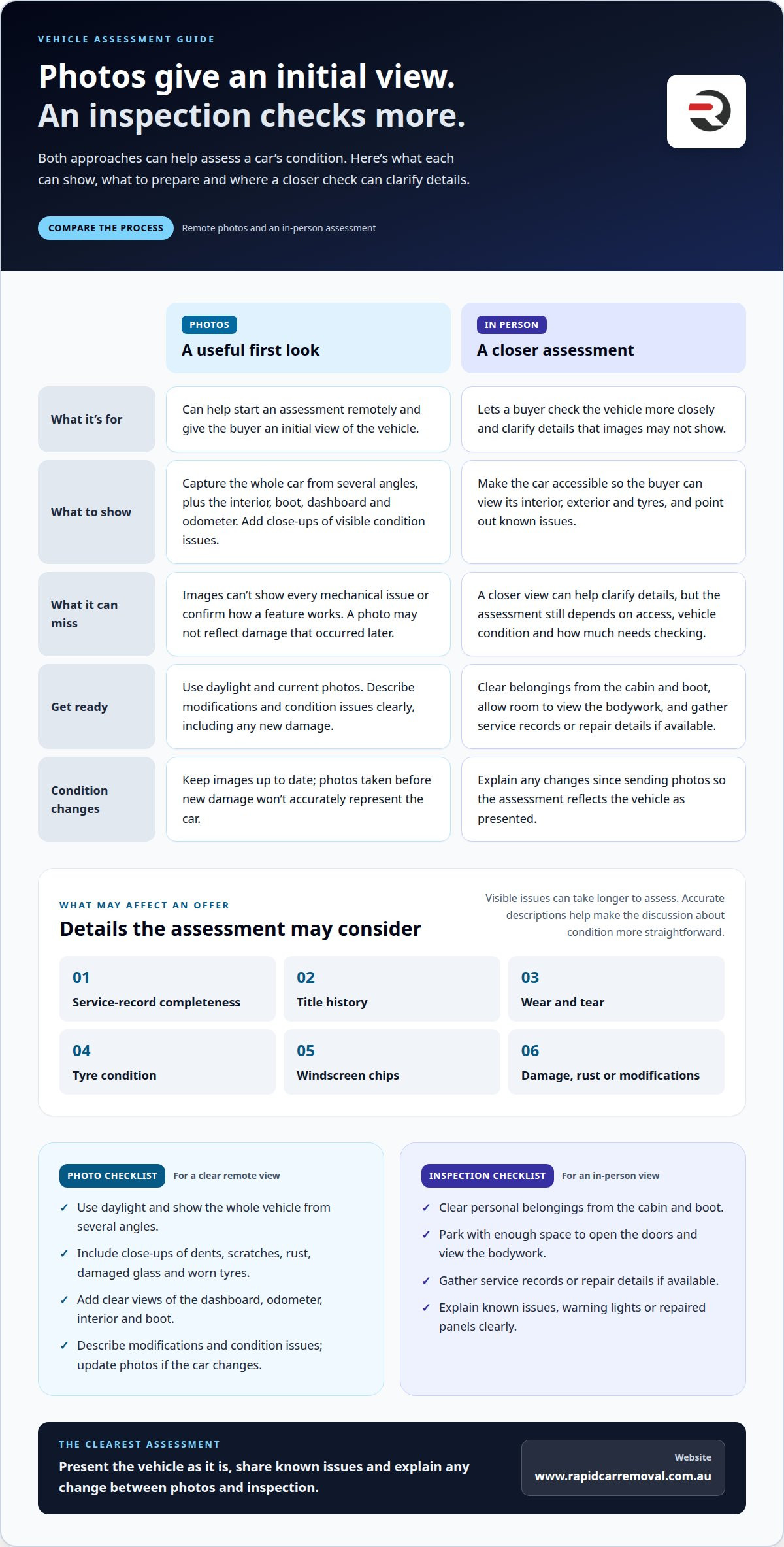
An in-person assessment lets a buyer check details that photos can miss. Clear images can help start an assessment remotely, while an in-person inspection gives a closer view of the vehicle’s condition.
Inspection Duration and Assessment
Assessment time depends on access, vehicle condition and how much needs checking. A car with visible damage, rust or modifications may take longer to assess than one with few obvious issues. The assessment may consider service-record completeness, title history, wear and tear, tyre condition and windscreen chips. These details help explain how the vehicle’s condition affects an offer.
Make the vehicle accessible and point out known issues. If a warning light appears or a panel has been repaired, describe it clearly rather than letting the assessment reveal it unexpectedly. A buyer can compare your description with what they see, including the interior, exterior and tyres. That makes the discussion about condition more straightforward.
Preparing the Vehicle for Inspection
Before an in-person assessment, clear personal belongings from the cabin and boot. Park somewhere with enough space to open the doors and view the bodywork. Gather service records or repair details if available. You don’t need to hide wear: accurate information helps the buyer assess the car as it stands, including faults that could affect the offer.
If you submit photos, use daylight and capture the whole vehicle from several angles. Include close-ups of dents, scratches, rust, damaged glass and worn tyres. Add clear views of the dashboard and odometer, plus the interior and boot. Keep the images current: photos taken before new damage won’t represent the car accurately. Include any relevant modifications or condition issues in your description.
A photo-based assessment is useful for an initial view, but images can’t show every mechanical issue or confirm how a feature works. An in-person check can clarify details and help the buyer make a more informed offer. If the vehicle’s condition changes between sending photos and inspection, explain what changed before proceeding. The assessment should reflect the car as presented, not an earlier description.
Private buyers may request an inspection or test drive before deciding. Arrange a time when you can accompany the buyer, and ask to see their driver’s licence before they drive. Agree on a route and keep the keys in your possession until the test drive begins. If you want to sell to a dealer, ask how its inspection works and which condition details it needs to assess.
To discuss the steps for selling your vehicle, get in touch.
Documents and items needed to complete a sale
For a quicker sale in Australia, consider selling to a dealership or car-buying service instead of arranging private advertising and buyer appointments. A sale to a dealer still needs clear ownership details, an agreed price and a record of the transaction. Prepare the vehicle information and paperwork early to help avoid delays at handover.
How do I sell my car privately in Australia? Prepare an accurate advertisement, respond to buyer enquiries, arrange inspections and agree on payment and transfer details. Keep a record of the sale and give the buyer a copy. A private sale can involve more coordination than selling directly to a dealer.
Private-sale advertising packages can include options such as different listing durations or added placement, depending on the platform. Compare what each package includes before paying. Use accurate details, current photos and a clear description of the car’s condition. Avoid describing features or service history you can’t support with records.
Collect the documents and details that help identify the car and record the sale:
- Registration and number plate details, plus the VIN or chassis number.
- Engine number, make, model and colour.
- Sale date and time, and both parties’ names, addresses and signatures.
- Service records or repair paperwork that supports the vehicle’s history.
For a NSW sale, keep a written record with the vehicle and plate details, VIN or chassis number, engine number, colour, make and model. Include the sale date and time, and both parties’ names, addresses and signatures. Give the buyer proof of sale, such as a receipt or invoice, and keep a copy for your records.
If selling to a dealership, include the motor dealer’s licence number and registered business name on the proof of sale. The registered business name may differ from its trading name, so make sure the record identifies the business correctly. A signed receipt or invoice gives both parties a clear record of the agreed transaction.
How do I transfer registration and notify the transport authority after selling a car? Complete the transfer steps required in your state or territory, then lodge the relevant notice of disposal. In NSW, submit a notice of disposal after the sale. Keep a copy or confirmation with your sale paperwork.
For payment, agree on the method and timing before handing over the keys. Check that the amount received matches the written agreement, and confirm an electronic payment has reached your bank account. Keep the receipt, transfer record and payment evidence together. These steps help reduce paperwork hassles if questions about ownership or payment arise later.
Have your vehicle details and sale documents ready before arranging a handover. For help with the next step, get in touch.
How long is my offer valid for?
An offer’s expiry period is set out in its terms. Read the stated deadline and any conditions before deciding whether to accept. If your circumstances change, or the vehicle’s condition differs from the information provided, the assessment may need to be revisited. Keep a copy of the offer so you can compare its conditions with the final paperwork.
Offers are assessed against details such as the vehicle’s make, model, age, condition and history. Market information helps indicate how comparable vehicles are valued, while an inspection or submitted photos help assess this particular car. Service-record completeness, modifications, rust, title history, wear and tear, tyre condition and windscreen chips can affect the final offer. Accurate details make the assessment more relevant.
An instant offer can give you a clear starting point without arranging private-sale advertising or managing multiple buyer enquiries. It’s still important to understand what the offer covers and whether it depends on a later inspection. For example, an offer based on photos may be reviewed if an in-person assessment reveals damage that wasn’t visible in the images.
A private sale gives you more control over the asking price, but you’ll need to prepare the listing, respond to buyers and arrange inspections. An instant offer can simplify those steps, though the amount and process may differ. Compare the likely proceeds with your timing needs and any finance payout. The best option depends on whether convenience, control or the expected sale amount matters most.
Before accepting, review the offer against the vehicle details you supplied. Confirm the car’s condition, included items, payment method and collection arrangements in writing. If the final assessment changes the amount, ask for the reasons before agreeing. Don’t rely on an earlier figure if the updated terms differ. A clear record helps you understand what you’re accepting and what happens next.
Payment timing depends on the sale process and its agreed terms. An instant-offer service says sellers receive payment within 24 hours after the sale. Treat that as a stated timeframe for that service, not a universal rule for every sale. Confirm when payment will be made and whether it will be transferred to your bank account or provided another way.
Before you accept, use these checks:
- Note the offer’s expiry deadline and acceptance conditions.
- Make sure the vehicle details and condition are accurate.
- Ask how a changed assessment affects the offer.
- Confirm payment timing and method in the written terms.
- Keep the accepted offer and sale record together.
Once you accept, follow the agreed steps for finalising the purchase and handing over the vehicle. If payment is by bank transfer, confirm the credit has arrived before completing the handover. Keeping the offer, payment evidence and sale documents together makes it easier to track the transaction from acceptance to completion.
Preparing vehicle documents and identity proof
Gathering paperwork before handover helps you finalise the transaction without searching for details at the last minute. Match the vehicle information across your registration papers, service records, photos and sale documents. If a detail differs, clarify it before signing or transferring ownership.
Prepare identity documents for the transaction and make sure your name matches the ownership details. If another person is named on the records, resolve who can sign the sale documents before arranging collection. Keep personal documents secure and provide only the information needed to complete the sale and record the transfer.
In Victoria, a roadworthy certificate is required to sell a registered car if the new owner intends to drive it on the road. The certificate relates to road use, not the vehicle’s valuation. Keep it with the registration and service paperwork so the buyer can understand which documents accompany the car.
Clear, current photos can support the valuation by showing the vehicle being sold. Include the exterior, interior and any visible damage, then keep those images with the written vehicle details. Accurate records help connect the assessment to the actual car. A mismatch between the photos and the vehicle at handover can lead to questions or a revised assessment.
Before accepting an offer, confirm the amount, payment method, collection arrangements and any conditions in writing. Ask when payment will be made and how the handover will be recorded. Keep a copy of the accepted offer, receipt and transfer paperwork. If payment is electronic, check your bank account directly rather than relying on a screenshot or message from the buyer.
How can I avoid scams when selling a car in Australia? Confirm payment in your own account before handing over the keys, and keep a written record of the buyer, agreed amount and vehicle transfer. Don’t treat a payment notification alone as proof that funds have arrived.
Agree on collection timing before the vehicle leaves your possession. At handover, give the buyer the agreed keys and documents, record the date and time, and keep your own copies. Remove personal items and any documents that aren’t part of the sale. This creates a clear record if questions about payment or ownership arise later.
After purchase, a dealer may prepare the vehicle for resale or move it through wholesale channels. That happens after your sale and doesn’t replace your own paperwork or payment checks. Keep your records after collection, including evidence of the final valuation and payment, so you can refer to the agreed terms.
Ready to discuss your vehicle’s paperwork and handover? Talk through your sale arrangements.
Rapid Car Removal: sell my car melbourne
Rapid Car Removal can help when you want to sell a car in Melbourne and need a clear next step. Its sell my car service connects your vehicle sale with Cash for Cars and free car removal. For an unwanted truck, Scrap Truck Removal is another relevant option.
Share accurate vehicle details and explain any finance owing before agreeing to proceed. Compare the offer with your lender’s payout figure and the amount you need for bills. If the car is damaged or no longer useful, a direct sale may help you avoid organising private advertisements and buyer appointments.
Have your vehicle details ready and discuss the sale process, payment and collection arrangements before handover. Contact Rapid Car Removal to discuss selling your vehicle.
Choose your next step with a clear plan
Before you commit to selling, decide which bill or essential expense needs attention first. That gives the sale a practical purpose and helps you judge whether the likely proceeds fit your immediate priorities. If you’re planning to sell your car to pay bills, include the loan payout in your calculations so you can focus on the amount that may actually be available.
Take a moment to organise your vehicle details and decide what you need from the transaction. A clear plan can make it easier to weigh up an offer, schedule the handover and direct the proceeds where they matter most. You’re in control of whether to proceed.
For a straightforward next step, contact Rapid Car Removal to discuss selling your vehicle. Take it one decision at a time, and choose the option that best fits your circumstances.
Frequently Asked Questions
What should I expect from a buyer inspecting my car?
Expect the buyer to compare the car’s actual condition with the details provided. They may look for dashboard warning lights, unusual noises, missing accessories or differences between the odometer reading and your description. Have the keys available and answer questions about known faults honestly. If a buyer wants to start the engine, make sure the car is accessible and explain any starting or running issues.
What will I need to bring?
Bring photo identification, the vehicle’s keys and any records that help establish its ownership or condition. Useful examples include service invoices, repair receipts and details of modifications. If another person is recorded as an owner, arrange their involvement before finalising the sale. Keep your own copies of signed sale paperwork and payment evidence rather than handing over your only records.
How do you value my car?
A valuation considers the vehicle’s identifying details, condition and history, then weighs them against relevant market information. For example, two cars of the same model may attract different offers if one has incomplete service records or visible damage. Be accurate about the car’s features and faults. A valuation is an assessment of that particular vehicle, not a guaranteed amount based only on its make or model.
How does it work?
With Rapid Car Removal, share your vehicle details online or by phone to request a quote. Review the offer and decide whether to proceed. If you accept, arrange collection and complete the sale paperwork at handover. Rapid Car Removal handles the seller’s paperwork. Have the car’s location, keys and relevant ownership details ready so collection and transfer can be organised smoothly.
How long does it take me to get paid?
Rapid Car Removal pays by cash, cheque or instant bank transfer. For an Osko or PayID bank transfer, payment lands in your account within 60 seconds of acceptance. Check your account directly before handing over the vehicle, rather than relying on a payment screenshot or notification. Agree on the payment method before finalising the sale, so you know what to expect at handover.
Is it legal to sell a car under finance?
Yes, you can legally sell a car in Australia while finance is owing. For a secured loan, the lender’s interest in the vehicle needs to be dealt with as part of the sale. Tell the buyer about the finance before agreeing to sell, and ask your lender for the current payout figure. An unsecured loan remains your responsibility, even after selling the car.
How much is my car worth in Australia?
There isn’t one set value for every car in Australia. The make, model, age, condition, service history and current buyer demand all affect an assessment. Two vehicles with the same model badge can be valued differently if their kilometres, features or damage differ. For a more useful estimate, provide accurate details and clear photos, then compare the resulting offer with your financial needs.
How do car-buying services and dealer trade-ins compare with private sales?
A car-buying service lets you sell without first choosing a replacement vehicle. A dealer trade-in links the sale of your current car to buying another vehicle from that dealer. A private sale gives you direct control over advertising and buyer discussions, but you also manage enquiries, inspections and payment arrangements. Compare the full transaction, including convenience, paperwork and how soon you need the proceeds.


