

Damaged cars can still have value, even when they won’t run. If you’re wondering who will buy my damaged car in Melbourne, local car wreckers and damaged-car buyers are the practical options: they may value a vehicle for reusable parts or scrap materials. You can sell an unregistered car to a dealer, and a roadworthy certificate isn’t required when selling a vehicle to a dealer.
It’s understandable to worry that major damage or no registration will make selling difficult. Describe the car’s condition clearly and arrange collection instead of driving an unregistered vehicle. You’ll learn what details to provide for a cash quote, what to do with the sale paperwork in Victoria, and how free towing can simplify removal.
We’ll also explain what can affect a damaged car’s value and how to prepare it for collection. This will help you move from an unwanted vehicle to a clear next step without overlooking practical details.
Key Takeaways
- An unregistered car can still be sold to a dealer; understand what identification and vehicle documents to have ready.
- A clear description of the car’s make, model, condition and damage helps shape a cash quotation.
- Find out how free towing can remove the need to move a damaged or non-running vehicle yourself.
- Learn which Victorian sale and registration steps to handle after the vehicle changes hands.
- See how Rapid Car Removal’s cash-for-cars and free-removal services can help with unwanted vehicles.
Can I sell my car for cash in Melbourne if it is unregistered?
Yes. You can sell an unregistered vehicle to a dealer in Melbourne. Agree on the payment method and collection arrangements before handing it over. To reduce scam risk, keep the buyer’s details and written sale terms, then confirm an electronic transfer has arrived in your account before releasing the vehicle.
Prepare your paperwork before arranging towing. Have photo identification and your vehicle registration paper ready, if available. Check that the sale paperwork matches the car, including its make, model and registration details where available. Keep a copy of the signed record and any messages confirming the agreed price and collection plan.
Payment methods
Payment for scrap metal and cars in Victoria can be made by electronic transfer or cheque. Victorian Government advice effective May 30th, 2018 was for scrap metal buyers not to pay cash for scrap metal and cars. The Second-Hand Dealers and Pawnbrokers Regulations 2018 are also referenced in discussions of vehicle-trade payments. Don’t treat “instant cash” as a promise of physical notes; confirm the actual payment method before you accept an offer.
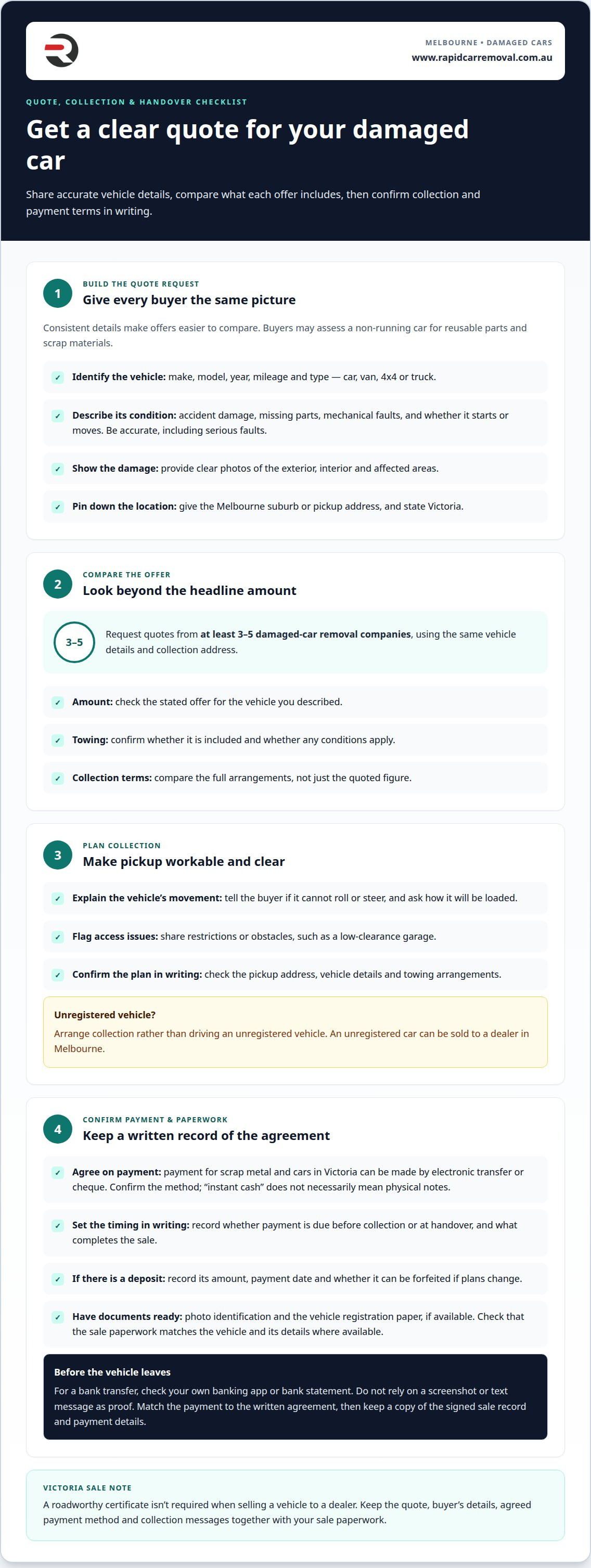
For a bank transfer, provide your account details directly to the buyer and check for the funds using your own banking app or bank statement. Don’t rely on a screenshot or text message as proof of payment. If you accept a cheque, record its details and the agreed amount before the vehicle leaves. Keep the payment record with your sale paperwork.
Payment timing and deposits
Agree in writing when payment is due, whether it will be made before collection or at handover, and what completes the sale. If there’s a deposit, record its amount, payment date and whether it can be forfeited if either party changes plans. Don’t accept a vague promise of later payment without a clear deadline and written record.
Use digital paperwork to keep a clear record. Save the quote, buyer’s details, agreed payment method and messages about towing together. Before signing or sending documents, check that the vehicle description and sale amount match your agreement. Store copies of identification and payment records securely, and share personal information only for the transaction.
- Match the buyer’s details to the sale paperwork.
- Confirm the transfer in your own bank account before handing over the keys.
- Record any cheque, deposit, payment deadline and forfeiture terms in writing.
How do I obtain a cash quotation for my damaged vehicle?
Give damaged-car buyers the same vehicle details and collection address to compare quotes. Melbourne wreckers may assess non-running vehicles for salvage, reusable parts and scrap materials, so even a car needing costly repairs can be evaluated.
To compare quotes, request them from at least 3-5 damaged-car removal companies, then check what each offer includes. Compare the stated amount, towing arrangements and any conditions attached to collection, not just the headline figure.
Give each buyer the make, model, year, mileage and known faults. Describe accident damage, missing parts and mechanical problems, and say whether the vehicle starts or moves. Clear photos of the exterior, interior and damaged areas can help show its condition. Include the Melbourne suburb or pickup address, as the vehicle’s location can affect the removal offer.
Owners can request an assessment for accident-damaged, scrap, broken or non-running cars. Vehicle type matters too: identify whether it’s a car, van, 4x4 or truck. A buyer uses details such as the model, condition and mileage to assess potential parts and materials. Don’t describe a car as repairable if you know it has a serious mechanical fault.
Search tools for salvage vehicles commonly organise listings by make, model, year, state and location. Use those details to describe your vehicle, so a buyer can distinguish, for example, a damaged Toyota from a different model with different parts demand. In your quote request, state Victoria and your Melbourne suburb rather than giving only a broad location.
Ask whether towing is included and how the vehicle will be loaded if it can’t roll or steer. Confirm the pickup address, access restrictions and obstacles such as a low-clearance garage. A clear description helps the removal team plan collection and avoid surprises at handover. Keep the agreed offer and towing arrangements in writing.
The pickup and payment process is straightforward: provide vehicle details and photos, receive a quote, agree on the terms, then arrange collection and payment. Before confirming, check that the buyer has recorded the correct vehicle and location. At handover, make sure the payment matches the agreed terms and keep your sale record.
For a vehicle-specific discussion, share your car and collection details.
Buying damaged, broken, wrecked and scrap cars in Melbourne
Melbourne damaged-car buyers may purchase vehicles for reusable parts or scrap materials. A car doesn’t need to run to have potential salvage value.
Damaged and scrap car purchases
Buyers assess accident-damaged, broken, wrecked and scrap cars based on their condition and potential use. A vehicle with a damaged front end, for example, may still have usable doors, wheels or interior components. A car that isn’t economical to repair may instead be valued for its materials. Describe the damage accurately, including missing parts and mechanical problems, so the offer reflects the vehicle presented at collection.
Buyers handle vehicles in different conditions, but the distinction matters. An accident-damaged car may retain reusable components, while a stripped or heavily damaged scrap car may be valued mainly for its materials. Share the make, model, age and known damage when requesting an assessment. Clear details help the buyer judge whether parts or scrap materials are likely to contribute more to the vehicle’s value.
Cash offers for unwanted cars
A cash offer lets you sell an unwanted vehicle without arranging repairs first. The price depends on the vehicle and is provided after a quote request. Make, model, age, condition, extent of damage, weight, materials and demand for parts all affect the assessment. “Top cash” isn’t a useful comparison on its own. Consider the offer’s conditions, collection arrangements and payment terms before accepting.
To keep the sale straightforward, give buyers consistent information and record the agreed terms in your paperwork. For example, disclose a missing catalytic converter or a gearbox fault before handover. A difference between the described car and the vehicle collected can lead to a changed offer. Keep the buyer’s written quote and sale details together so you can refer to the agreement.
Reusable parts and scrap value
After a sale, damaged vehicles are often dismantled for parts, while metals and other materials are recycled. A wrecked car can therefore retain value even when repair isn’t practical. Components in better condition may be suitable for reuse; damaged or unusable parts may contribute to its scrap materials instead.
Buyers consider parts demand alongside the car’s condition and materials. A popular model with usable components may be assessed differently from a similar vehicle with extensive damage or missing parts. Be specific about the year, model and affected systems, such as the engine, suspension or bodywork. These details give the buyer a clearer basis for assessing salvage and scrap value.
Before agreeing to sell, remove personal belongings and keep the sale paperwork. Confirm the final offer matches the vehicle’s disclosed condition, and settle the payment and collection terms before the car is taken away. This final check helps avoid confusion between the vehicle quoted and the scrap car handed over.
Legal sale of damaged and unregistered cars in Victoria
Have your vehicle registration paper and photo identification ready when selling a damaged car. A roadworthy certificate isn’t required when selling a vehicle to a dealer.
Sale documents and requirements
Keep a written record of the buyer, vehicle details, agreed payment and collection arrangements. After the sale, lodge a Notice of Disposal in myVicRoads and keep a copy of the confirmation with your paperwork. In Victoria, the buyer transfer should be completed within 14 days. This gives both parties a clear record of the handover and helps you keep your sale documents organised.
If you’re cancelling the registration, return the number plates to VicRoads when required. The steps depend on your registration situation, so keep the plates and vehicle details together until you complete the relevant process. Selling an unregistered vehicle doesn’t remove the need to record the sale clearly. Note the handover date and keep the buyer’s details with your Notice of Disposal record.
Wrecker valuation factors
Wreckers assess a damaged car by considering its make and model, age, condition, extent of damage, weight and materials, as well as demand for its parts. An engine fault or transmission problem affects the vehicle’s condition, while damage elsewhere may determine which components remain reusable. Share known faults and missing parts before agreeing to sell.
For example, a vehicle with a failed transmission may still have useful body components, while a heavily damaged car may be valued more for its materials. The balance varies by vehicle. A precise description helps the buyer assess the car as presented, rather than assuming a wrecked vehicle is either worthless or fully reusable.
Accident-involved car sales
You can sell a structurally damaged car in Victoria. Structurally damaged vehicles are often listed on the Written-Off Vehicle Register, so disclose the accident history and known damage when discussing the sale. A dealer sale doesn’t require a roadworthy certificate. If the buyer later chooses to register the damaged vehicle again, the buyer is responsible for meeting roadworthy requirements.
Before car removal services collect the vehicle, accurately describe accident damage, mechanical problems and missing parts. Include engine or transmission faults, even if the car still starts. Honest details help align the offer with the vehicle’s actual condition and reduce the risk of a last-minute price change. Keep a record of the sale and check whether any follow-up registration steps apply after handover.
Free car towing and removal in Melbourne
Free towing can make selling a damaged car easier, especially when it won’t start or isn’t roadworthy. Before accepting a removal offer, confirm what collection includes and how pickup will work at your Melbourne address.
Start by giving the removal service the vehicle’s exact location and condition. Say whether it’s parked in a driveway, underground car park or narrow laneway. Explain whether it can roll, steer and be reached by a tow truck. These details help the team plan access and equipment. A car trapped behind another vehicle needs a different pickup plan from one parked kerbside.
Ask for the towing arrangement to be recorded with the quoted offer. Confirm that collection is included at no charge, and clarify whether the offer depends on the vehicle matching your description. A free car removal arrangement should make the pickup location, timing and payment clear. Keep those details in writing so you can compare the agreed service with what happens at handover.
Pickup timing can vary across Melbourne. Some car removal companies offer same-day pickup, sometimes within hours after quote acceptance. A set time still depends on collection logistics, so provide a working contact number and make sure someone can provide access. If the vehicle is at a repairer or storage facility, arrange permission and tell the removal team where the keys are before collection.
Location can affect a removal offer, particularly when a vehicle is outside a provider’s usual service area. Give the suburb or regional location at the start, not after agreeing to a quote. This lets the buyer account for travel and prevents confusion about whether towing is included. For example, a car in central Melbourne and one in a regional area may need different collection planning.
Before pickup, prepare the vehicle and collection area:
- Remove personal belongings, toll tags and documents from the car.
- Tell the removal team about locked wheels, flat tyres or damage that stops it rolling.
- Move other vehicles or obstacles where practical, and keep access clear.
- Have the keys and sale paperwork ready for handover.
An unregistered or non-running car doesn’t need to be driven to collection. Arrange towing instead, and confirm the handover details before the vehicle leaves. Arrange a damaged-car pickup by sharing the vehicle’s condition and location.
Rapid Car Removal: Cash for Cars
Rapid Car Removal offers Cash for Cars and Free Car Removal for unwanted vehicles across Melbourne. If your damaged car won’t run or you’d rather not organise transport yourself, these services bring the sale and collection together.
Share the vehicle’s make, model, condition and Melbourne pickup location to start the quote process. Include details such as accident damage, missing parts or engine trouble so the vehicle can be assessed accurately. Before agreeing, review the offer, payment method and towing arrangements, then keep the sale paperwork for your records.
For a damaged or unregistered car that needs collection, contact Rapid Car Removal to discuss the next step.
Make a clear next move with your unwanted vehicle
An unwanted car can take up space and leave you with another loose end to manage. Decide what you need from the sale: a buyer for a damaged vehicle, collection, or a practical option for a scrap truck. Then choose a next step that suits the vehicle you have, rather than delaying over repairs that may not suit its condition.
If you’re still deciding who will buy your damaged car in Melbourne, Rapid Car Removal offers Cash for Cars and Free Car Removal across Melbourne. Scrap Truck Removal is also available for unwanted trucks. Share your vehicle details and location to begin the quote and collection process. Describe the vehicle honestly, review the offer and arrangements, and proceed when the terms suit your needs.
Contact Rapid Car Removal today to discuss your unwanted vehicle. Take the next step when you’re ready, and clear the way for what comes next.
Frequently Asked Questions
How do you scrap a car in Melbourne?
To scrap a car in Melbourne, arrange an assessment and collection, then complete the sale and disposal steps. Start with the vehicle’s details, including its make, model, condition and whether it’s complete. Remove personal items and toll tags before handover. Keep the sale record and lodge the Notice of Disposal through myVicRoads after the sale. If cancelling registration, handle the number plates as required for your situation.
How much money can you get for your unwanted car in Melbourne?
The amount depends on the car, so there isn’t one figure for every unwanted vehicle in Melbourne. Buyers consider the make and model, age, condition, extent of damage, weight, materials and demand for usable parts. A complete car with sought-after components may be assessed differently from a stripped vehicle. Share accurate details and clear photos to help the buyer prepare a vehicle-specific quote.
Where is the best place to sell a wrecked car?
A Melbourne car wrecker is a practical option if your wrecked car isn’t suitable for ordinary resale. Wreckers assess vehicles for reusable components and scrap materials rather than requiring them to be roadworthy. If you’re asking who will buy your damaged car in Melbourne, compare written offers and collection terms from buyers who handle damaged vehicles. Give each buyer the same description of the car’s condition.
Are scrap cars worth anything?
Yes, a scrap car may retain value through usable parts and recyclable materials. Its condition and completeness matter: an intact component may have a different salvage use from one that’s damaged or missing. The car’s make, model, age, weight and demand for its parts also affect the assessment. Before accepting an offer, list major missing components and faults so the buyer’s valuation reflects the actual vehicle.
Can I sell my damaged car for cash if it doesn’t run?
Yes. Rapid Car Removal buys vehicles in any condition, including cars that don’t run. You don’t need to repair an engine fault before requesting an assessment. Describe what happens when you turn the key, such as whether it won’t start, makes unusual noises or shows a warning light, and say whether the car rolls. These details help the buyer assess the vehicle and plan collection.
Do I need to fill out any paperwork when selling my wrecked car?
Yes, keep a written sale record and complete the Victorian transfer and disposal steps. Have photo identification and your vehicle registration paper available for the transaction. Record the buyer’s details, vehicle description, agreed terms and handover date, then retain copies. Lodge the Notice of Disposal through myVicRoads after the sale. Keeping these records together helps show when ownership changed and supports your registration administration.
Do you buy transmission fault or engine problem cars?
Yes. Rapid Car Removal accepts vehicles in any condition, including cars with engine or transmission problems. Give a specific description rather than saying only that the vehicle is faulty. For example, explain whether the engine starts, whether the gears engage and which warning lights appear. Mention any recent diagnosis or repair estimate, if available. Clear information helps the buyer assess the vehicle as it stands and plan collection.
Do you require me to be present when you collect my vehicle?
Plan a clear handover, whether you attend personally or arrange for an authorised person to meet the collection team. Make sure the vehicle is accessible and that the person present knows the agreed sale terms. Have the keys and relevant paperwork ready, but don’t hand them over before payment and sale arrangements are settled. Agree on access details beforehand, especially if the car is at a repairer or storage site.


