

Compare at least three scrap-car offers before choosing a buyer. Knowing how to avoid scams when scrapping a car starts with checking what each quote includes, being cautious of an unusually high offer from a buyer who won’t inspect the vehicle, and getting the agreed terms in writing. Confirm the full payment has arrived before handing over the keys, and keep a receipt and transfer paperwork.
It’s sensible to want a fair price and a straightforward collection, without last-minute deductions or uncertainty about what happens to your car. For owners assessing whether major drivetrain issues make a vehicle uneconomical to fix, diagnostic guidance from specialists like Eagle Transmission & Auto Repair can help clarify mechanical condition before selling. Once you decide on disposal, compare the quoted amount, payment method and collection terms to spot pressure tactics or offers that don’t stack up.
This guide explains how to check a scrap merchant, compare quotes, agree on secure payment and keep the paperwork that records the sale. You’ll have practical steps to follow before the vehicle leaves your hands.
Key Takeaways
- Check the merchant’s business details and reputation before agreeing to a collection.
- Compare at least three offers, and treat a much higher quote with caution if the buyer won’t inspect the car.
- Agree on the payment amount, method and timing in writing, then confirm the full payment has arrived before handing over the keys.
- Keep a signed record of the sale and a receipt identifying the vehicle and transaction.
- Slow down if a buyer pressures you to decide quickly; clear terms are worth taking the time to review.
1. Checking a scrap merchant’s licence or certification
Before selling a vehicle, establish who will buy it and what authorisation applies to their business. Ask for the merchant’s legal business name, trading name and licence or permit details. Check that these match the quote, collection paperwork and receipt.
Check the business registration independently rather than relying only on a logo, text message or social media page. Search the Australian Business Register using the ABN supplied, then compare the listed entity name with the buyer’s name. Ask for a clear explanation of any mismatch before agreeing to collection.
Ask which authority issued the merchant’s licence or certification and what activity it covers. A document for a different business, site or service may not apply to the vehicle being collected. Check the issuing authority’s records or contact it using independently sourced details.
Some merchants may describe themselves as an Authorised Treatment Facility, or ATF. Ask which jurisdiction and authorising body that status relates to, then request the relevant register entry or certificate. Don’t treat the term alone as proof of local authorisation; check that the organisation and document can be verified.
Check the scrapyard’s authorisation as well as the collector’s identity. If the vehicle will go to a yard, ask for its trading name and location, then check that the paperwork names the same operator. If the collector and receipt list different businesses, clarify who is accepting the vehicle.
Look closely at any certificate or licence shown to you. Compare the business name, address, scope and expiry details, where listed, with the merchant’s quote and collection documents. For example, a certificate naming a different site does not verify the yard receiving your car.
For a truck, clarify in writing whether the same operator and authorisation cover collection and disposal. This links the vehicle, the collecting business and the destination in the transaction records.
Reviews and a working business website can help you assess whether the company presents consistent details, but they don’t replace registration checks. Compare the contact name, trading name and address across the website, quote and official records. Pause if you find differences the business cannot explain.
Before agreeing, save a copy of the licence details, certificate or register entry you checked. Record the date and issuing organisation. If a merchant won’t name its authorising body or provide matching business details, resolve the discrepancy before handing over the vehicle.
2. Risks of remaining legally responsible for a scrapped vehicle
Before collection, remove personal belongings, deal with number plates under your state’s registration process, and contact your insurer about ending cover after the transfer. In New South Wales, cancelling registration requires the plates, registration certificate and proof of identity, plus bank details for any fee or refund.
In NSW, you can cancel registration at any time, including after scrapping the vehicle. Complete the relevant forms at a service centre and keep a record of the cancellation. This helps separate your registration from a vehicle that has left your possession.
A vehicle’s later use can create complications if the transfer is unclear. For example, a cut-and-shut scam combines two used vehicles into one, which may then be sold illegally. Keep documents showing who collected the car, when it changed hands and where it was going.
Don’t assume a vehicle has been destroyed just because a collector calls it scrap. An end-of-life vehicle may be repaired, resold or used for parts. A clear receipt and transfer record show what you agreed to and when responsibility passed to the buyer.
Scammers may send fake vehicle-report or inspection links to collect personal or payment information. Don’t enter details through an unexpected text or email link. Instead, find the organisation’s official contact details independently and ask whether it sent the report. Check the sender’s address and the vehicle registration shown in any document.
For a business or fleet, use an asset register to record each vehicle’s registration, assigned driver and disposal status. Give one staff member responsibility for approving the sale, and require a second person to match the collection paperwork against the vehicle. Keep the quote, receipt and transfer records together in the vehicle’s fleet file.
These steps matter when a fleet vehicle is collected from a depot rather than its usual location. Record the collector’s name, the vehicle’s condition and the collection time. If the paperwork lists a different registration or business, pause the transfer and resolve the mismatch before releasing the keys.
For a truck disposal, keep the collection and transfer documents with the fleet or vehicle records. If you need to discuss collection arrangements, use the vehicle collection contact page.
3. Verifying secure payment before handing over a car
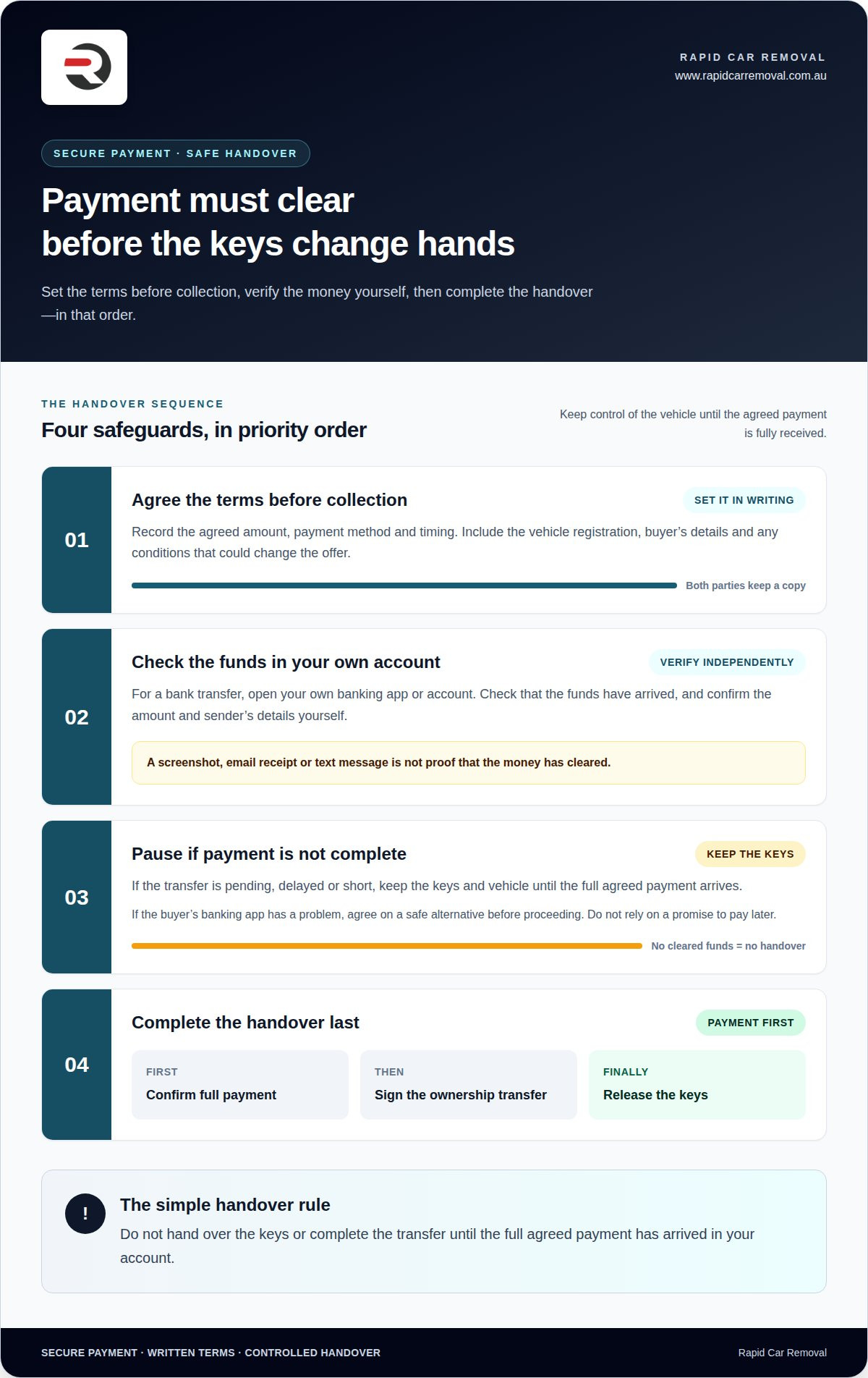
Set the payment terms before collection, not beside the tow truck. Write down the agreed amount, payment method and timing. Include the vehicle’s registration, the buyer’s details and any conditions that could change the offer. Both parties should keep a copy.
For a bank transfer, verify the funds in your own banking app or account. A screenshot, email receipt or text message isn’t proof that money has cleared. Check the amount and sender’s details yourself. If the transfer is pending, delayed or short, keep the keys and vehicle until the full agreed payment arrives.
Make payment part of the handover sequence. Confirm the money first, then sign the ownership transfer and release the keys. If a buyer says their banking app is experiencing a problem, agree on a safe alternative before proceeding. Don’t complete the transfer based only on a promise to pay later.
For a private sale, cash or a bank cheque can be practical options. Count cash carefully and check that a cheque is for the agreed amount before handing over the vehicle. A bank transfer can also work; complete it in person and confirm the funds through your own account. Keep a receipt showing the payment method and transaction details.
Scrap-metal payment rules can vary by jurisdiction and transaction type, so don’t assume cash is always acceptable or prohibited in Australia. Ask the merchant to state the payment method in writing before collection. If the buyer proposes a different method, resolve the change before the vehicle leaves.
Don’t pay an upfront amount to have your car collected. Scrutinise a request for a deposit, administration charge or release fee, particularly if it wasn’t discussed in the original quote. Agree on who pays towing and paperwork costs, and require any deduction to be explained and accepted before collection.
Hidden fees can appear as last-minute deductions for towing, recycling or handling. Compare the final amount with the written offer. If a deduction is raised at pickup, ask for its reason and amount in writing. Don’t sign a receipt that records a different payment or says you’ve been paid in full when you haven’t received the money.
Before handover, keep your copy of the agreement, payment confirmation and receipt together. Check the receipt against the vehicle registration and agreed amount. These records help show what was promised, what was paid and when the transfer took place.
4. Bill of sale, receipts and ownership paperwork
Keep a document trail that identifies the vehicle and records its handover. A useful sale record names both parties, gives the registration and vehicle identification details, and states the transaction date. Add the agreed amount and the buyer’s business details so you can match the paperwork to the vehicle later.
Check every identifier against the vehicle itself before signing. Compare the registration on the paperwork with the plates and vehicle records, and check the VIN where accessible. Correct discrepancies before collection. An incorrect character can make a receipt difficult to match to the vehicle if questions arise later.
There’s no single national scrapping form that covers every Australian state and territory. Registration and disposal processes differ by jurisdiction and can depend on the vehicle’s status. Keep the signed sale record and receipt, then follow the instructions from the authority responsible for registration in your state or territory.
Make the receipt useful as evidence of handover. It should identify the seller, buyer, vehicle and transaction date, and record that possession transferred. Keep a digital copy in a folder named with the registration, alongside the quote and any collection record. This makes the relevant paperwork easier to find.
If you’re keeping records for a fleet, file each vehicle’s sale documents against its asset record. Note which staff member authorised disposal and who witnessed collection. For a privately owned car, store the receipt with the registration records until you’ve completed the relevant state or territory steps.
Watch for pressure tactics during signing. An offer said to be valid for only two hours can push you to accept before reading the terms. Take time to check every page, especially clauses about deductions, collection and transfer. Don’t sign blank fields or a document describing a different vehicle or payment.
If a collector changes the agreed terms at pickup, pause and amend the paperwork before signing. Mark the incorrect detail, write the replacement clearly and have both parties acknowledge the change. Keep the final version, not an earlier draft. A complete record helps establish what you agreed to if the vehicle is later resold or used illegally.
For a truck collection, keep its vehicle details and collection arrangements with the relevant records. You can discuss those arrangements through the contact page.
5. Comparing quotes and identifying unrealistic offers
Collect at least three offers before deciding. Give each buyer the same vehicle details, including make, model, year, registration, condition and whether it runs. Consistent information makes the quotes easier to compare. If one buyer receives different details, their offer may not provide a fair comparison.
Scrap value can change with global supply and demand for scrap metal. Vehicle weight, reusable parts, damage and collection arrangements can also affect an offer. Compare what each buyer says the quote covers, not just the headline amount. Use the same vehicle condition and collection requirements for each comparison.
Write each offer in a simple comparison note. Record the buyer’s name, quoted amount, collection conditions, payment method and possible deductions. Note whether the buyer inspected the car or relied on your description. This makes any change at collection easier to spot.
A much higher offer isn’t automatically a scam, but it deserves closer scrutiny if the buyer won’t inspect the vehicle. Ask how the amount was calculated and what could change it. Clarify, for example, whether missing parts, accident damage or a non-running engine affect the final payment. Don’t treat a verbal promise as a fixed offer.
Compare the quote after any inspection with the original written terms. If a buyer lowers the offer, ask which specific detail changed the valuation. A clear explanation should identify the condition or cost involved. Pause and reconsider if a vague deduction appears only at pickup.
Check whether collection is included or the buyer lists a separate charge. Read the terms for phrases such as “subject to inspection” and ask what the inspection could change. A verified business identity and clear written offer help you assess the transaction, but neither makes an unusually high quote reliable by itself.
Use a consistent process: gather three offers, compare their inclusions, then follow up on the outlier. Inform each buyer if the vehicle’s condition changes before collection. Keep the final accepted quote with your sale records, so you can compare the agreed amount with the payment and receipt.
For a quote to compare against your other offers, request a vehicle quote and provide accurate details about its condition.
Rapid Car Removal: Cash for Cars
Rapid Car Removal offers Cash for Cars for people ready to move from comparing offers to arranging the next step. Its Free Car Removal can suit an unwanted vehicle that needs collection, while Scrap Truck Removal and Cash for 4x4s cover other vehicle types.
Before agreeing to any collection, use the checks in this guide: compare the written offer, clarify payment terms and keep the sale paperwork. Share accurate details about your vehicle so the quote reflects its condition. Keep your own records of the agreed terms and handover.
If you’re ready to discuss your vehicle, contact Rapid Car Removal.
Make your next step a deliberate one
A calm handover starts before the vehicle leaves your driveway. Set aside the documents you’ll need, decide who will be present and keep your own copy of every signed record. If a detail changes on collection day, pause and update the agreement before proceeding. This gives you time to decide without reacting under pressure.
Knowing how to avoid scams when scrapping a car means choosing a process you can follow from quote to handover. Keep communication in writing, make sure the vehicle details match and allow time to review the final terms. A straightforward transaction should leave you with a clear record of what was agreed.
If you’re ready to discuss the next step for your vehicle, contact Rapid Car Removal. You can move forward with a plan that suits your situation.
Frequently Asked Questions
How can consumers prevent falling prey to a car scrapping scam?
Take control of the handover sequence and keep every key decision in your own records. A practical way to avoid scams when scrapping a car is to use the same vehicle description for every buyer, then compare what each offer actually includes. Don’t follow unexpected links asking for vehicle or banking details. If a buyer changes the deal at collection, stop and review the revised terms before deciding.
What do car scrapping scams typically involve?
Common warning signs include a buyer changing the offer after arrival, adding an unexplained deduction or claiming payment has been sent when it hasn’t appeared in your account. Scammers may also use fake inspection or vehicle-report links to seek personal information. They may combine tactics, such as rushing you to sign while distracting you from a changed amount or missing sale details.
How to check if a car scrapping company is licensed and legitimate in Australia?
Start by matching the company’s trading name and ABN against the Australian Business Register. Then check any licence or permit with the authority named on the document, since requirements can depend on the activity and jurisdiction. For example, compare the business on your written quote with the entity in the register. A matching name is useful, but you should still check the document’s scope.
What is a fair scrap car price in Australia, and how is it calculated?
There isn’t one fixed scrap value for every Australian vehicle. An offer can reflect current scrap-metal demand, the vehicle’s weight, condition, reusable components and collection requirements. Ask how the buyer reached the figure and what could change it after inspection. Compare offers based on the same vehicle details rather than assuming the highest is fair or using another car’s offer as a direct benchmark.
How can I compare scrap car quotes and spot unusually low offers?
Request at least three offers using identical details, then compare the inclusions and conditions alongside the amount. A low quote may reflect missing information, a different view of the vehicle’s condition, or collection terms that vary from other offers. Ask the buyer to explain the valuation in writing. If the explanation doesn’t account for the difference, weigh the clarity and terms of the offer, not just its headline figure.
What fees should a car removal company disclose before collecting a vehicle?
Ask for a written breakdown of any proposed deductions or charges before agreeing to collection. Clarify whether the quoted amount could change after inspection and what might trigger a change, such as undisclosed damage or missing parts. Ask how collection, towing and paperwork are treated in the offer. If a new cost appears on pickup day, compare it with the written terms before signing or releasing the vehicle. Rapid Car Removal provides free towing and removal and handles the paperwork at no cost.
How do I avoid scams involving upfront fees, changed offers, or fake payment when scrapping a car?
Don’t send a deposit or pay a release charge unless it was clearly explained and agreed in advance. If the offer changes, ask the buyer to document the reason and revised amount before you decide. For bank transfers, check your own account rather than trusting a screenshot or payment notification. Keep the keys until the agreed funds are visible and the final paperwork accurately records the transaction.
What proof of ownership and identification should I provide to a car wrecker?
Have your registration details and identification available, and follow the relevant state or territory process for the vehicle’s transfer or cancellation. The exact documents can vary by jurisdiction and circumstances. If the registration is in another person’s name, or the vehicle belongs to a business or deceased estate, resolve who can authorise the sale before collection. Share personal documents through a direct, trusted channel, not an unexpected link.


